Global: EU Seed Potato Grades Allow From 0.2% to 6% Virus-Symptom Plants in the Field
EU seed potato grades set virus tolerances from 0.2% for grade S to 6% for class B. Scotland prefers much stricter limits for PVY, PVA and leaf roll.
With planting under way in the Southern Hemisphere and seed orders for next spring starting in the north, the class on a seed label deserves a close look. It tells the buyer how much virus was allowed. The European Union’s grading system is one of the most widely used references.
Commission Implementing Directive 2014/20/EU, adopted on 6 February 2014, sets Union grades for basic and certified seed potatoes. For basic seed, grade S allows a maximum of 0.2% plants with mosaic or leaf roll symptoms in the growing crop, grade SE 0.5% and grade E 0.8%. For certified seed, class A allows 2.0% and class B 6.0%.
The directive also sets limits for virus in the progeny, meaning the next generation tested after harvest: 1.0% for S, 2.0% for SE, 4.0% for E, 8.0% for A and 10.0% for B. Blackleg limits rise from 0.1% for S to 4.0% for B. Off-type plants may not exceed 0.1% in basic grades, 0.2% in class A and 0.5% in class B. Basic grades are also limited by age: a maximum of 5 field generations for S, 6 for SE and 7 for E. Tuber defects are limited to 6.0% by mass for basic seed and 8.0% for certified seed.
Weekdays. Unsubscribe in one click.
Stricter national rules
Countries may go further. A 2014 presentation by SASA, the Scottish Government’s agricultural science agency, shown at the James Hutton Institute, listed the EU growing-crop virus tolerances as 0, 0.1, 0.2, 0.5, 0.8, 2 and 6% from pre-basic tissue culture (PBTC) to class B. Scotland preferred stricter limits for PVY, PVA and leaf roll virus: 0, 0, 0.02, 0.1 and 0.4% from PBTC to grade E. The presentation noted that the EU talks lasted five years, with seven expert meetings.
Why it matters
Under EU rules, a buyer who plants class B seed accepts up to 6% plants with virus symptoms and up to 10% infected progeny. A buyer of grade S seed accepts at most 0.2% and 1%. For ware growers, the grade is a trade-off between seed price and virus risk, and the right choice depends on how many times the seed will be multiplied on the farm.
Seed buyers should ask for the grade, the field generation and, where available, post-harvest virus test results. Exporters and importers outside the EU should check the tolerances of the importing country, which may differ from EU grades.
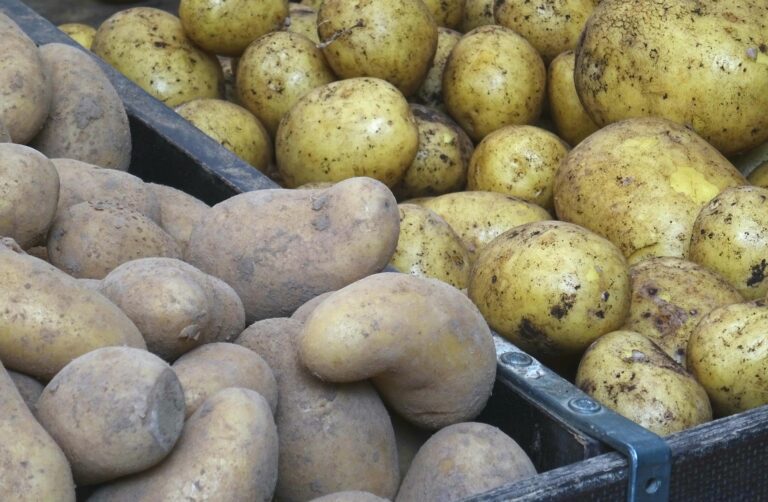
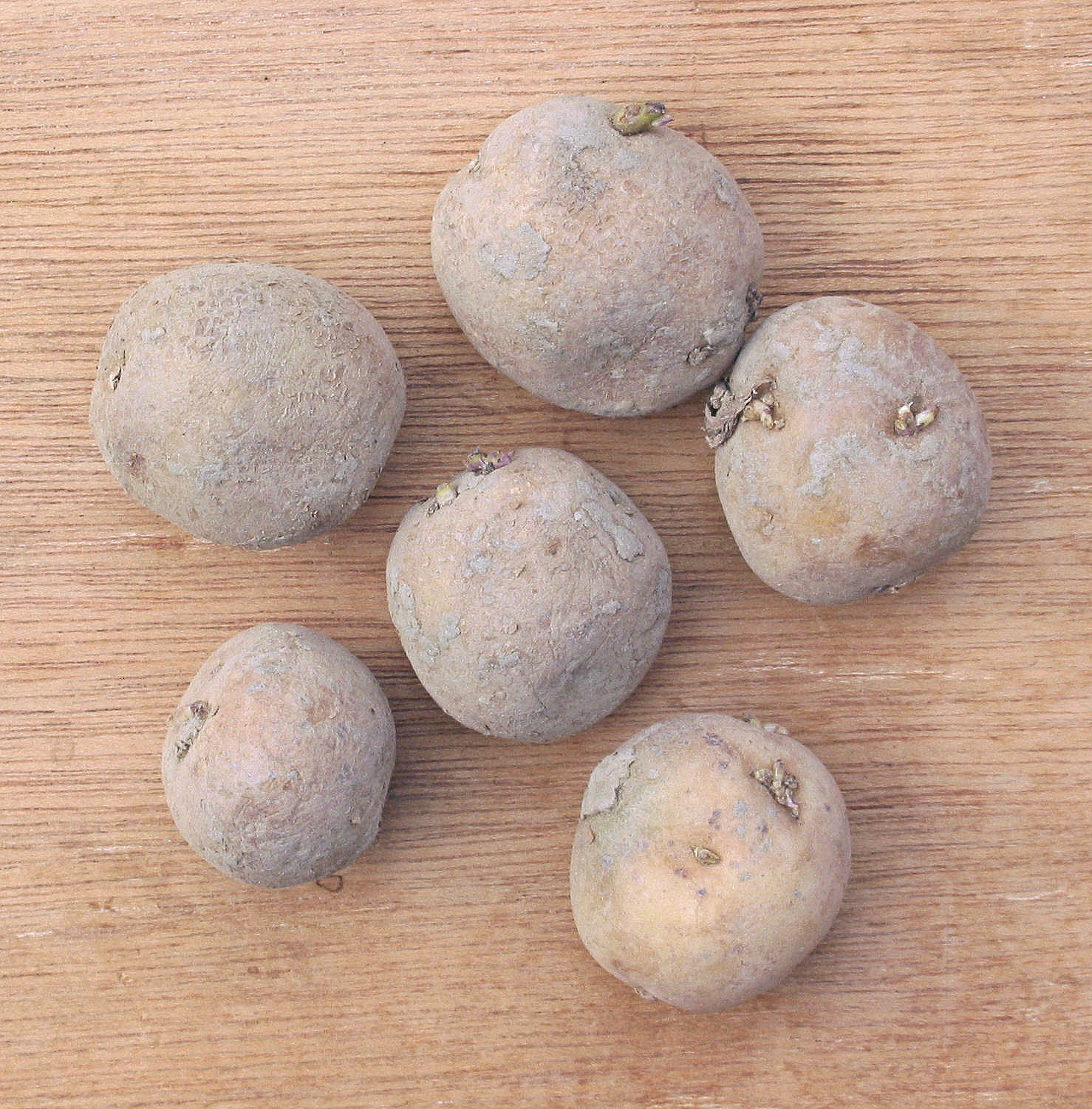
Photo: Seed potatoes of the variety Doré (illustrative). Rasbak / Wikimedia Commons, CC BY-SA 3.0