Global: EU Cut Chlorpropham Residue Limit in Potatoes From 10 to 0.2 mg/kg After CIPC Ban
Six years after the EU ban on CIPC, the temporary residue limit for potatoes fell to 0.2 mg/kg from January 2026. Old stores remain the main contamination risk, while ethylene, mint and orange oil replace CIPC.
Chlorpropham (CIPC) was for decades the main sprout suppressant in European potato stores. In Great Britain it made up more than 90% of pesticide treatments on stored potatoes, according to AHDB. Six years after the EU ban, the residue limit for potatoes has fallen from 10 mg/kg to 0.2 mg/kg.
From ban to a 0.2 mg/kg limit
Commission Implementing Regulation (EU) 2019/989 ended the approval of chlorpropham on 31 July 2019. Grace periods for stocks had to end by 8 October 2020 at the latest. The Commission cited acute and chronic dietary risks for consumers from chlorpropham and its main metabolite, 3-chloroaniline, and data gaps in the consumer risk assessment.
The old residue limit for potatoes was 10 mg/kg. Old stores still release CIPC from dust on walls, floors and boxes, so the EU agreed a temporary limit of 0.4 mg/kg for this cross-contamination in September 2020, the Dutch authority Ctgb reported. Regulation (EU) 2023/377 cut it to 0.35 mg/kg, because monitoring data showed a lower level was achievable. Regulation (EU) 2025/1163 set 0.2 mg/kg, applying from 6 January 2026, as confirmed by the AGRINFO platform. The limit will be reviewed on monitoring data sent to the Commission by 16 June 2027, and every two years after that.
Weekdays. Unsubscribe in one click.
Stores can meet such limits. In Great Britain, the CIPC Residues Monitoring Group reports that of 102 samples from the 2023/24 season, 78 were at or below the 0.01 mg/kg detection limit, 23 were above it but below the temporary limit, and one exceeded it.
What replaced CIPC
AHDB lists the options now used in Great Britain. Maleic hydrazide is sprayed on the growing crop at 3 kg active substance per hectare, with only one application allowed, and has a residue limit of 60 mg/kg. Ethylene gas, spearmint oil (R-carvone) and orange oil (limonene) have no residue limit in potatoes. Spearmint and orange oil are applied as a hot fog, usually by contractors. Orange oil was first used commercially in Great Britain in autumn 2021. 1,4-dimethylnaphthalene (DMN) was not approved as a potato sprout suppressant in Great Britain at the time of AHDB’s guidance.
Why it matters
Every step down in the residue limit makes old CIPC stores a bigger risk. A store that was treated years ago can still contaminate a crop that was never treated. Store owners need cleaning, testing and records. Ethylene and oil-based products also work differently from CIPC, so store managers must match the product to the variety, the market and the storage period.
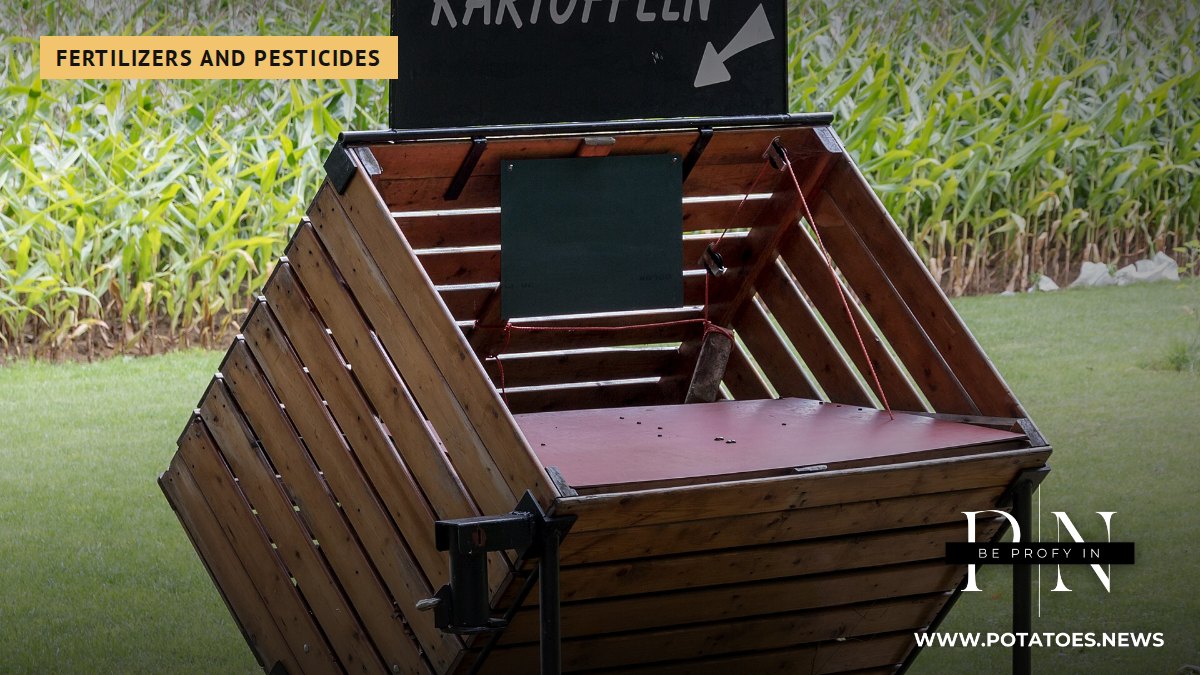
Photo: A wooden potato storage box (illustrative). Dietmar Rabich / Wikimedia Commons, CC BY-SA 4.0