Global: Dense Planting Lifts Baby Potato Yield to 65 t/ha in Dutch Trials
Wageningen trials, PotatoWorld guidance and a Florida spacing study show that plant density, stem number and variety decide how many tubers end up in the small baby potato grade.
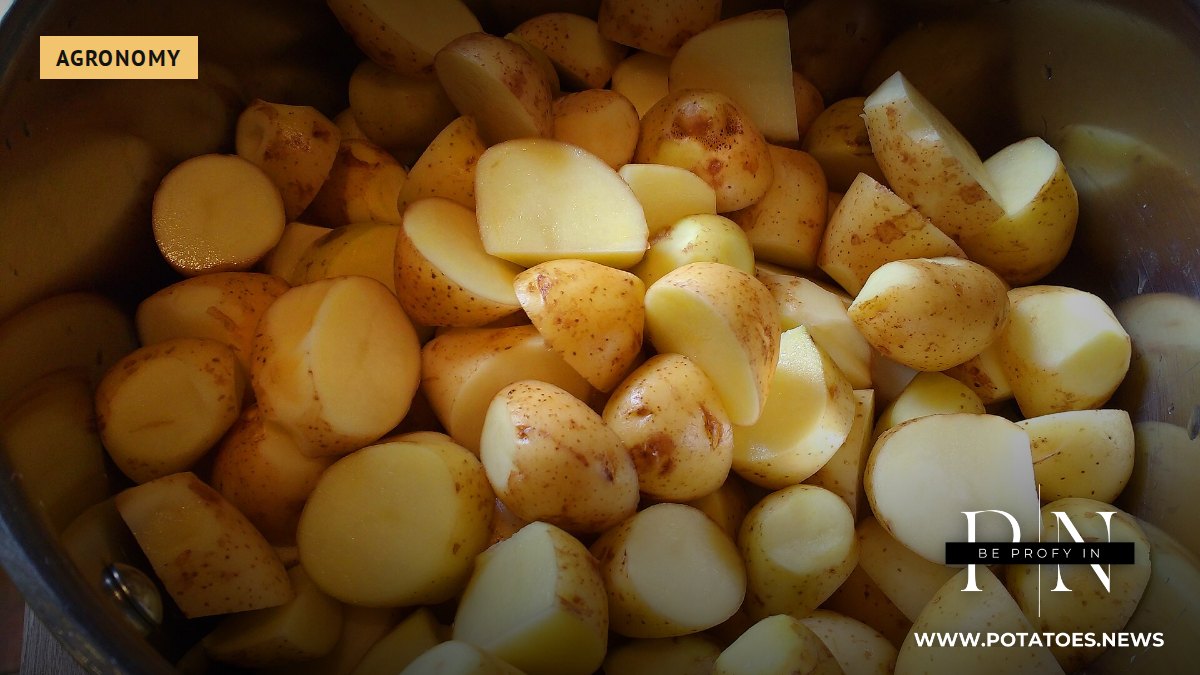
Baby potatoes are not a separate crop. They are ordinary potato plants that are grown so that most tubers stay small. The main tool is plant density. Research from the Netherlands and the United States shows how far growers can push it.
In a study published in Potato Research in 2021, Wageningen scientists Luuk van Dijk, Michiel de Vries, Willemien Lommen and Paul Struik transplanted hybrid potato seedlings at densities from 6.25 to 200 plants per square metre. On flat beds, total yield reached 107 tonnes per hectare. The yield of the 20–35 mm “baby baker” grade reached up to 65 tonnes per hectare. Large tubers above 50 mm never exceeded 10 tonnes per hectare. Higher density raised the total number of tubers per hectare but cut the number per plant, and the size distribution moved toward small tubers.
The same logic applies to crops grown from seed tubers. PotatoWorld explains that stems, not plants, set the tuber count. The number of stems rises from about 10 to 40 per square metre as the seed rate rises from 500 to 4,000 kg per hectare. A ware crop usually has around 16 stems per square metre, and a seed crop about 24. More stems give more tubers, but competition cuts yield per tuber faster, so tubers are smaller on average.
Weekdays. Unsubscribe in one click.
A three-year trial by the University of Florida (IFAS) measured the effect of in-row spacing. At 6-inch (15 cm) spacing, the yield of B-size tubers (1.5–1.89 inches) was 14%, 28% and 35% higher than at 8, 10 and 12 inches. In 2020, total yield was 371 cwt per acre at 6 inches, against 292 cwt per acre at 12 inches. The authors recommend 6 inches for B and C sizes. Variety also matters: in the trial, Natascha and Purple Majesty set more small tubers than Red LaSoda or Satina.
Uniformity is the hard part. Buyers of baby potatoes want tubers in a narrow grade, so a crop with many large tubers loses value. Harvest timing is the second risk. Small tubers are often lifted early, while the skin is still thin. Colorado State University (Sastry Jayanty) advises killing vines 14 to 21 days before harvest and checking skin set before lifting, because immature tubers skin and shrink more.
Why it matters
Baby potatoes usually sell at a premium per kilogram, but only if the grade is right. The data show that the grade is decided at planting: seed rate, stem number, spacing and variety. Growers who treat a baby potato field as a normal ware field with an early harvest will get mixed sizes and damaged skins.
The topic was raised by practitioners in the MAX messenger chat «КАРТОФЕЛЬ И Т.Д. (Potato etc.)», a community of more than 1,100 potato growers and industry specialists. Participants are not named. Join the discussion.
Photo: Baby potatoes before cooking (illustrative). Marek Ślusarczyk (Tupungato) Photo portfolio / Wikimedia Commons, CC BY 3.0