
Global: Curing at 10–15 °C for Up to Three Weeks Prepares Potatoes for Long Storage
Extension advice converges on a warm, humid curing phase after harvest. It heals wounds, lowers respiration and cuts the heavy weight loss of the first storage month.
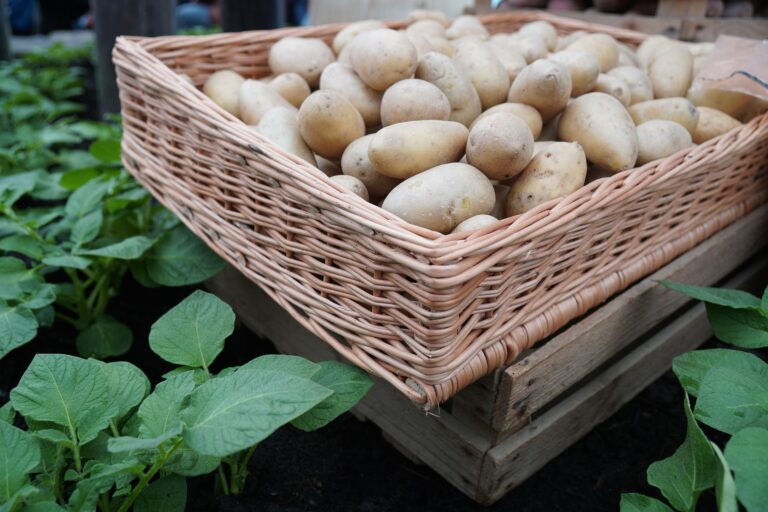
Freshly harvested potatoes carry cuts, scrapes and bruises. Before long storage, these wounds need to heal. The process is called curing. It takes place in the store during the first weeks after harvest.
Recommendations differ slightly, but they fall in a narrow band. Ryan Barrett, research and agronomy specialist with the PEI Potato Board in Canada, advised in Spud Smart on 17 September 2026 to hold tubers at 10 to 12 °C for at least 10 to 14 days. He called for high relative humidity and plenty of air flow.
A Spud Smart report from January 2025 cited two further ranges. One source recommended 95% humidity and 11 to 13 °C during the first two to three weeks. Another said curing at 13 to 14 °C promotes cell repair and reduces respiration losses. The same report noted that respiration is lowest at 7 to 10 °C.
Weekdays. Unsubscribe in one click.
For early-crop potatoes, the University of California, Davis, gives a warmer regime. Its fact sheet by Trevor Suslow and Ron Voss recommends 8 days at 15 °C and 95% humidity. This allows storage for up to 5 months at 4 °C.
Most weight loss comes early
Curing matters because losses peak at the start. University of Idaho researchers measured weight loss in commercial stores with sample bags, Spud Smart reported in 2017. Between 55 and 70 per cent of total loss occurred in the first 30 days. About 3% of weight was lost in the first month. Total loss after five months was about 5%.
Start with the right pulp temperature
Curing works best when tubers enter the store in good condition. Barrett recommends harvesting at pulp temperatures between 10 and 16 °C. Warm tubers are prone to soft rot, Pythium leak and pink rot. They also lose more weight while they cool.
Cooling capacity can be a bottleneck. According to the 2025 report, potatoes entering at 21 °C can take more than two weeks to reach target temperature in an underperforming store. Mature tubers need less curing time than immature ones.
Why it matters
A tonne of potatoes lost to shrink is a tonne that cannot be sold. With 3% lost in the first month, a two-week curing phase done well protects much of the stored value. Healed wounds also give storage pathogens fewer entry points later in the season.
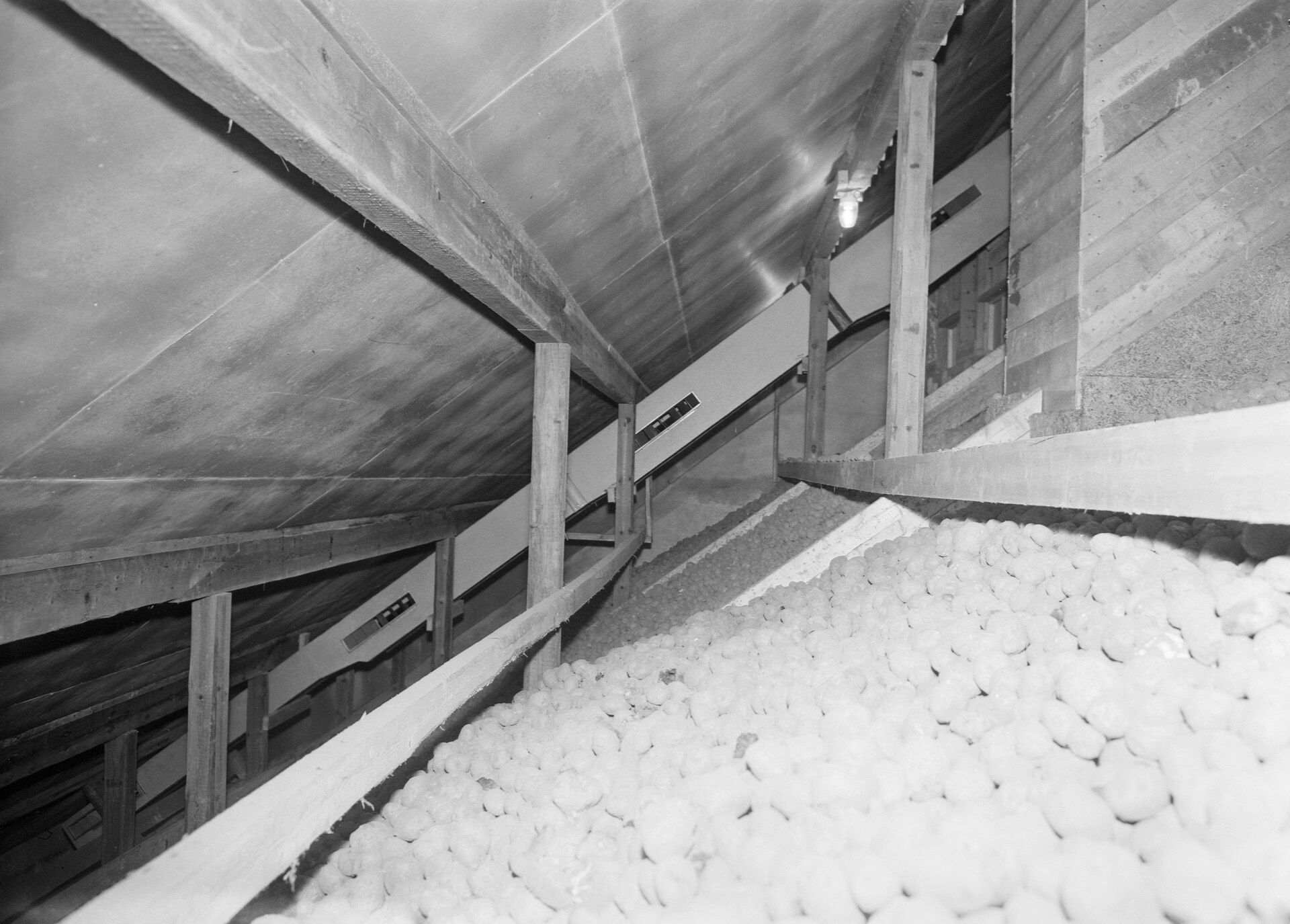
Photo: A potato store in Ylöjärvi, Finland, 1962 (illustrative). Erkki Voutilainen / Wikimedia Commons, CC BY 4.0