Global: Clod-Free Ridges Cut Severe Potato Damage by 30–50% and Lift Harvest Rates up to 40%
Clods that end up on the harvester and in the store are mostly made at spring cultivation on wet soil. UK, Irish, Belgian and Russian research shows what they cost at harvest and why machines struggle to remove them.
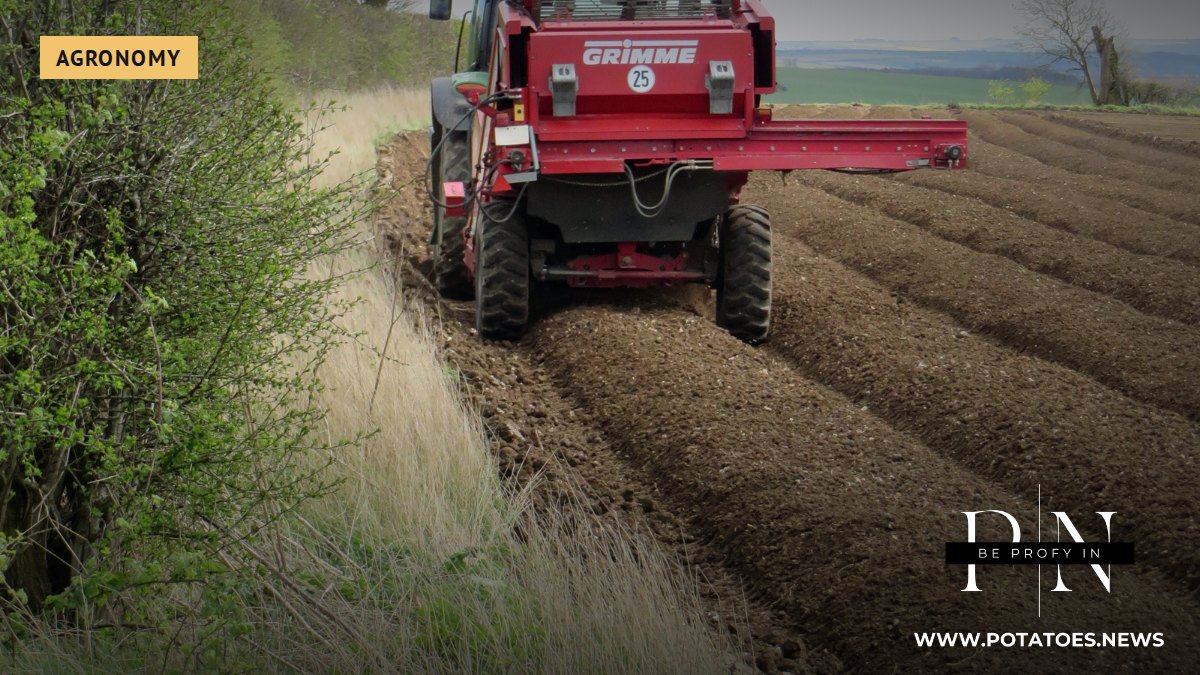
Clods in a potato harvest are usually made in spring. A research review for the British Potato Council (Stalham et al., 2005) states that compaction is often caused by working soil when it is at or above its plastic limit, that is, too wet. The same review says compaction may increase bruising because of the clods at harvest, and because the harvester webs must shake harder to separate soil from tubers.
The benefit of a clean ridge is large. The review cites earlier work (Whitney and McRae, 1992) that found destoning gave a 30–50% decrease in severe tuber damage at harvest and up to a 40% increase in the harvest rate of work. The Irish advisory service Teagasc reaches the same conclusion without figures: removing stones and clods from the ridges “substantially reduces tuber damage” and “greatly increases harvester output”. Teagasc also warns that soils must be dry for good separation.
For yield, deeper is not better. In 16 AHDB trials in 2011–2014, destoning at 22–28 cm gave 55.3 t/ha, against 53.4 t/ha at the commercial depth of 30–38 cm and 50.5 t/ha when growers went 3–5 cm deeper. Lighter tillage has a cost too: in the UK Potato-LITE project, harvest in 2023 was 14–18% slower on the low-intensity systems, according to CPM magazine.
Weekdays. Unsubscribe in one click.
Once a clod is made, the machine has a hard job. Russian engineers at the VIM research centre found that soil impurities can reach 46–50% of the harvested heap. A clod needed a force of about 243.6 N to break, while the maximum allowable force on a tuber was 18 N. So a web that breaks clods can also damage potatoes.
Soil that is not separated leaves the field. In Belgium, Ruysschaert and colleagues measured an average of 3.2 t of soil lost per hectare at potato harvest, with a range of 0.2 to 21.4 t/ha. Loose soil and clods caused most of the variation. At the buyer, the USDA processing standard allows only 2% by weight for loose sprouts, dirt and foreign material.
Optical sorting can help, but it is not free capacity. A 2026 study from Inner Mongolia Agricultural University reached 98.3% sorting accuracy for stones and clods, but on a test conveyor running at 0.2 m/s.
Why it matters
Every clod that reaches the store must be carried, sorted and paid for. The research points to one cheap control point: the day the first tractor enters the field in spring. Waiting for drier soil costs days, but can save harvester speed, sorting labour and bruised tubers later.
The topic was raised by practitioners in the MAX messenger chat «КАРТОФЕЛЬ И Т.Д. (Potato etc.)», a community of more than 1,100 potato growers and industry specialists. Participants are not named. Join the discussion.
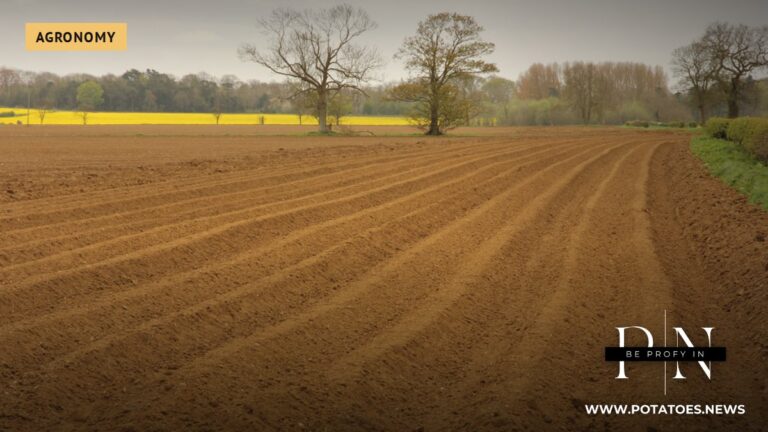
Photo: Destoning potato beds before planting near Saxby All Saints, England (illustrative). David Wright / Wikimedia Commons, CC BY-SA 2.0