Global: Boscalid Control of Early Blight Fell From 70–75% to 30–40% in Swedish Field Trials
Field and laboratory work in Sweden shows how fast Alternaria solani can escape SDHI fungicides. In Wisconsin, specialists start early blight sprays at 300 P-days and report strong strobilurin resistance.
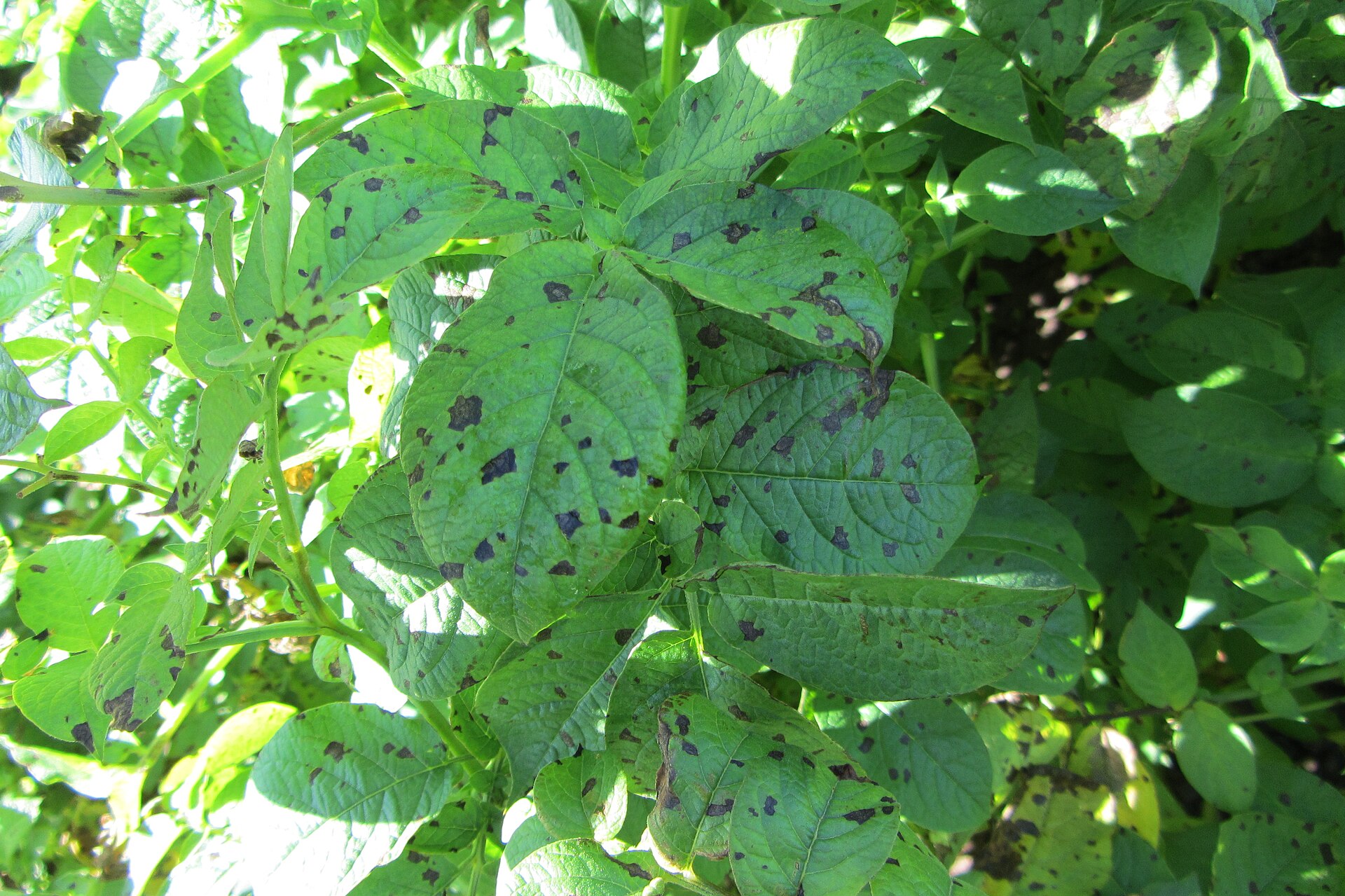
Early blight fungicides can lose their effect within a few seasons. A Swedish study showed this clearly for boscalid, an SDHI fungicide. The paper appeared in the European Journal of Plant Pathology on 22 October 2021.
Field trials ran at Nymö from 2014 to 2017. In 2014, boscalid controlled early blight with an efficacy of around 70–75%. After 2015 there was a clear drop, down to 30–40%, the authors wrote.
Laboratory tests explained the drop. In 2014, the SdhC-H134R mutation was found at several sites, but at a low frequency. By 2017, most samples carried either SdhB-H278Y or SdhC-H134R. Wild-type isolates were highly sensitive, with EC50 values below 1 µg/mL. Mutated isolates had EC50 values above 100 µg/mL.
Weekdays. Unsubscribe in one click.
Strobilurins were already weak. About 90% of the Swedish population carried the F129L substitution, which reduces sensitivity to QoI fungicides. Reduced field efficacy of boscalid has also been reported in several other countries, the authors noted.
Timing sprays with P-days
In the United States, the University of Wisconsin uses a heat-unit model called potato physiological days, or P-days. A value of 300 or more marks the threshold for early blight risk. It triggers the first preventive fungicide application.
By 20 June 2026, early plantings at two Wisconsin sites had passed that mark. Spring Green reached 386 P-days and Arlington 377, according to the extension vegetable pathologist Amanda Gevens. For late blight, the same service uses a disease severity value of 18 or more as the spray trigger.
The Wisconsin update also warns of substantial resistance to QoI fungicides, including azoxystrobin, in the local Alternaria population. Its product list includes SDHI and triazole options, such as boscalid, fluopyram and difenoconazole.
Why it matters
Early blight is often treated as a minor, late-season disease. Yet the Swedish data show that a single fungicide group can lose half of its field effect within about three seasons. When both QoI and SDHI groups weaken, few tools remain.
Growers should start sprays by a risk model, not by the calendar. They should also alternate modes of action and use mixtures with a partner from a different group. A resistance test of the local Alternaria population helps to choose that partner.
Prevention & control · Editorial note
Early blight (Alternaria solani): what growers can do
- Prevention: Balanced nitrogen, crop rotation, removal of infected haulm and volunteers.
- Monitoring: Start sprays by a risk model, such as 300 P-days, not by the calendar.
- Chemical protection: Difenoconazole (FRAC 3), boscalid (FRAC 7), azoxystrobin (FRAC 11) and copper (FRAC M1). Check the national register of your country.
- Resistance management: Use groups 11 and 7 no more than two or three times per season, only in mixtures.
This note is provided by the potatoes.news editorial team for information only. It is not a recommendation of any company and is not mandatory. Use only plant protection products authorised in your country and follow the label. Product names and registrations differ between countries; consult a local agronomist.
Photo: Early blight (Alternaria solani) on a potato leaf (illustrative). Linnea Stridh / Wikimedia Commons, CC BY-SA 4.0