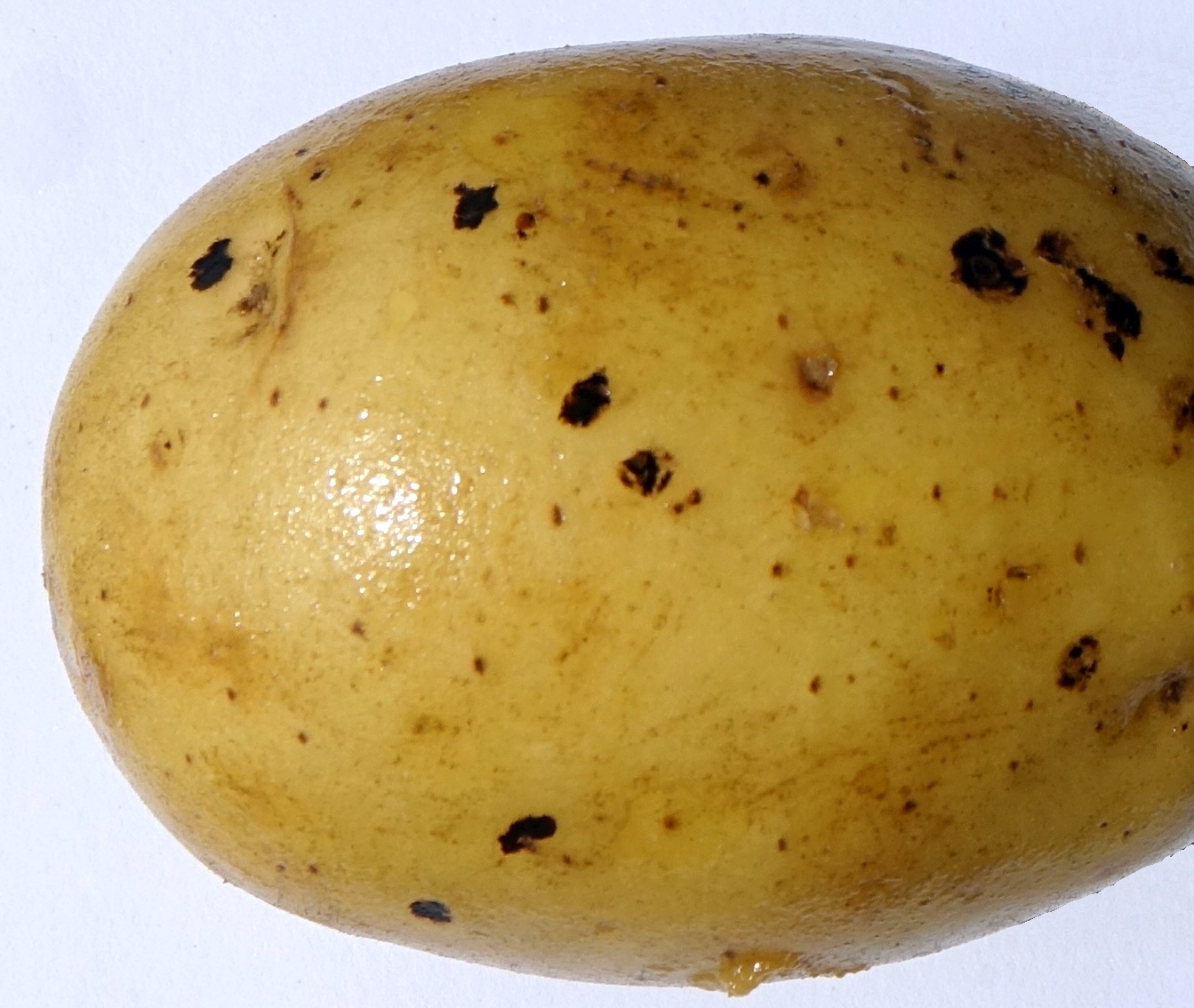
Black scurf is the name for the hard black sclerotia that Rhizoctonia solani leaves on potato skins. They do not rot the tuber. But they spoil the look of ware potatoes and carry the fungus into the next crop through seed.
The key period is the gap between haulm destruction and harvest. A Wageningen doctoral study by G. Dijst in 1989 examined this gap. It found that haulm destruction stimulates black scurf formation, because the tuber surface changes as the tuber matures faster. These changes probably start within 3 to 6 days, the study said.
The method of haulm destruction mattered more than the variety or the level of seed infestation. Haulm pulling stimulated black scurf less than chemical haulm destruction or cutting the shoots. Cutting the roots as well moderated black scurf formation. It also extended the period in which tubers could be lifted with a firm skin and limited black scurf.
Extension advice
Current extension advice follows the same line. Sclerotia formation increases as the interval between vine kill and harvest is lengthened, according to a University of Maine bulletin reviewed in 2020. Cornell University advises harvesting soon after vines are killed. Its fact sheet, updated in April 2021, notes that sclerotia begin to form on tubers as vines senesce.
Seed is the main source of infection. Tuber inoculum is more important than soil inoculum, the Maine bulletin says. It gives a simple rule: if more than 20 sclerotia are visible on one side of washed tubers, consider a different seed source. It also advises covering seed with no more than two inches of soil, about 5 cm, to speed emergence. At a minimum, potatoes should not follow potatoes on the same land in two consecutive seasons.
Cornell adds that damage is worst in cool, wet soils, especially when the weather is cold and wet in the weeks after planting.
Why it matters
Growers wait after haulm kill so that the skin sets and resists harvest damage. But every extra day in the soil gives the fungus more time to form sclerotia. The two goals pull in opposite directions.
The practical answer is to plan both together. Start with clean seed and a sensible rotation. Choose a haulm destruction method that slows scurf. Then lift as soon as skins are firm, rather than leaving tubers in the ground longer than needed. This matters most for seed crops and for washed ware potatoes, where appearance sets the price.
Photo: Black scurf (Rhizoctonia solani) on potato tubers (illustrative). Jerzy Opioła / Wikimedia Commons, CC BY-SA 4.0