Global: Biofumigation Control of Potato Cyst Nematodes Ranged From 0% to 95% in Trials
An AHDB guide and Oregon State University Extension show that brassica cover crops can suppress potato cyst nematodes, but only with high biomass, flowering-stage chopping and fast incorporation.
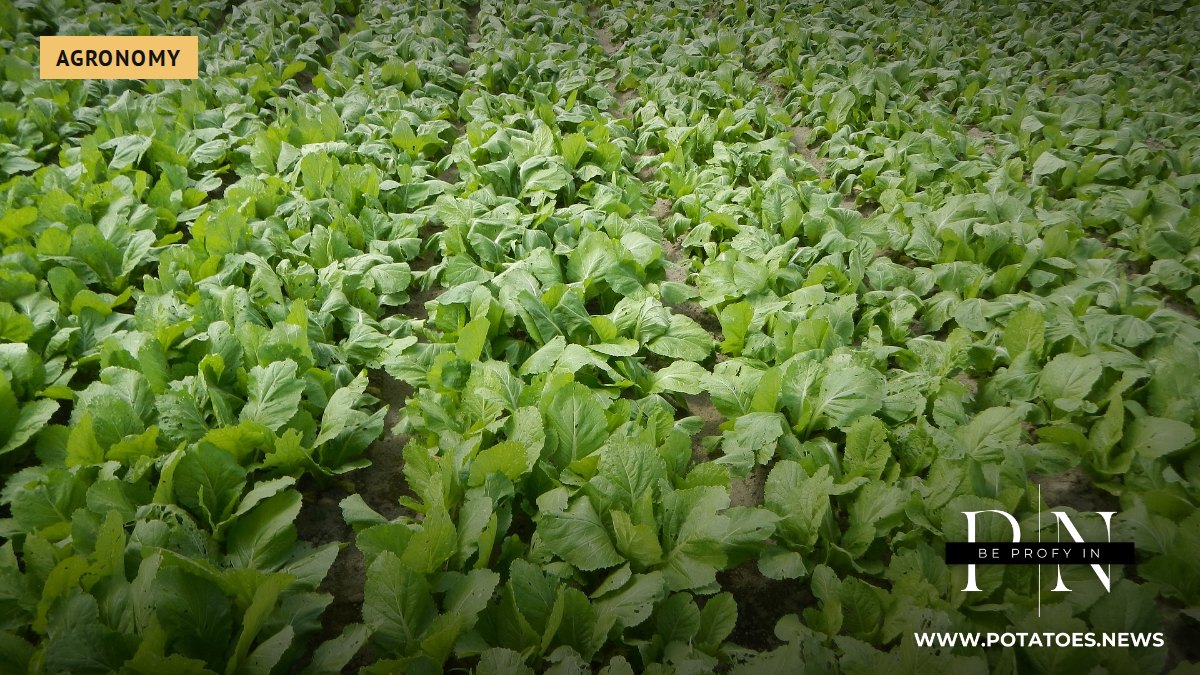
Biofumigation uses brassica cover crops, such as Indian mustard, rocket and oil radish, to suppress soil pests before potatoes. The plants contain glucosinolates. When the green crop is chopped and mixed into moist soil, these break down into isothiocyanates, compounds that are toxic to nematodes and some soil-borne fungi. The idea is simple, but field results vary widely.
A 2019 AHDB guide by Matthew Back of Harper Adams University and William Watts of AHDB lists trial results against potato cyst nematode (PCN). Indian mustard gave 15–95% efficacy in one set of trials and 23–37% in another. Rocket gave 30–90% and oil radish 65–95%. White mustard gave 41%, 0% and 16% in three trials. In short, the same crop can work very well or hardly at all.
The guide explains that most of the result depends on management. It sets a minimum target of 50 tonnes per hectare of biomass for summer and spring systems, with crops 1.2–2.0 metres tall. Indian mustard can reach 40–70 t/ha, rocket and oil radish 30–40 t/ha. To get there, the crop needs 100–150 kg/ha of nitrogen and 25–50 kg/ha of sulphate. Summer crops are drilled between mid-July and mid-August and grow for 8–14 weeks. The crop is macerated at early to mid-flowering and incorporated 25–35 cm deep within 20–30 seconds of chopping, into soil at 25–75% of field capacity. Potatoes follow at least 2 weeks later.
Weekdays. Unsubscribe in one click.
Oregon State University Extension gives the same key rules. It says terminating mustard at early flowering gives up to 40–60% higher pest suppression than later termination, that a delay of just four days in incorporation can significantly reduce effectiveness, and that irrigating before or right after incorporation raises isothiocyanate levels. Its greenhouse examples also used a two-week gap before planting.
The cost is significant. The AHDB guide estimates seed at £60–100 per hectare. A winter system costs about £270 per hectare, with 10–30% efficacy expected. Spring and summer systems cost £400–675 per hectare, with 40–70% efficacy expected.
Why it matters
Biofumigation is not a like-for-like replacement for chemical nematicides. It gives partial control, and only when biomass, timing and soil moisture are right. It works best as one part of a PCN plan with resistant varieties and long rotations. Growers who sow a cheap mustard late and plough it in slowly should not expect much effect on nematode numbers.
Photo: Mustard field (illustrative). Judgefloro / Wikimedia Commons, CC BY-SA 4.0