Global: Bacterial Soft Rot Accelerates Above 21°C, and a Water Film Can Start It in Store
Soft rot bacteria live on most potato crops and wait for warmth, wounds and a lack of oxygen. Extension guidance explains which temperatures and handling steps turn a small problem into a wet store.
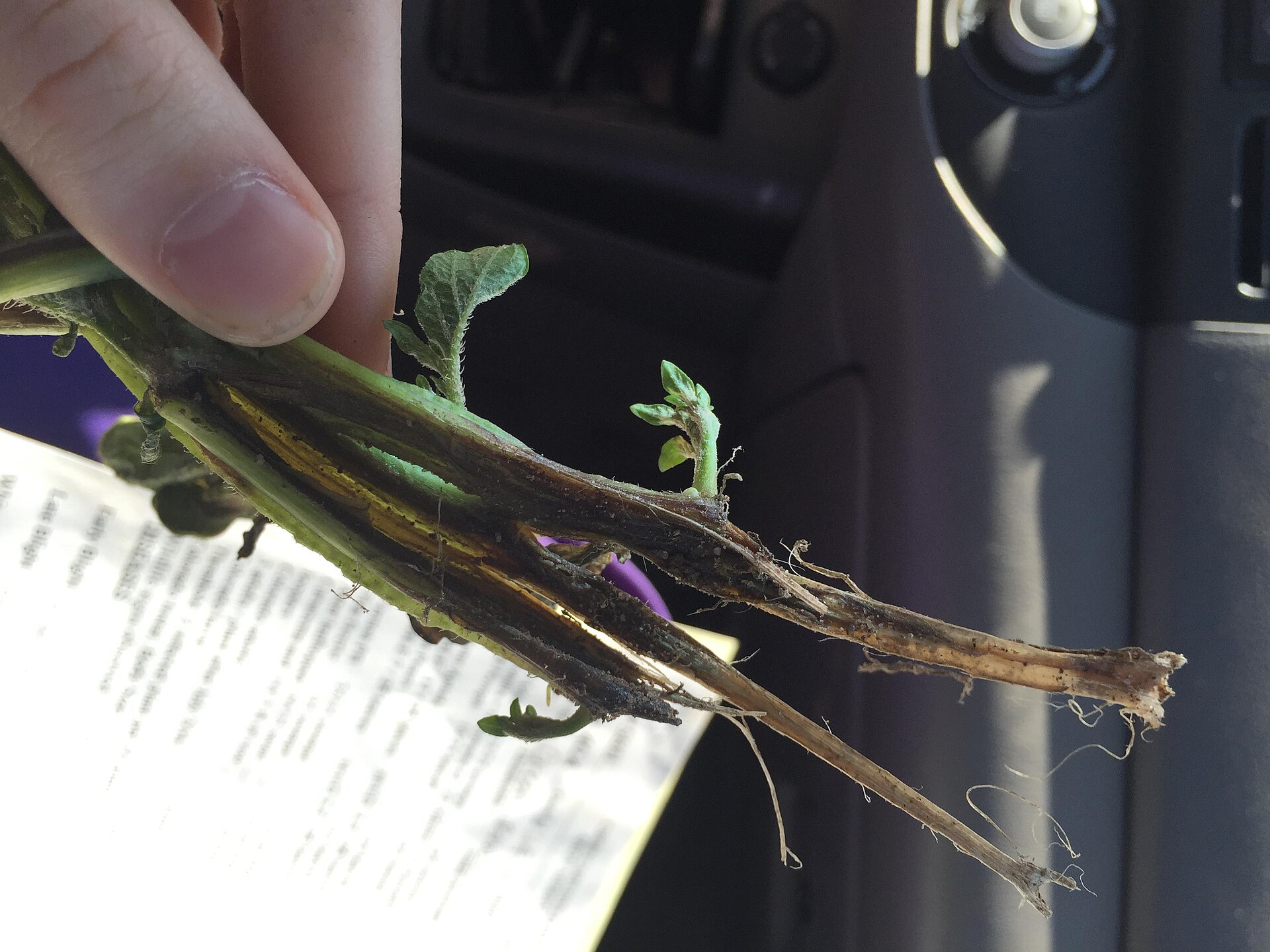
Bacterial soft rot is a fast, wet decay of potato tubers. It is caused by Pectobacterium bacteria and related species. The same bacteria cause blackleg on stems in the field. In store, a few rotting tubers can leak onto healthy ones and create a wet pocket in the pile.
Temperature is the main driver. Decay can occur between 45°F and 90°F, or 7°C to 32°C, according to University of Maine Cooperative Extension. Rot increases dramatically above 70°F, or 21°C. The bacterium grows best between 70°F and 80°F, or 21–27°C. Temperatures below 50°F, or 10°C, retard decay. The Pacific Northwest Plant Disease Management Handbook, revised in March 2026, also places soft rot conditions at 70°F to 80°F.
Water and oxygen
Free water is the second driver. In storage, a film of water induces anaerobic conditions in the tuber, according to the Maine bulletin. Low oxygen weakens tuber defences and lets the bacteria multiply. Soft rot is favoured by immaturity, wounding, other diseases, warm temperatures, free water and low oxygen.
Weekdays. Unsubscribe in one click.
The Maine bulletin also warns that tubers harvested above 80°F, or 27°C, can be predisposed to soft rot. It advises leaving potatoes at least seven days after vines are totally dead. This encourages skin set and reduces bruising.
Wound healing and washing
The Pacific Northwest handbook recommends 90–95% relative humidity for wound healing. Humidity must not turn into free water on the tubers. Good airflow through the pile removes surface moisture after loading.
For washing and grading lines, the handbook lists 75 ppm available chlorine as a sodium hypochlorite wash rate. It also describes seed conditioning at 50–55°F, or 10–13°C, for 10 to 14 days before planting.
Why it matters
Crops that go into store after a hot summer and wet harvest weeks face high soft rot risk. Late September lifting in the Northern hemisphere often brings exactly these conditions. Wet, warm tubers loaded without drying air can start rotting within days.
The response is practical. Cool the crop below 10°C as soon as wounds have healed. Dry wet tubers quickly with airflow. Remove rotting pockets early and keep water off the pile. Store managers should inspect the top and the base of the pile often in the first weeks.
Photo: Blackleg symptoms caused by Dickeya solani on a potato stem (illustrative). Jspychalla / Wikimedia Commons, CC BY-SA 4.0