Global: 99% Hail Defoliation at Early Bulking Left Only 38% of Potato Yield in WSU Trials
Simulated hail trials in Washington and Colorado show that potato yield loss depends on both defoliation level and growth stage. Total loss of leaves at early bulking cut yield by up to 62%.
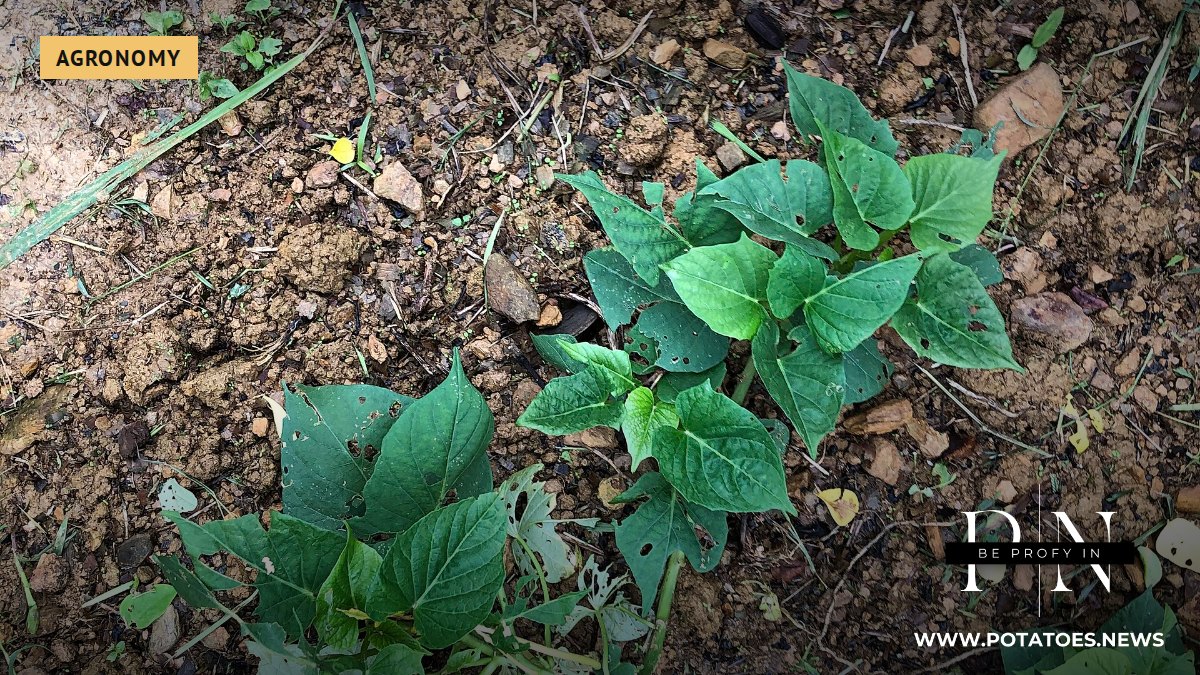
Hail can strip a potato field in minutes. How much yield is then lost depends on two things: how much of the leaf area is destroyed, and when. Two US field studies measured this with simulated hail.
At Washington State University, M. J. Pavek and colleagues removed 33%, 66% or 99% of the canopy and compared the plots with an untreated control. They used Russet Norkotah TX278, a medium-maturing variety, and Ranger Russet, a late variety. Damage was applied at tuber initiation, early bulking or late bulking in the Columbia Basin. The results were published in the American Journal of Potato Research in 2018.
- With 99% defoliation at early bulking, Russet Norkotah TX278 kept only 38% of the control yield and 14% of the gross return.
- Ranger Russet kept 51% of the yield and 30% of the gross return after the same damage.
The authors say insurance adjusters should take into account both growth stage and defoliation level.
Weekdays. Unsubscribe in one click.
In Colorado, Samuel Essah and Mark Zarnstorff of Colorado State University’s San Luis Valley Research Center ran a similar test. They presented it at the 2017 ASA, CSSA and SSSA annual meetings.
- In the early variety Russet Norkotah TX296, 99% damage cut total yield by 42% at tuber initiation and by 36% at early bulking.
- In the late variety Russet Nugget, 33% damage at late bulking did not affect total or marketable yield.
- In Russet Nugget, 99% damage at tuber initiation cut total and marketable yield by 33%.
Why it matters
Both studies point in the same direction. Heavy hail during tuber initiation and early bulking is the most costly. Light damage late in the season often has little effect, especially in late varieties that still have time to recover leaf area.
Hail and other summer storms have hit potato regions in several countries in recent seasons. These data help growers decide whether to keep a damaged crop and help insurers set fair loss estimates. The numbers come from russet varieties in irrigated US conditions, so results for other varieties and climates may differ.
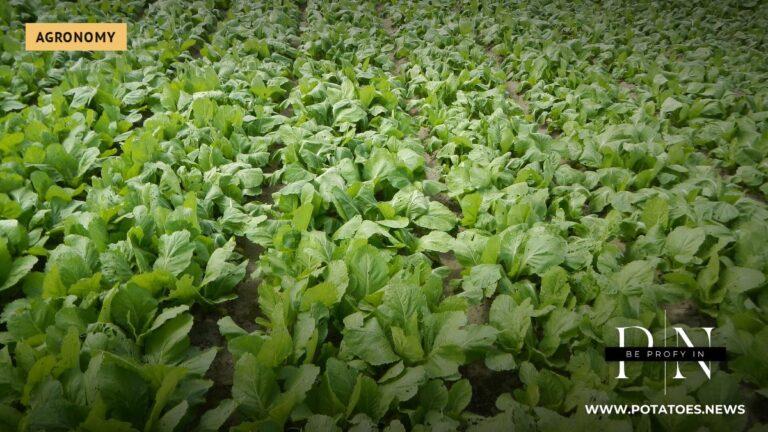
Photo: Potato leaves in a field (illustrative). Battlesnake1 / Wikimedia Commons, CC0