GB Potatoes: Four Years After AHDB — What’s Changed and What’s Next
Four years ago, a new organisation — GB Potatoes — emerged to fill the gap left by the disbanded AHDB Potatoes levy board. Today it reports growing membership, is launching an unusual parametric insurance scheme against excess rainfall, and names the sector's biggest strategic risk not as Brexit or pests, but as water access.
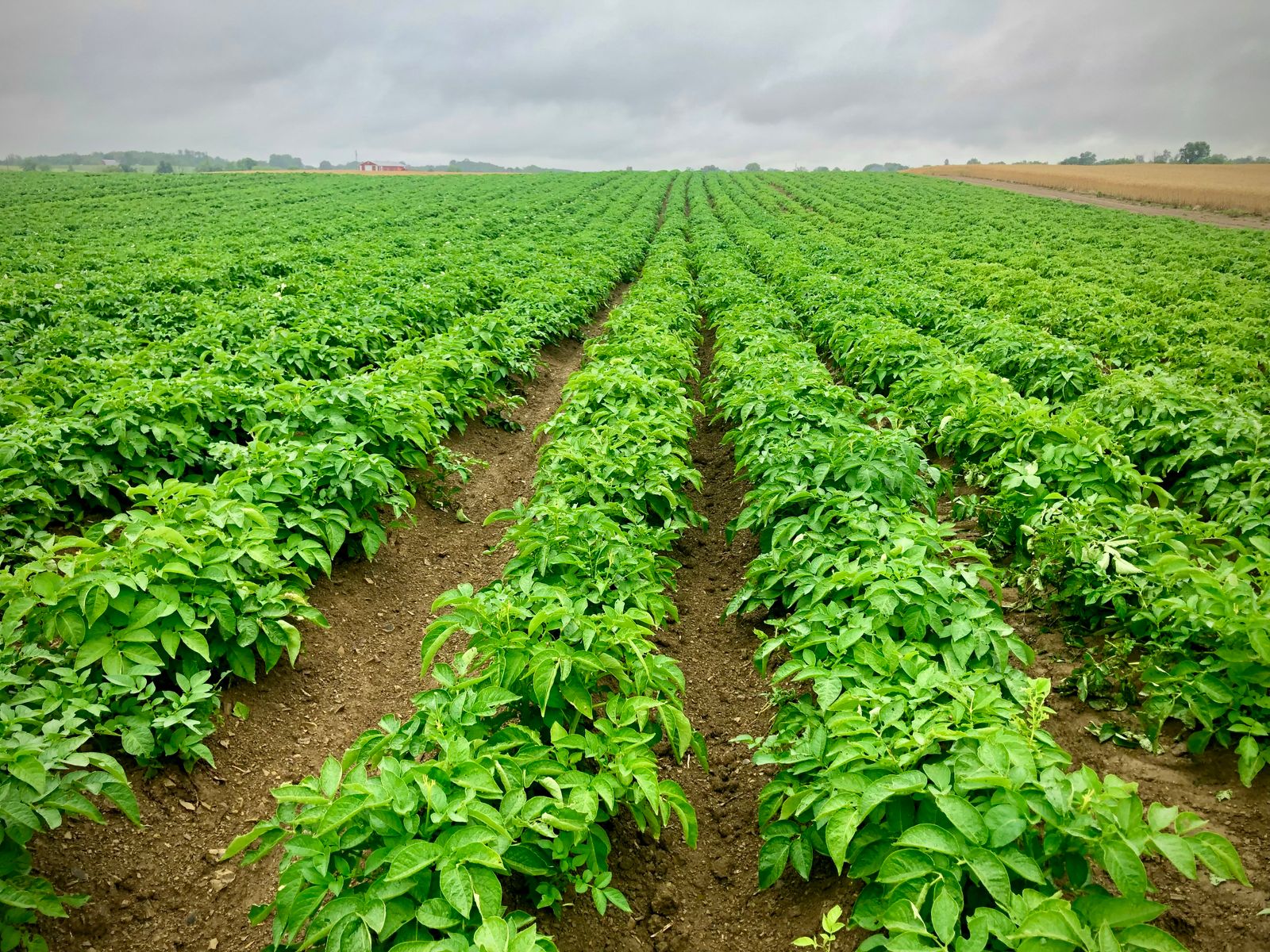
When the AHDB Potatoes levy board — funded by a compulsory levy on growers — ceased to exist in 2021, Britain’s potato industry was left without a unified voice in dealings with government. Filling that gap fell to a new organisation, GB Potatoes, founded in May 2022 by a group of growers [source 1, confirmed also by source 2]. Four years on, its chief executive Scott Walker describes the starting point this way: the demise of AHDB Potatoes left a major gap in research and industry representation, and without GB Potatoes stepping in, there would have been no organisation solely focused on representing potato growers and the wider industry [source 1].
Membership and money. According to Farmers Weekly, GB Potatoes has strong support across the supply chain — particularly among processors and packers — and its overall membership continues to grow. At the same time, the organisation itself acknowledges there is still considerable room to grow and is actively encouraging more growers to join. Grower membership is typically priced at £10/ha of potatoes grown; with production costs of around £10,000/ha, this represents roughly 0.1% of production costs. A promotional rate is currently in place for new grower members — equivalent to £15/month for smaller growers and £50/month for larger businesses [source 1; figures from a single source — [verify]].
Farmers Weekly cites an SRUC (Scotland’s Rural College) report to put a figure on the industry’s economic weight: a farmgate value of £1.5bn and a retail value of £4.5bn for the UK potato sector, making potatoes the second most valuable crop in the country after wheat. This is a reference to the SRUC report as cited within the Farmers Weekly piece; I have not verified the underlying report directly — [verify], single source.
Weekdays. Unsubscribe in one click.
A grower’s perspective. Euan Grewar, a farmer near Dundee, Scotland, whose family has farmed potatoes since the early 1900s, grows high-grade seed potatoes — more than 30 varieties — on the Black Isle near Inverness, as well as commercial seed and ware potatoes in Angus and Perthshire. He says enormous capital and risk are tied up in production — land, machinery, the crop itself — and that an organisation like GB Potatoes provides an essential link between growers, researchers and policymakers [source 1].
A new kind of insurance. One of GB Potatoes’ projects is a parametric insurance scheme for excess rainfall: unlike traditional crop insurance, which requires growers to prove losses after the fact, payouts under this scheme are triggered automatically once pre-set weather thresholds are met (based on local weather modelling and historical data). The focus is specifically on excess rainfall rather than drought — Walker notes that growers now have wider access to irrigation, whereas heavy rain is far harder to manage and can devastate harvest and crop quality. Grewar offers an example: three years ago during harvest, his farm experienced three separate rainfall events exceeding 100mm — in his assessment, under such a scheme that would likely have triggered a claim [source 1, single anecdotal case].
Water as the strategic risk. GB Potatoes names water access as the sector’s single biggest strategic challenge — ranking it above retaining access to crop protection products or changes in market access. The organisation is calling on government to recognise water as food-production infrastructure and to support investment in on-farm reservoirs, irrigation and collaborative water-management schemes [source 1].
Seed potato exports. Since Brexit, the sector has lost access to the EU market, reducing demand for high-grade Scottish seed potatoes; Egypt has become an alternative market, though at the cost of higher logistics expenses given the distance. The organisation is hopeful that a recently agreed UK–EU sanitary and phytosanitary (SPS) framework will eventually help restore access to European markets, though Walker estimates that even once access is secured, trade volumes could take three to four years to recover [source 1].
Crop protection and science. GB Potatoes has worked with government and the Health and Safety Executive on efforts to retain access to mancozeb — the appeal was unsuccessful, but Walker says the process helped strengthen the industry’s relationship with regulators. The organisation also runs blight-monitoring programmes and supports research into free-living nematodes amid the loss of certain chemistries (including Vydate) — Grewar has already begun planting a radish cover crop on his own farm to suppress nematodes [source 1].
Talent pipeline. The Kickstart programme, according to Farmers Weekly, has secured funding for 24 PhD positions across the UK working on key industry challenges — [verify], single source.
Consumption trends. As rice and pasta gain popularity, fresh potato consumption in Britain is declining, while processed products (crisps, fries) hold their position; GB Potatoes is exploring promotional campaigns to encourage consumption [source 1].
Why it matters: GB Potatoes’ story is a telling case study in how an industry rebuilds a lobbying structure “from scratch” after the dismantling of a government-regulated, levy-funded board — and it signals that the top concern for UK potato growers today is not Brexit (though it remains a background factor for seed exports) but infrastructure risk, above all water.
Sources
- Emma Gillbard, “GB Potatoes at four: What are the challenges and priorities?”, Farmers Weekly, 01.09.2026 — https://www.fwi.co.uk/arable/potatoes/how-gb-potatoes-gives-potato-industry-the-voice-it-needs (primary source, read in full)
- “GB Potatoes Joins Europatat: A New Era of Collaboration for the U.K. Potato Sector,” Potatoes News, 18.10.2024 — https://potatoes.news/gb-potatoes-joins-europatat-a-new-era-of-collaboration-for-the-u-k-potato-sector/ (independent confirmation of founding date, May 2022; background on prior GB Potatoes coverage on the site)
- Aggregator repost, Potato News Today (no original reporting) — https://www.potatonewstoday.com/2026/09/01/gb-potatoes-at-four-what-are-the-challenges-and-priorities/