
From a Smartphone Snapshot to a Diagnosis: Argentina’s PapaDX Rewrites the Rules of Potato Health with AI
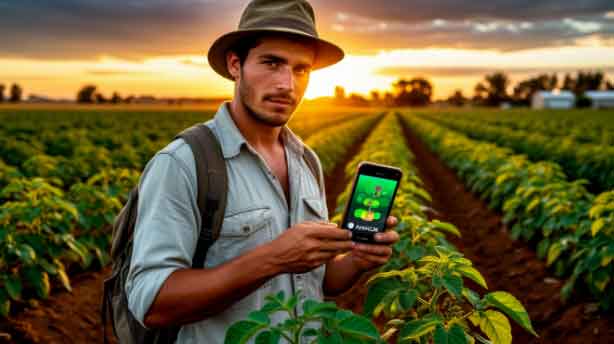
In a quiet but powerful revolution from the pampas of Mar‑del‑Plata, a third‑generation farmer named Santiago Cardoso and his team at Aconcagua Digital have unleashed PapaDX—an AI‑driven mobile sidekick that turns any iPhone into a pocket plant pathologist. Snap a photo of a suspicious leaf or tuber, and within seconds, the app scans for a rogue’s gallery of potato enemies: from the dreaded late blight (Phytophthora infestans) and early blight (Alternaria) to rhizoctonia, common scab, verticillium wilt, fusarium, pink rot, and even cryptic viral signatures. But PapaDX does more than diagnose—it watches the sky. Integrated weather alerts warn growers of imminent disease‑friendly conditions, bridging the gap between reactive spraying and proactive protection. Available now in Spanish, English, Portuguese, and Hindi, this digital agronomist is already transcending borders, though its creators humbly insist: it is a compass, not a map—a guide that complements, never replaces, the trained eye of a professional agronomist or the certainty of a lab test.
Why it matters:
Latin America rarely takes center stage in the global conversation about agtech and plant health—but PapaDX changes that narrative with a single, compelling premise: world‑class AI doesn’t require a supercomputer; it fits in your pocket. For potato growers in Argentina, Brazil, India, and beyond, this means democratized diagnostics—faster decisions, fewer wasted sprays, and healthier crops at a fraction of the usual cost. The integration of real‑time weather data with pathology models is particularly timely as climate volatility redefines disease calendars everywhere. While still in its early days, PapaDX signals a broader shift: the future of crop protection lies not in heavier machinery, but in smarter algorithms. If this tiny Argentine app gains traction, it could become the unexpected standard‑bearer for accessible, intelligent agriculture across the Global South—and a wake‑up call for established players to rethink what “high‑tech” really means.