Finland: Starch Potato Area Jumps to 6,571 Hectares as Total Area Returns Above 20,000
Finland grew 546,000 tonnes of potatoes in 2025. In 2026 the area rose back above 20,000 hectares, driven by starch potatoes, and Luke expects more than 620 million kg.
Finland harvested 546,000 tonnes of potatoes in 2025, 1% less than in 2024, according to provisional data from Natural Resources Institute Finland (Luke). Eurostat lists 551,020 tonnes from 18,700 hectares, or 29.5 tonnes per hectare.
Area returns in 2026
The potato area has fallen for two decades. In 2005, Finnish farms planted 28,900 hectares, according to Eurostat. By 2023, the area was only 16,500 hectares. In 2026, it rose again to 20,025 hectares, according to Finnish Food Authority data published by the seed company Myllymäen Peruna.
Starch potatoes drive the change. They cover 6,571 hectares in 2026. In 2024, farmers’ union MTK counted 4,840 hectares. Varieties such as Euroresa, Allstar and Kuras added the most area. Food potatoes cover 8,205 hectares in 2026, processing potatoes 2,884 hectares, certified seed 1,148 hectares and early potatoes 674 hectares.
Weekdays. Unsubscribe in one click.
Strong regional focus
MTK data show that production is concentrated on the west coast. Ostrobothnia (Pohjanmaa) grows about two thirds of food potatoes and 62% of processing potatoes. Satakunta grows 42% of starch potatoes. Southwest Finland (Varsinais-Suomi) produces about three quarters of early potatoes. North Ostrobothnia produces 70% of certified seed potatoes.
Self-sufficient market
Finland covers its own demand. MTK says imports and exports are usually only 2–3% of the market. Finns eat 50–55 kg of potatoes per person each year. Yields have improved: Eurostat shows about 25.7 tonnes per hectare in 2005 and 30–31 tonnes in 2020, 2023 and 2024.
For 2026, Luke said on 25 September that the harvest outlook was good, at more than 620 million kg. This is about one tenth above average. Luke also warned that rain during lifting could still change the final volume and quality.
Why it matters
Finland is a closed market where domestic supply and demand are close to balance. The rise in starch area shows that industrial demand is now the main growth driver, not table potatoes. This makes the starch factories and their contract prices more important for farm income.
The strong regional focus also creates risk. Heavy rain in Ostrobothnia or Satakunta at harvest can affect a large share of the national crop at once.
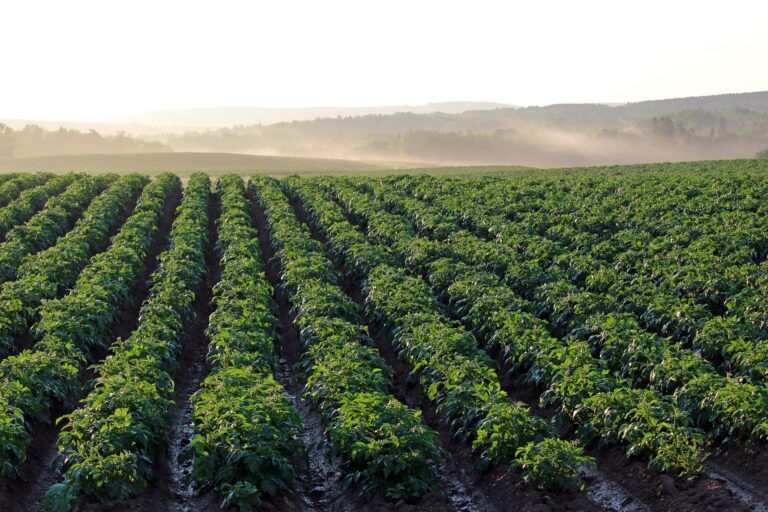
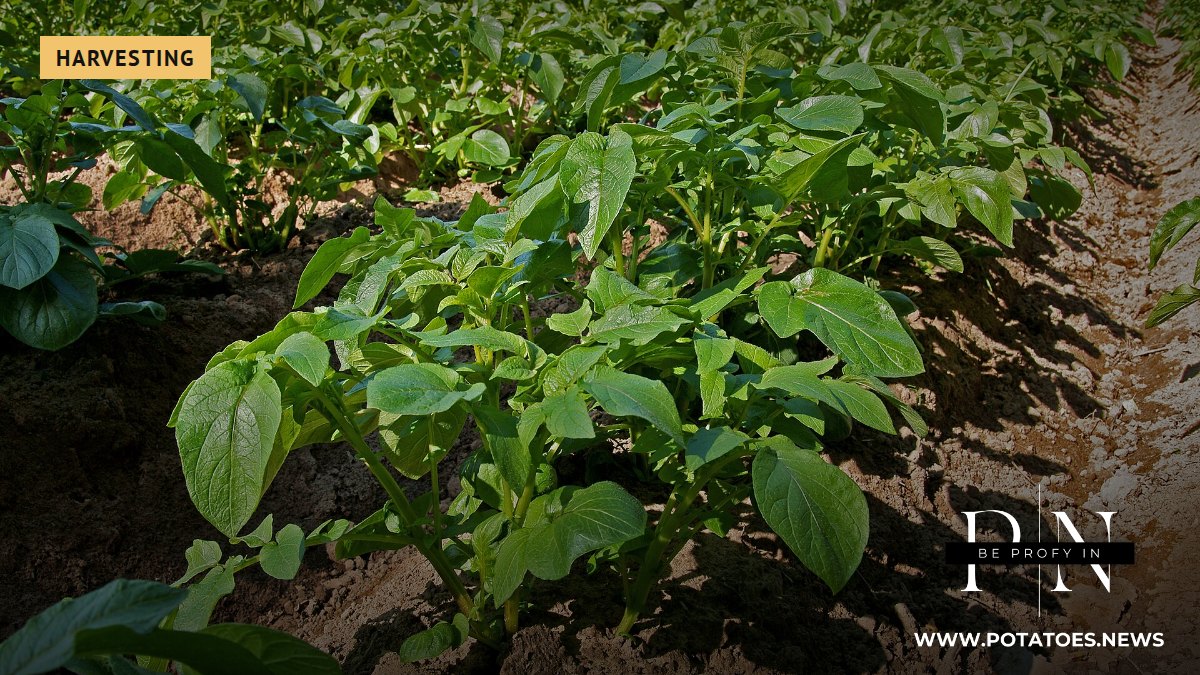
Photo: Potato field in Nakkila, Finland (illustrative). kallerna / Wikimedia Commons, CC BY-SA 3.0