Finland: Potato Crop Forecast Above 620 Million kg, About 10% Over Average
Finland expects a potato crop of more than 620 million kg, about 10% above average, according to the research institute Luke. Autumn rains still threaten volume and quality.

Finland is heading for a good potato crop. The country expects more than 620 million kg, or 620,000 tonnes. That is about one tenth above the average. The Natural Resources Institute Finland (Luke) published the forecast on 25 September 2026.
The outlook could still worsen. Autumn rains have hampered lifting in the main growing areas. Luke says volume and quality may fall in the coming weeks.
How the estimate was made
The forecast is dated 21 September. It is based on regional assessments by ProAgria advisers. They rely on field observations and local knowledge. Luke will publish final crop data on 20 November, based on farm surveys.
Weekdays. Unsubscribe in one click.
A mixed year for other crops
The potato forecast stands out in a mixed season.
- Cereals: the total crop is estimated at 3.2 billion kg.
- Rye: about 62 million kg, roughly 25% below average. That is not enough to cover annual consumption.
- Peas: more than 140 million kg, a record and five times more than a decade ago.
- Rapeseed: more than 90 million kg, back to the long-term average after several weak years.
Finnish regional media relayed the potato outlook on the same day. They also stressed the risk from rain during lifting.
A contrast with western Europe
The Finnish picture differs sharply from north-west Europe. Heat and drought hit the main fries-producing countries hard this summer. The combined harvest in the Netherlands, Belgium, France and Germany is estimated at 20.8 million tonnes. That is 23.7% below last season.
Finland mainly grows potatoes for its own market. Table potatoes, processing and starch production all use the domestic crop.
Why it matters
A crop above average should keep Finland well supplied through the storage season. Domestic packers and processors may need fewer imports than in weaker years. This matters when western European supply is tight and prices are high.
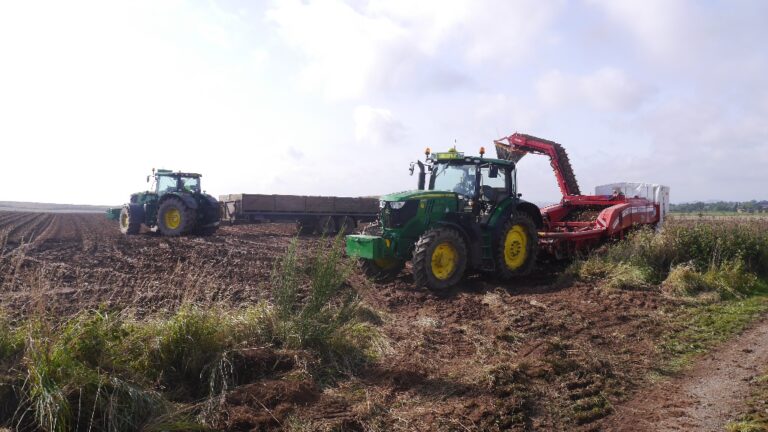
However, wet lifting brings its own risks. Tubers harvested in wet soil are more prone to rot and bruising in store. Growers will need careful drying and ventilation to protect the quality of this larger crop.
Photo: Harvesting potatoes in Finland, 1960 (illustrative). Erkki Voutilainen / Wikimedia Commons, CC BY 4.0