Fertilizers: challenges and solutions
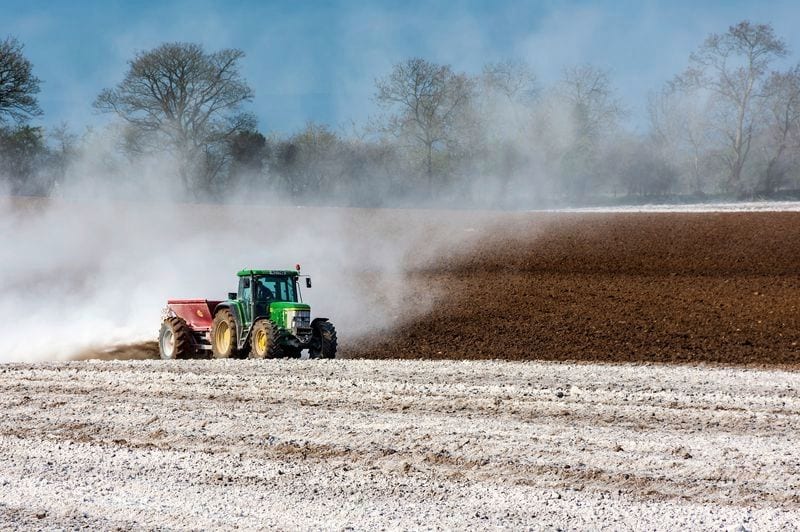
At the start of the 20th century, German chemists Fritz Haber and Carl Bosch developed a method for taking nitrogen from the air and melding it with hydrogen. It would prove to be one of the great scientific advances of the century.
Combined, the two elements made liquid ammonia, a key ingredient in synthetic fertilizers, which would drive an unprecedented agricultural expansion and help feed a fast-growing world.
But there has been a downside. During the last 100 years, the amount of man-made nitrogen compounds in water, soil and the air has doubled – an increase driven in large part by the widespread use of synthetic fertilizers.
Weekdays. Unsubscribe in one click.
Nitrogen is essential for life on Earth but in excess, it is a dangerous pollutant and is poisoning water bodies, plants, animals and humans, while driving climate change through emissions of the potent greenhouse gas, nitrous oxide. Though little known to the general public, experts call the flood of excess nitrogen one of the most severe pollution threats facing humanity today.
Challenges
At the beginning of the 19th century, there were almost no man-made nitrogen compounds in the environment. But in the years after the Haber-Bosch breakthrough, their levels began to skyrocket, driven by the massive uptake of synthetic fertilizers and other human activities like the manufacturing of munitions and the burning of fossil fuels, both of which create chemically reactive forms of nitrogen.
Nutrient run-off from farms laced with synthetic fertilizer has adversely affected land ecosystems, according to the United Nations-backed Intergovernmental Science-Policy Platform on Biodiversity and Ecosystem Services (IPBES). But freshwater and marine habitats have been hit hardest, with recurrent algal blooms such as in Lake Erie, and “dead zones” bereft of aquatic life as in the Gulf of Mexico, it says.
Human health is also at risk. Agricultural ammonia emissions can combine with pollution from vehicle exhausts to create dangerous particulates in the air and exacerbate respiratory diseases, including COVID-19. One study has estimated that air pollution may increase mortality associated with COVID-19 by 15 per cent.
To stem the tide of nitrogen pollution, a growing number of governments, companies and international bodies, including the United Nations Environment Programme (UNEP), have been working with scientists to better understand the risks associated with human use of nitrogen, and to raise awareness.
To that end, almost exactly a year ago United Nations Member States endorsed the Colombo Declaration on Sustainable Nitrogen Management, which sets an ambition to halve nitrogen waste from all sources by 2030.
UNEP also recently established the global “Halve Nitrogen Waste” campaign, highlighting the fact that improving nitrogen use efficiency not only supports climate, nature and health goals but also saves US$100 billion globally annually (an estimate based on half the value of global synthetic fertilizer sales).
Solutions
Globally, synthetic fertilizers are behind the bulk of global food production and they’re especially important in developing countries. That, experts say, will make a transition away from them challenging. However, initiatives to stake out a more sustainable way of growing food, are plentiful.
A recent study from the Soil Association, a United Kingdom-based charity and advocate of organic farming, calls for much greater attention to nitrous oxide emissions in global greenhouse gas accounting; more integrated efforts to tackle nitrogen excess as a climate, nature and health issue; and incentives for better nitrogen management at farm level.
But organic farming methods are not the only example of sustainable nutrient management: agroecological approaches, including conservation, low-input, and minimum tillage agriculture, are all recognized as “nature-positive” and regenerative practices.
From farm to fork, 80 per cent of nitrogen is wasted and lost to the environment, according to a study by the Centre for Ecology & Hydrology in the United Kingdom. More efficient use of animal manure and greater use, in rotations, of nitrogen-fixing crops – such as legumes which convert nitrogen from the air into a form that is biologically useful – will be crucial to replace synthetic nitrogen as part of the process of rebuilding soil fertility.
What are nitrogen-fixing plants?
Nitrogen-fixing plants have partner bacteria in their roots able to grab dinitrogen (N2) out of the atmosphere. They convert the N2 into ammonia (NH3), which the plant can use to make protein, amino acids and DNA. Only a few plants can achieve this amazing trick, like the pea family (legumes) and the floating fern Azolla. Where the availability of manure is limited, these plants become very important in farming systems aiming to avoid synthetic nitrogen fertilizers.
There is consensus that everyone should be using manure and urine better, says Mark Sutton, a lead author of the study. “Simple actions include putting a lid on the manure tank, which stops ammonia being lost to air. If you can smell your manure, it means you are wasting it to the atmosphere,” he says.
“Financial incentives and political buy-in will be necessary to overcome the many obstacles in the way of nitrogen-light farming methods,” says Susan Gardner, head of the UNEP Ecosystems Division. “But the bottom line remains: we need to dramatically reduce the quantity of reactive nitrogen being released into the environment from all sources, especially from synthetic fertilizers which represent one of the biggest nitrogen flows.”
“The sustainable use of nitrogen offers a triple win – for the economy, for human health, and for the environment,” she adds.
The International Nitrogen Management System (INMS) is a global science-support system for international nitrogen policy development established as a joint activity of UNEP and the International Nitrogen Initiative. It is supported with funding through the Global Environment Facility and around 80 project partners through the “Towards INMS” project (2016-2022). INMS provides a cross-cutting contribution to multiple programmes and intergovernmental conventions relevant for the nitrogen challenge.
Global Potato Brief
Top five stories, prices, disease alerts and events. Weekday mornings, no advertising.
Linked in this material
- Sections
- AGROTECHNOLOGY
Related stories

Beyond Breeding: Resource-Saving Technologies and Biological Inputs in Polish Potato Production
Separation Settings on a Potato Harvester: How Webs and Agitation Protect the Crop