Three members of the Potatoes.News Potato Expert Panel describe a widening gap between low-priced table potatoes and processing-quality supplies in parts of India during October 2026. Surya Prakash and Deepak Soni discuss regional market conditions in India, while Prof. Miriam G. Kinyua explains seed-system challenges in Kenya. Their observations follow our 6 November report on India’s potato sector.
The regional prices below are the experts’ observations for October 2026, not a national price survey or current November quotations. Forecasts for 2027 are their expectations, subject to weather, planting and market conditions.
Table potatoes below storage rent
Surya Prakash, an independent consultant in Mumbai with 17 years in agri-commodity procurement and processing, sets out the October price picture in a market report prepared for Potatoes.News. In Farrukhabad and Kannauj, Uttar Pradesh, table varieties fell to ₹50–150 per quintal at the cold-store gate, against storage rent of ₹200–250. In Barabanki and Araul, ration and seed-grade lots fetched ₹100–450. Farmers and traders abandoned stock rather than pay to release it, and cold-store operators are liquidating uncollected lots to clear space ahead of the new season.
Weekdays. Unsubscribe in one click.
Deepak Soni, Senior Manager – Procurement at ITC Foods, gives the season-long view: farm-gate prices opened at about ₹7–8 per kg and fell as arrivals grew; cold storage added roughly ₹3 per kg that many growers never recovered. “The overall economics of potato cultivation has remained unfavourable,” he says.
Not everyone lost. West Bengal recovered after Durga Puja: Jyoti reached ₹1,060–1,100 per quintal and Chandramukhi ₹1,500–1,800. Contracted processing growers in Madhya Pradesh and Gujarat growing Lady Rosetta and Chipsona held ₹1,300–1,800. The divide, Surya Prakash says, ran between contracted and non-contracted stock, not between regions.
Processors cannot find quality
While table prices collapsed, processing-grade potatoes were scarce. Maharashtra’s harvest suffered growth cracking and low dry matter, so usable lots commanded ₹2,600–2,800 per quintal on the spot market. In Gujarat, stored processing stock showed tuber soft rot and high reducing sugars; bulk lots were rejected for chips and dumped into the table market at a loss. Soni confirms that despite the larger national crop, “the quality of potatoes suitable for industrial processing remained a major concern”.
Surya Prakash’s list of what decides a processing purchase: dry matter and specific gravity, reducing sugars and frying colour, tuber size and shape, internal defects, hollow heart and black spots, skin maturity, disease and rot, and storage performance. A chip variety may not deliver French-fry length or recovery, so specifications must be product-specific. His rule for buyers: evaluate usable processing recovery and total landed cost, not gross weight or mandi price. A cheaper lot “may ultimately become more expensive”.
Surya Prakash also describes two structural developments. Multinational processors are expanding contract farming in South India, where sowing is now dominated by table varieties, to build supply pools away from the northern belts. Northern processors are trialling high-yield, high-dry-matter cultivars. Soni adds that contract prices for the new season are up by about ₹1–1.5 per kg.
Seed: a price war in Punjab and a gap in Kenya
In Surya Prakash’s account, seed potato prices in Punjab fell alongside the table market. Early Pukhraj seed opened at ₹1,800 per quintal and dropped to ₹600–800; in Punjab cold stores, seed packets fell to ₹200–350 per 50 kg. Surya Prakash reads this as an opening: with certified seed 50–60% cheaper, Uttar Pradesh growers who normally replant degenerated home-saved seed can afford to switch to Kufri Mohan, Jyoti or processing varieties this season.
The underlying constraint he names is the same across Uttar Pradesh, West Bengal, Bihar, Punjab and Madhya Pradesh: genetically pure, disease-free seed at an affordable price, undermined by virus build-up over multiplication cycles, weak certification and inspection, and poor storage. Tissue culture, aeroponics and minitubers are spreading, with private producers alongside government institutions, but adoption “remains uneven”.
In Kenya, Prof. Miriam G. Kinyua, plant breeder at the University of Eldoret, Kenya, gives the same answer in fewer words. The main issue for Kenyan producers is seed and a stable market for the harvest. The constraint on seed quality is the source of foundation and breeder seed and access to fields free of bacterial wilt and potato cyst nematode. Over two seasons she has seen more seed growers and higher demand. Processors want chip and French-fry varieties and white-skinned types similar to Shangi, the popular local variety; supply is always available and only the price changes.
Disease priorities
Late blight heads every list. Surya Prakash adds early blight, bacterial wilt, black scurf, stem canker and viruses moving through apparently healthy seed tubers via aphids. Kinyua’s list for Kenya is led by bacterial wilt and late blight, with potato cyst nematode, cutworms, leaf miners and aphids as the main pests. Her research priority for growers: new varieties responding to their preferences.
Water and the 2027 crop
Water stress in the Malwa belt and north Gujarat was covered in our earlier report. New in this round: Surya Prakash adds Punjab, Haryana and western Uttar Pradesh, where groundwater stress is slowing sowing in water-short pockets and lengthening tube-well run times. Both experts warn that heat during tuber bulking in January–February 2027 could cut yields; Surya Prakash’s estimate is 10–15% per hectare, with lower dry matter on top.
The experts suggest drip and micro-irrigation, alternate-furrow irrigation, laser land levelling, mulching and short-duration varieties as options for managing water stress. Water savings depend on the system and local conditions: ICAR’s 2021/22 rabi advisory reports 38% water saving from drip irrigation in potato compared with conventional irrigation. Soni adds a soil rule: sprinklers for the black soils of Malwa, drip for light and sandy soils.
Aeroponics: the cost and the barrier
Surya Prakash points to a 2025 study in Potato Research that estimated ₹1.94 per minituber at 14 × 14 cm plant spacing in the experimental aeroponic system. This is a treatment-specific research estimate, not a commercial production cost or a guaranteed cost for other facilities. The real gain is faster multiplication of clean seed and slower degeneration. The barriers are high initial investment, skilled staff, uninterrupted power and water, virus-free mother material, and running the facility at viable capacity all year. Kinyua’s barrier is simpler: awareness of the benefits. Both point to the same way forward, public–private seed hubs linking research institutes, seed companies, processors and farmer organisations.
Outlook for 2027
Surya Prakash expects acreage under generic table varieties to contract by 5–8% in 2026/27 as distressed smallholders cut back, restoring balance and lifting table prices to ₹1,200–1,600 per quintal in the 2027 marketing cycle. Soni’s indicative outlook is ₹15–16 per kg for processing grade and ₹12–14 for fresh, with the caveat that cheap retained seed could keep acreage higher than the economics suggest; the picture will be clear by mid-December. Both are market expectations, not forecasts of assured prices.
WHY IT MATTERS
- Growers: lower seed prices may offer an opening to replace poor-quality stocks; experts in India and Kenya both identify access to reliable, healthy seed as a central concern.
- Processors: buy on recovery and landed cost; contract prices are rising and the supply map is shifting south.
Join the conversation
These are three voices from an international panel of scientists and practitioners. If you work in the potato sector and see a different picture in your region, reply in the comments or write to v.kovalev@potatoes.news with the subject “Expert Panel”. Substantive replies will be published with full attribution, and specialists who wish to take part regularly are invited to join the Potato Expert Panel.
Sources: Surya Prakash, “Anatomy of India’s Potato Market”, report prepared for Potatoes.News, 5 November 2026, and written answers to the Panel questionnaire, 6 November 2026; Deepak Soni, ITC Foods, written reply, 5 November 2026; Prof. Miriam G. Kinyua, University of Eldoret, written reply, 6 November 2026. Price figures are the experts’ own market observations for October 2026 and have not been independently verified by Potatoes.News.
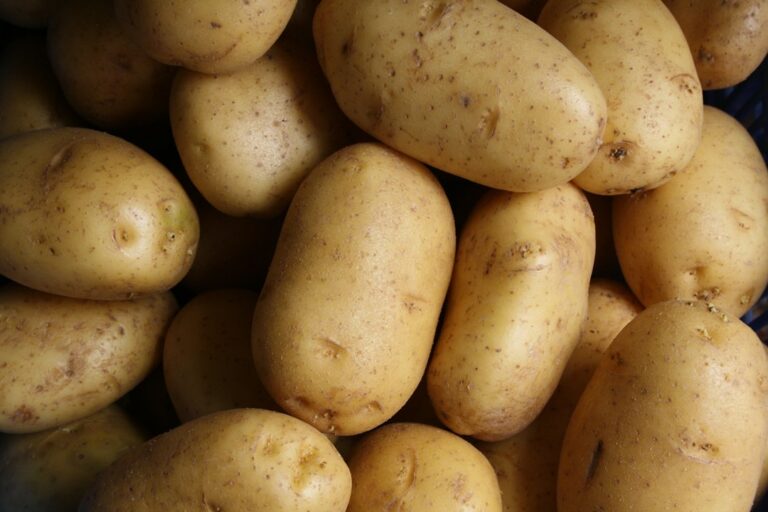
Cover photo: Eric Prouzet / Unsplash. Illustrative image; it does not depict the expert or their farm.