Why do we produce more and more potatoes, yet fail to keep the market stable?
By Viktor Kovalev, Founder of the International Potato Tour and Editor-in-Chief of Potatoes.News.
Author’s discussion paper, based on the text prepared for Moscow State University and circulated to the Potato Expert Panel on 9 November 2026. Expert responses received by 11 November are presented separately below. The proposal to examine a systemic crisis is the author’s hypothesis and invitation to debate.
Weekdays. Unsubscribe in one click.
Dear colleagues, members of the scientific community, government bodies, growers, processors and everyone working in the potato industry!
Today I would like to talk about a problem that, in my view, is far more serious than individual crop failures, plant diseases or price swings.
I believe the global potato industry is approaching a systemic crisis. And one possible cause of this crisis is the imperfection of statistics and of food security policy.
My talk may sound somewhat harsh. But I want to stress from the outset that I have deep respect for everyone in the industry, from the small farmer to the largest agricultural holdings, from national research institutes to international organisations.
My aim is not to find someone to blame. My aim is to raise questions to which we do not yet have convincing answers.
And I invite you to an open professional dialogue.
1. How many potatoes do we really produce?
In 2024 I attended the World Potato Congress in Australia.
One of the presentations stated that Russia produces about 15 million tonnes of potatoes a year.
For someone who works directly with Russian growers, that figure raised serious questions.
Russia's organised sector harvests roughly 7–8 million tonnes of potatoes in a typical recent season. Professional growers supply retail chains, wholesalers and processors, but this gross harvest is not itself a measure of saleable output after grading and storage.
Of course, there is also production on household plots. And if all categories of producers are counted, the figure will be much higher.
But the question arises: can total production be used to assess the marketable supply?
I approached the speaker and asked about the methodology. The answer was that official FAO data were used.
That conversation became the starting point for my further observations.
We often rely on international statistics, make decisions on that basis, build forecasts and invest in production and processing.
But do we always understand what actually lies behind the published figures?
In 2024 Russia saw a lower harvest. In the organised sector, output fell from about 8.6 to 7.3 million tonnes.
At the same time, growers pointed to a large share of small tubers. Many retail chains accept potatoes under 45 millimetres in diameter only to a limited extent.
The result is a paradox: the potatoes have physically been grown, but a significant part of them cannot reach the usual sales channels.
Meanwhile, reports of a possible shortage fuel expectations of a sharp price rise.
In the winter and spring of 2024–2025 I received many proposals to organise potato imports. Some of the people I spoke to expected a need for millions of tonnes.
Actual import requirements, however, should be assessed against the volume, grade and timing of supplies rather than the most dramatic shortage estimates. A total import figure by itself does not explain which market gap was filled.
And here I want to ask my first question:
What exactly do we call a shortage: a lack of potatoes, a lack of the right size grade, a shortage of good-quality product after storage, or a mistake in assessing the market?
These are four completely different problems that require four different solutions.
2. How accurate are global potato statistics?
Let us turn to the global scale.
FAOSTAT-based production data for 2024 put the world crop at approximately 390 million tonnes.
China: approximately 95 million tonnes.
India: about 57 million tonnes.
Russia: more than 18 million tonnes by international estimates, including all categories of producers.
These figures are regularly used in analytical reports and forecasts.
I understand that international statistics are based primarily on national data and, where such data are missing, use estimates and calculated indicators.
Reading the figures: total production across all types of producers and the harvest of the organised commercial sector describe different populations. Neither figure alone measures saleable potatoes after grading, storage and allocation to seed. The loss calculation below is an illustrative scenario, not an estimate of observed global losses.
But I am interested in a different question.
How accurately are small-farm production, the use of farm-saved seed, storage losses and informal trade accounted for?
How comparable are data from countries with completely different statistical systems?
For example, if a national harvest estimate is based partly on farm surveys, expert calculations or indirect indicators, can we use the result as an accurate description of the real marketable supply?
And most importantly:
Can a wrong estimate of production volume lead to poor investment decisions and a subsequent price collapse?
I believe it can.
But this is a hypothesis that we need to test together with researchers, growers and international organisations.
3. The billions of dollars we lose after harvest
The next problem is storage.
This conference will present research on potato storage diseases, protection technologies, grading and the use of artificial intelligence.
I consider these areas extremely important.
But I propose to look at the storage problem from an economic angle.
Take a world harvest of 390 million tonnes.
Suppose total storage losses are only 6 percent. I stress that this is a calculated scenario, not an established global average.
390 million tonnes × 6 percent = 23.4 million tonnes.
More than 23 million tonnes of potatoes.
If we put a nominal value of just 10 US cents on each lost kilogram, we get 2.34 billion dollars of potential losses.
And that is without the costs of growing, harvesting, electricity, transport and disposal.
Storage conditions also vary enormously across the world.
In some places modern automated facilities operate. In others, potatoes are stored with practically no control of temperature or humidity.
And we come back to the main question:
Why, when we discuss food security, do we pay so much attention to increasing production and not enough to preserving the crop that has already been grown?
In some regions, investment in storage may have a greater effect than expanding the planted area.
4. Seed potatoes: the invisible part of the global market
There is another problem that rarely takes centre stage in economic discussions.
How much of the total harvest is used as seed for the next production cycle?
And what share of that material is actually certified seed potatoes?
During my travels in Russia and Central Asia I observed an interesting situation.
For many years Russian farms sold small-size potatoes to buyers from Kazakhstan, Uzbekistan, Azerbaijan and other countries.
For the grower this was a familiar outlet for produce that did not suit the main retail chains.
But during my expeditions it turned out that some of these potatoes, after additional grading, were used not only for food but also for planting.
This raises questions of phytosanitary safety, the origin of planting material and crop quality.
Now let us look at the situation from an economic angle.
Countries are launching programmes for their own potato production and seed development.
This is an entirely understandable food security goal.
But traditional cross-border purchases of small potatoes are gradually declining.
The Russian grower keeps producing the usual volume, counting on a familiar market.
And the buyers do not come.
The surplus stays in the country.
The price falls.
The farmer suffers losses.
So a policy to strengthen food security in one country can create economic problems for growers in another.
That is why I believe national programmes must be assessed not only within national borders but also in the context of regional trade.
5. China, India, Pakistan: when growth in production becomes a problem
In recent years I have watched potato growing develop in various regions of Asia.
In India, potatoes are being successfully integrated into existing crop rotations.
In China, the growth of production is supported by large-scale national and regional programmes.
In Pakistan, in some districts potatoes are becoming an attractive alternative to other crops.
The reasons for production growth differ.
But in many cases the result is similar: supply grows faster than the ability to sell it.
The logical next step is the development of processing.
New plants are being built to make French fries, flakes, crisps and other products.
It looks like an excellent prospect.
But the next question arises.
On what forecasts do investors base future demand for processed potatoes?
We regularly see forecasts of annual growth in individual market segments of 7, 10 and even 15 percent.
But what happens if actual demand turns out lower than expected?
Who will pay for the excess capacity?
Who will take the potatoes that processors do not need?
And who will bear the main losses?
As a rule, the farmer suffers first.
And the problem is not limited to Asia.
In Europe, too, we have seen situations where expanding production and weakening demand for processed products led to a sharp fall in free-market prices.
In other words, even a high-tech potato industry is not protected from an imbalance between supply and demand.
6. Food security or a crisis of overproduction?
I want to draw attention to a fundamental contradiction.
Almost every country seeks to increase its own food production.
Governments allocate subsidies.
Scientists develop new varieties.
Growers adopt modern technologies.
Fertiliser suppliers improve crop nutrition systems.
Companies invest in storage and processing.
Each participant in this system does its job.
But who is responsible for the coherence of the system as a whole?
Today we discuss higher yields, the fight against late blight, variety resilience, the use of micronutrient fertilisers and automated grading.
All this research is necessary.
But I would like to put an additional question to the scientific community:
What happens if, thanks to our technologies, we increase production by another 10 percent while effective demand grows by only 2 percent?
To whom will we sell the additional potatoes?
What will their price be?
And will the grower remain financially viable?
Higher yields do not in themselves mean higher profitability.
We may learn to grow more potatoes per hectare and at the same time make growing them uneconomic.
In my view, this is one of the most serious threats to the future of our industry.
7. Why is it especially hard for a potato grower to plan income?
The potato is a crop with a high technological and financial burden.
The farmer invests in advance in seed, fertilisers, crop protection, machinery, irrigation, harvesting and storage.
But the quality, marketable yield and final value of the crop become clear only much later.
You can get an excellent yield, yet a large part of the potatoes may prove unsuitable for the chosen sales channel.
You can harvest a good-quality crop, yet face overproduction.
You can store potatoes until spring, only to find that the market offers a price below the cost of storage.
Until the farmer sells the last tuber, he does not know the final financial result of the season.
That is why I am convinced we need not only new varieties and technologies but also new tools for economic forecasting.
We need to understand not just the volume of potatoes grown but the volume of marketable product actually available, taking into account its quality, intended use, storage life and possible markets.
8. What do I propose to the international potato community?
I do not claim that today I can offer a ready solution to all these problems.
On the contrary, the more I talk to growers in different countries, the more questions I have.
But I am sure the first step is to create a system for the professional exchange of reliable information.
Within the International Potato Tour project, I propose to bring together growers, researchers, breeders, storage experts, processors, economists and representatives of industry organisations.
In 2027 I plan to develop a global expert community that can work in five areas:
Reliable statistics. Comparing official data with information from actual growers and industry associations.
Monitoring of marketable supply. Accounting for crop quality, size grading, storage volumes and the intended use of potatoes.
Demand forecasting. Analysis of fresh potato consumption, the development of processing and international trade flows.
Assessment of investment risks. Studying how government programmes, new production facilities and changing export routes affect neighbouring markets.
International professional dialogue. An opportunity to share experience between countries regardless of political differences.
I am not proposing to regulate world prices or restrict competition.
I am proposing to make the market more understandable for its participants.
So that the farmer can make decisions based on information rather than rumours.
So that the investor understands the market outlook before building a new plant.
So that governments can assess not only self-sufficiency indicators but also the consequences of their decisions for the entire production chain.
Conclusion. The main question we have to answer
Dear colleagues!
It seems to me that for too long we have been asking the same question:
How can we grow more potatoes?
And we have achieved enormous success in this.
Today we have high-yielding varieties, modern nutrition and protection systems, automated stores, artificial intelligence technologies and highly efficient processing plants.
But now it is time to ask a different question:
How can we make sure that every tuber grown makes economic sense and every grower can count on a sustainable future?
Because food security is not only about potatoes being on the shop shelf.
It is also about the economic security of the person who grows them.
If a government keeps consumer prices low at the cost of ruining farmers, can such a food system be considered sustainable?
If growers increase their harvest but cannot cover their costs, is that a success for the industry?
If every year we lose millions of tonnes of potatoes after harvest, are we setting the right priorities?
I propose to begin discussing these questions here, at Moscow State University, and to continue the discussion with colleagues around the world.
I invite scientists, growers, processors, representatives of industry associations and international organisations to join our community.
What we need is not polished reports but an honest conversation, real data and a willingness to look for solutions together.
The future of the potato industry depends not only on how many potatoes we can grow, but also on how wisely we learn to manage what we already produce.
Thank you for your attention. I invite you to a dialogue.
Expert responses: Rwanda’s value chain
Evariste Nsabimana, MSc Crop Science, founder of L Triple Green Tech Ltd and a seed potato, aeroponic and sandponic specialist in Rwanda, replied to the discussion paper on 10 November and authorised publication of his comments under his name.
His central point is that Rwanda’s challenge extends beyond increasing output: the country needs a more integrated and commercially sustainable potato value chain. He identifies affordable, quality-assured seed, appropriate storage, market-oriented production planning, processing and coordination among growers, researchers, investors and government as connected priorities.
On seed, Nsabimana sees scope for aeroponics and sandponics to expand early-generation planting material, while stressing the need for infrastructure, technical skills and disease management. On post-harvest losses, he points to deterioration, sprouting, weight loss and rotting where storage conditions are inadequate.
He also describes seasonal price pressure when harvesting is concentrated and calls for better market information, aggregation and contractual links between growers and buyers. Expanding processing, in his view, could help reduce dependence on fresh-tuber sales.
The official figures he supplied can be checked against the National Institute of Statistics of Rwanda’s Seasonal Agricultural Survey 2025: potato production was estimated at 475,785 tonnes in Season A and 314,093 tonnes in Season B. These are seasonal production estimates, not measured marketed volumes.
Related perspectives from India and Kenya
Separate written contributions to the Potato Expert Panel, supplied before this discussion paper was circulated, show why regional detail matters. They are complementary perspectives, rather than reviews of this paper.
In our India–Kenya panel discussion, Surya Prakash describes a gap between low-priced table potatoes and scarcer processing-quality lots in parts of India. Deepak Soni discusses the importance of processing quality and the economics of procurement and storage.
Prof. Miriam G. Kinyua of the University of Eldoret identifies reliable seed and a stable market for the crop as central concerns in Kenya. Her comments connect seed quality with access to suitable seed sources and fields free of important diseases and pests.
These observations do not establish that every region faces the same crisis. They underline the need to distinguish total tonnage from variety, quality, intended use, storage condition and the market into which a crop can actually be sold.
Join the dialogue: write to Viktor Kovalev
I invite scientists, growers, seed producers, processors, storage specialists, traders and industry associations to challenge this argument, add evidence and describe what is happening in their countries.
Please write to v.kovalev@potatoes.news with the subject “Potato industry crisis — expert comment”.
Useful contributions can cover how harvest and marketed supply are measured; the quality and price of seed; grading and storage losses; fresh and processing demand; or examples of investment that succeeded or failed. Please give the country or region, period, units and source for any figures, and say whether we may publish your name, role, organisation and comments.
This is an open professional discussion. Different views and corrections are welcome. We want to compare evidence and practical experience before drawing conclusions.
Sources and scope
The author’s original discussion paper, The Global Crisis in the Development of the Potato Industry, circulated on 9 November 2026; Evariste Nsabimana’s written response of 10 November 2026, with permission for named publication; and the separately published Potato Expert Panel discussion on India and Kenya.
Production context: FAOSTAT Crops and livestock products; the 2024 potato series reproduced with source and retrieval details by Husfarm; and NISR, Seasonal Agricultural Survey 2025. Rounded production figures provide scale; they do not establish the volume of potatoes available to a particular buyer.
The calculation using a 390-million-tonne harvest, 6% losses and US$0.10 per kilogram produces 23.4 million tonnes and US$2.34 billion. Both the loss rate and unit value are assumptions in this scenario.
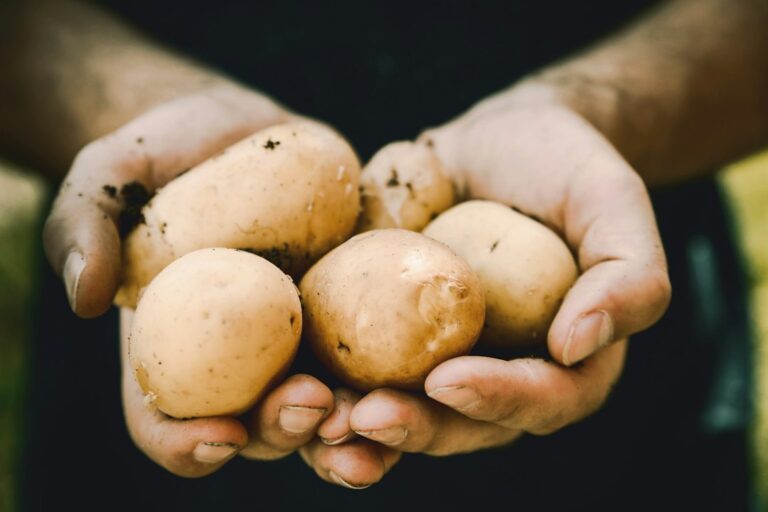
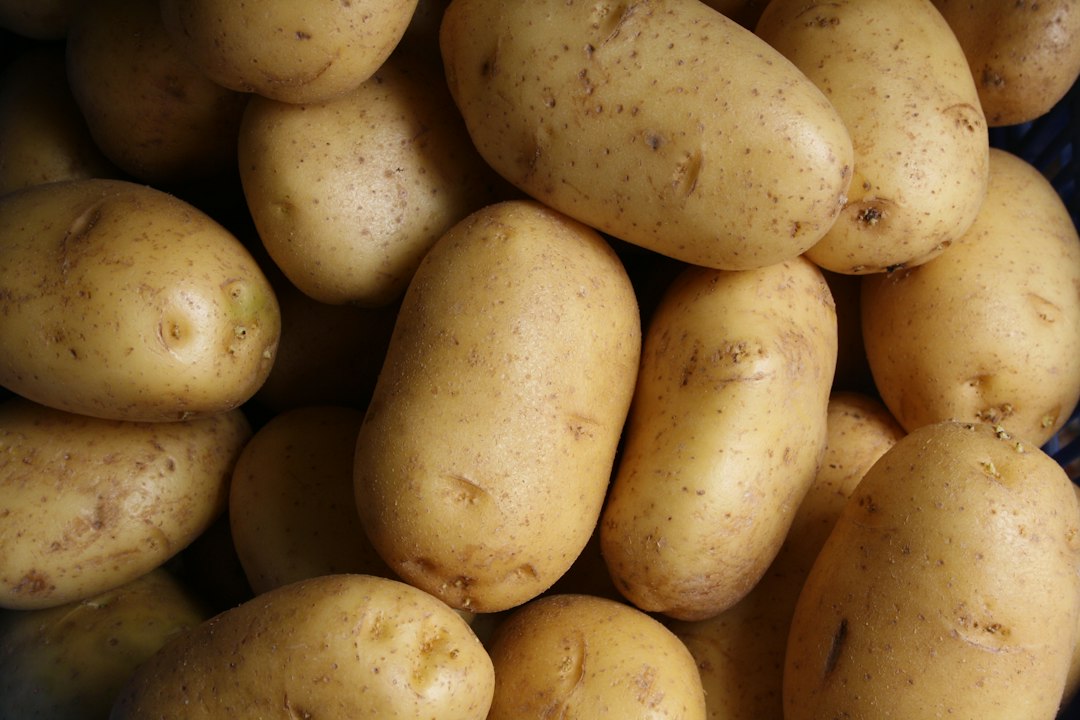
Cover photo: Lars Blankers / Unsplash. Illustrative image; it does not depict the expert or their farm.