The European Union harvested 57 million tonnes of potatoes in 2025, including seed potatoes. This is up from 51 million tonnes in 2024. The figures come from a European Commission potato market overview, based on Eurostat data and reported on 22 September.
Germany remained the largest producer, with about 14 million tonnes. France followed with about 10 million tonnes and the Netherlands with 9 million tonnes.
German federal statistics confirm the German figure. They put the 2025 crop at 13.9 million tonnes, with a yield of 459.6 dt/ha.
Weekdays. Unsubscribe in one click.
Area up in 2025, down in 2026
The EU potato area reached 1.487 million hectares in 2025. In 2024, it was 1.384 million hectares.
For 2026, the Commission projects 1.421 million hectares. This includes 280,000 hectares in Germany and 177,000 hectares in France.
The large 2025 crop led to low prices and many unsold potatoes. As a result, many growers cut area for 2026. Drought and heat then reduced yields in much of North-West Europe.
Trade and world context
Intra-EU trade in fresh potatoes totalled 8.48 million tonnes in 2025. Exports outside the EU reached about 710,000 tonnes. The main destinations included Côte d’Ivoire, Indonesia and Switzerland.
World potato production reached about 390 million tonnes in 2024, according to the overview. Between 2017 and 2024, China produced on average 32% of the world crop. India produced 19% and the EU 18%.
Why it matters
The 2025 figure shows how large the last EU crop was. It explains the price collapse of 2025–2026 and the area cuts that followed. With a much smaller 2026 harvest now expected in the main producing countries, the EU market is swinging from surplus to shortage within one year. Buyers and growers can use these data as a baseline for contract and planting decisions.
The Commission projection for German area is higher than the latest German estimate. The German statistics office now puts the 2026 potato area at 268,300 hectares.
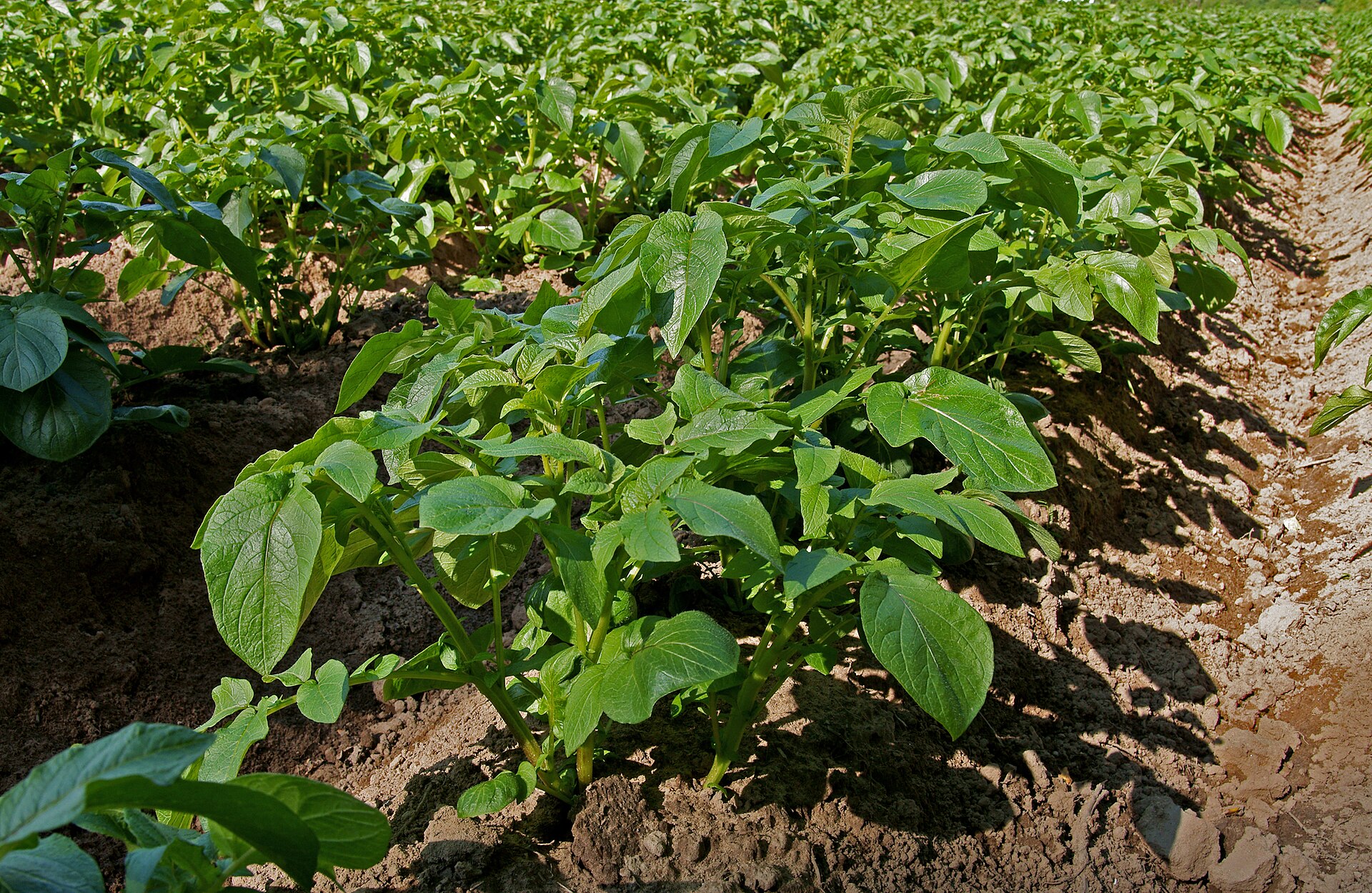
Photo: A potato field in Nakkila, Finland (illustrative). kallerna / Wikimedia Commons, CC BY-SA 3.0