Estonia harvested 60,170 tonnes of potatoes in 2025, according to Eurostat. The area was 2,910 hectares, and the average yield was about 20.7 tonnes per hectare. In 2024, the harvest was 69,330 tonnes from 2,920 hectares. So output fell by about 13% while the area stayed the same.
From 52,000 hectares to under 3,000
Statistics Estonia says that in 1991 the country grew potatoes on 52,000 hectares and harvested 592,000 tonnes. By 2020, the area was 3,600 hectares and the harvest was 94,000 tonnes. The statistics office said potato output was 6.3 times smaller than in 1991.
Yields rose at the same time. The average yield was 11 tonnes per hectare in 1991 and 26 tonnes in 2020, according to Statistics Estonia. In recent years, the national figures, which include home gardens, show 78,000 tonnes from 3,400 hectares in 2022 and 85,000 tonnes from 3,500 hectares in 2023. The 2023 yield was 24.5 tonnes per hectare. Home gardens made up about 8% of the area in 2022.
Eurostat figures are a little lower, because they cover a different scope. For 2023, Eurostat lists 79,300 tonnes. Both series show the same trend: a very small area with yields that change a lot from year to year. Eurostat yields ranged from about 17 tonnes per hectare in 2016 to 26.2 tonnes in 2020.
Consumption
Statistics Estonia said the 2023 harvest was equal to 62 kg of potatoes per resident, and 59 kg in 2022. This is a rough guide to how much of local demand the crop can cover. The data used for this article do not include import volumes or regional figures.
Why it matters
Estonia is one of the smallest potato producers in the EU. Its area has fallen by more than 90% since 1991. Output now depends on a few commercial farms and on the weather in one short season. A weak year, like 2025, quickly reduces local supply.
For traders in Finland, Latvia and Lithuania, Estonia is a small but steady buyer in poor seasons. For seed and input firms, the market is small, and growth will come from yield, not from area.
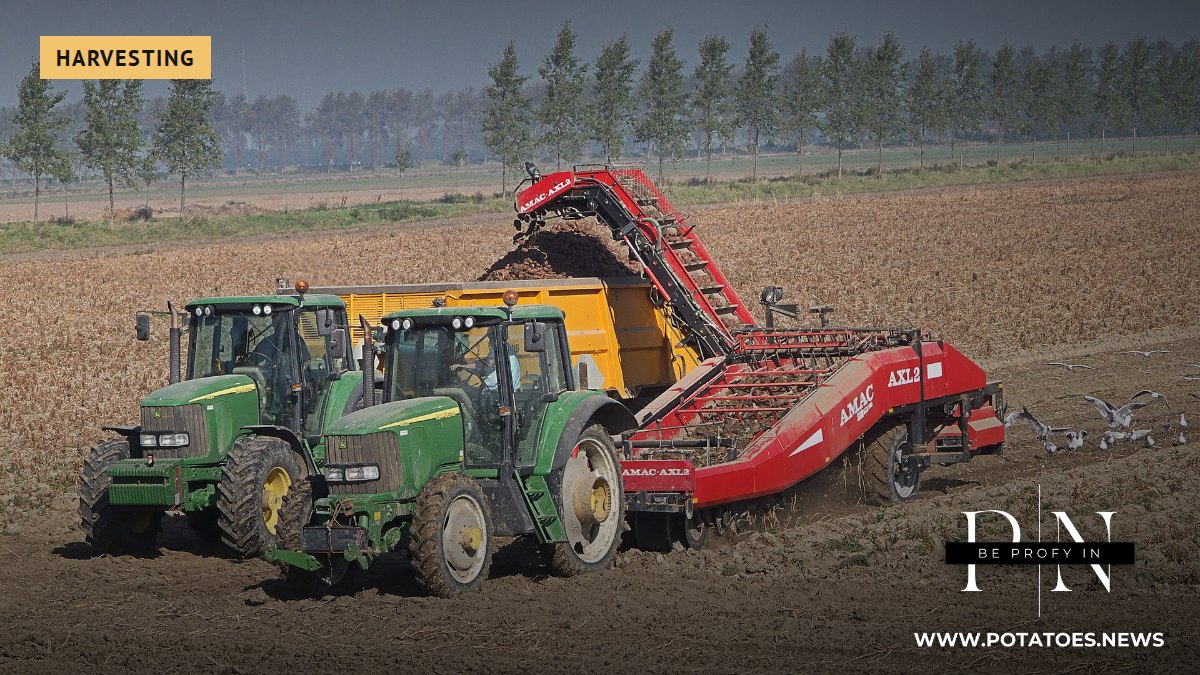
Photo: Potato harvest with tractors (not Estonia) (illustrative). Rasbak / Wikimedia Commons, CC BY-SA 3.0