Dominican Republic: Potato Output Grows 5.4% to 2.87 Million Quintals as Constanza Holds 80% of Area
The Dominican Republic produced 2,871,185 quintals of potatoes in 2025, up 5.4%, the Ministry of Agriculture says. Constanza holds about 44,000 of 55,000 tareas, and seed is still imported.
The Dominican Republic produced 2,871,185 quintals of potatoes in 2025, according to the Ministry of Agriculture. That is 5.4% more than the 2,722,792 quintals of 2024. The figures were reported by the business paper elDinero in June 2026, and Diario Libre also reported potato output of 2.87 million quintals. One quintal is 100 pounds, so the 2025 crop equals roughly 130,000 tonnes.
Potato was the second-largest crop by volume in the ministry’s group of roots and tubers in 2025.
Production is concentrated in one valley. According to Eladio Arnaud Santana of the Dominican Institute of Agricultural and Forestry Research (IDIAF), the country has about 55,000 tareas under potatoes, and 44,000 of them are in Constanza, in La Vega province. That is 80% of the area. A tarea is about 629 square metres, so 55,000 tareas are roughly 3,460 hectares. He said local growers had produced about 884,305 quintals so far in 2026.
Weekdays. Unsubscribe in one click.
Seed is the weak link. The country imports most of its seed potatoes. According to IDIAF, seed imports cost about US$3 million a year. The institute is investing about US$300,000 in a laboratory for mass production of potato plantlets. The aim is to raise productivity and reduce dependence on imported seed. Arnaud Santana said seed material is often contaminated by fungi, bacteria and viruses.
A 2024 report in elDinero, based on ministry data, said imported seed comes mainly from the Netherlands and Canada. The same report showed yields of 49.2 quintals per tarea in 2020–2021 and 44.7 quintals per tarea in 2023.
Sources differ on self-sufficiency. The 2024 elDinero report said the country had reached self-sufficiency in production. In 2026 IDIAF said local output was not enough and potatoes had to be imported for consumption.
Why it matters
The Dominican potato sector is growing, but it rests on one valley and on imported seed. A disease or weather problem in Constanza would hit most of the national crop at once.
Local seed production could change the cost base. If the IDIAF laboratory works as planned, part of the US$3 million seed bill could stay in the country. For European and Canadian seed exporters, this is a market to watch.
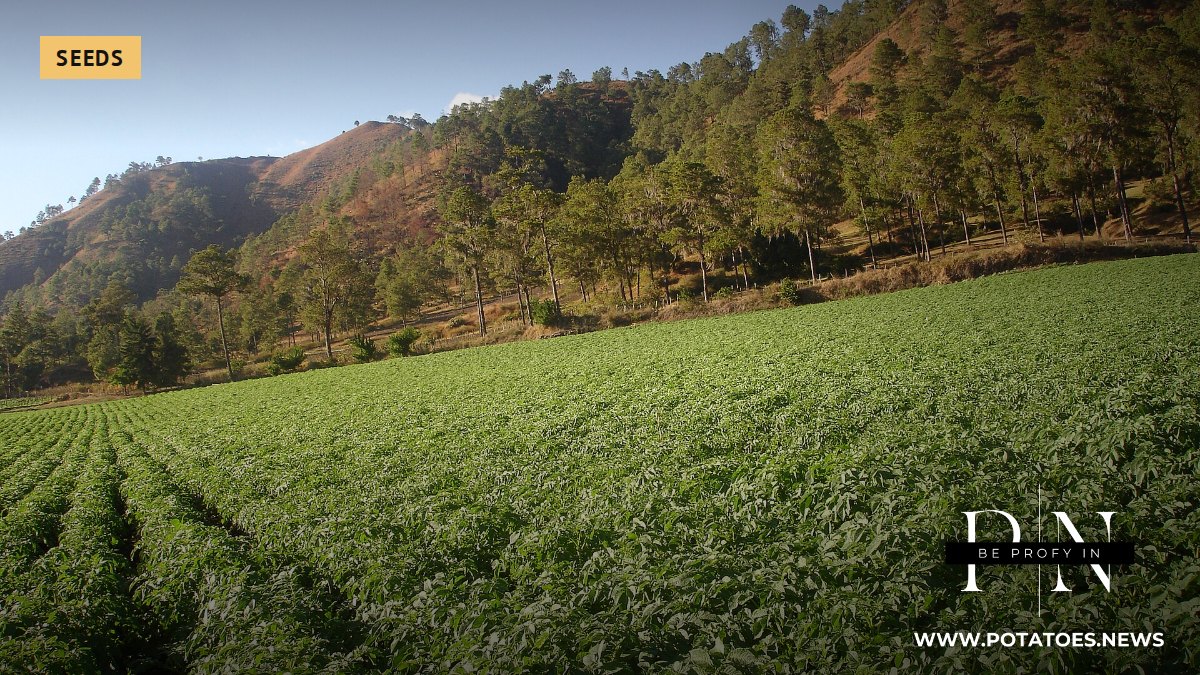
Photo: Harvest in Constanza, Dominican Republic (illustrative). yensileonel / Wikimedia Commons, CC BY 3.0