Denmark is one of the few countries in Western Europe where the potato area is growing. According to the statistics office Danmarks Statistik, potatoes covered 65,447 hectares in 2024. In 2004 the figure was 41,050 hectares. This is an increase of 59%.
The growth came from one segment. Potatoes for industry grew from 19,392 to 50,154 hectares over the same period. Seed potatoes rose from 5,079 to 9,645 hectares. Table potatoes fell from 16,578 to 5,648 hectares, a loss of about two thirds.
Long-run trend
FAOSTAT data published by Our World in Data show the same picture. Danish output was 1.36 million tonnes in 2010. It reached 3.00 million tonnes in 2024. The yield rose from 35.3 to 45.8 tonnes per hectare in the same period. In 1961 the yield was only 20.6 tonnes per hectare.
The farm structure changed too. The number of farms with potatoes fell from 2,690 to 1,538 between 2004 and 2024, the statistics office said. The average potato area per farm grew from 15 to 43 hectares. About 95% of the area is in Jutland, according to the farm newspaper LandbrugsAvisen.
Economics of industrial potatoes
The statistics office also measures farm results by crop. For 2023, potatoes for industry gave a net profit of DKK 16,524 per hectare. The price was DKK 115 per 100 kilograms, up 28% from 2022. The yield was 438 hundred kilograms per hectare. The office described the result as much better than for wheat, barley and rapeseed in the same year.
Organic potatoes are a small niche. They covered 2,073 hectares in 2024, or 3% of the total. For table potatoes the organic share was 27%.
A turn in 2026
The growth may now pause. In March 2026 LandbrugsAvisen reported that the area of starch potatoes could fall by about 20% in 2026. The newspaper linked this to large Danish and European harvests in 2025 and a very large supply of potato starch. It followed two to three years of exceptionally good prices.
Why it matters
Denmark has become a specialised industrial potato country. Its crop now depends mainly on starch and processing demand, not on household consumption. This makes the sector sensitive to the European starch balance and export prices.
For seed and machinery suppliers, the market is concentrated in fewer and larger farms in Jutland. A cut in starch contracts in 2026 would be the first serious test of this model after two decades of growth.
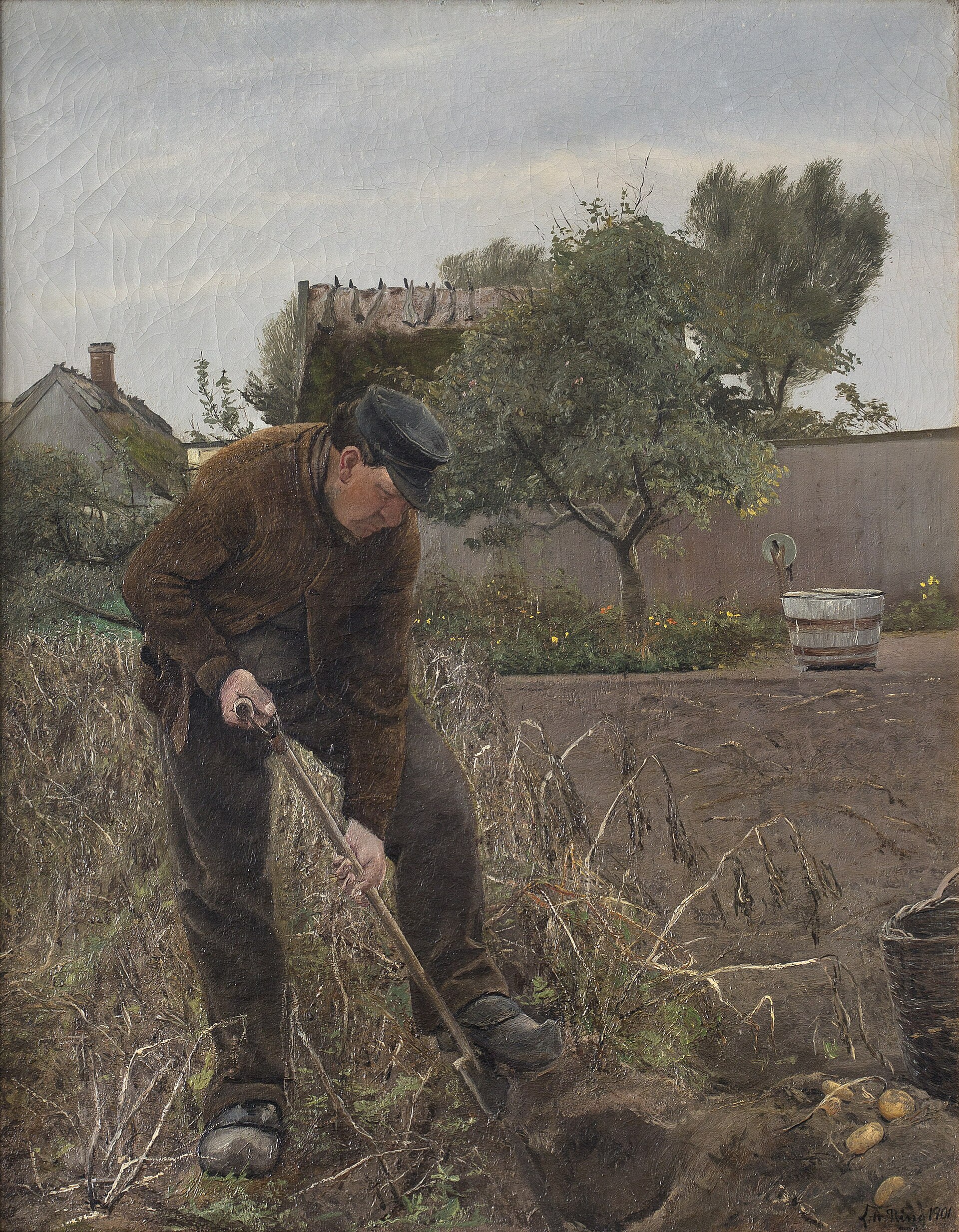
Photo: A man digging potatoes, a 1901 painting by the Danish artist L.A. Ring (illustrative). Laurits Andersen Ring / Wikimedia Commons, CC0