The government of Cyprus has approved an extra 3.5 million cubic metres of irrigation water for 2026. The cabinet took the decision on 16 September, the Cyprus Mail reported. Three million cubic metres come from the Southern Conveyor, the main water pipeline in the south of the island. Another 500,000 cubic metres come from the Paphos irrigation project.
Of the Southern Conveyor water, 2 million cubic metres are for autumn seasonal crops, including potatoes. The remaining 1 million cubic metres are for tree crops. The decision was based on updated data and technical assessments of the Water Development Department, which found a limited extra margin in the system.
Agriculture Minister Christos Senekis said: “Today’s decision does not mean that the problem of water scarcity has been overcome, or that the need for prudent water management is removed.” He said water use will be monitored closely, with corrective measures if needed. A day earlier he told the House agriculture committee that the allocation is “a dynamic process” and that further action will be taken if necessary. He also said the government plans three more desalination plants by 2031.
Farmers warned about the potato season
Potato farmers had pressed for more water. In August the farm organisations Pek, Eka and Panagrotikos warned that water shortages could hit the planting of the winter potato crop, the news site Kiprinform reported. “If the necessary quantities of water are not provided, there is a risk of losing markets,” said Pek president Christos Papapetrou. Eka leader Panikos Hambas said recent rain was helpful, but the water problem was not solved.
The weather has been unusual. According to the Cyprus Mail, August 2026 was the wettest month since 1902.
Why it matters
Farm groups link the winter potato crop directly to export markets, and the crop depends on irrigation. The extra water gives growers more certainty before planting the autumn and winter crop. Without it, farmers feared smaller plantings and lost export markets.
The minister made clear that water remains scarce. Growers will need to use water carefully, and long-term supply depends on new desalination plants.
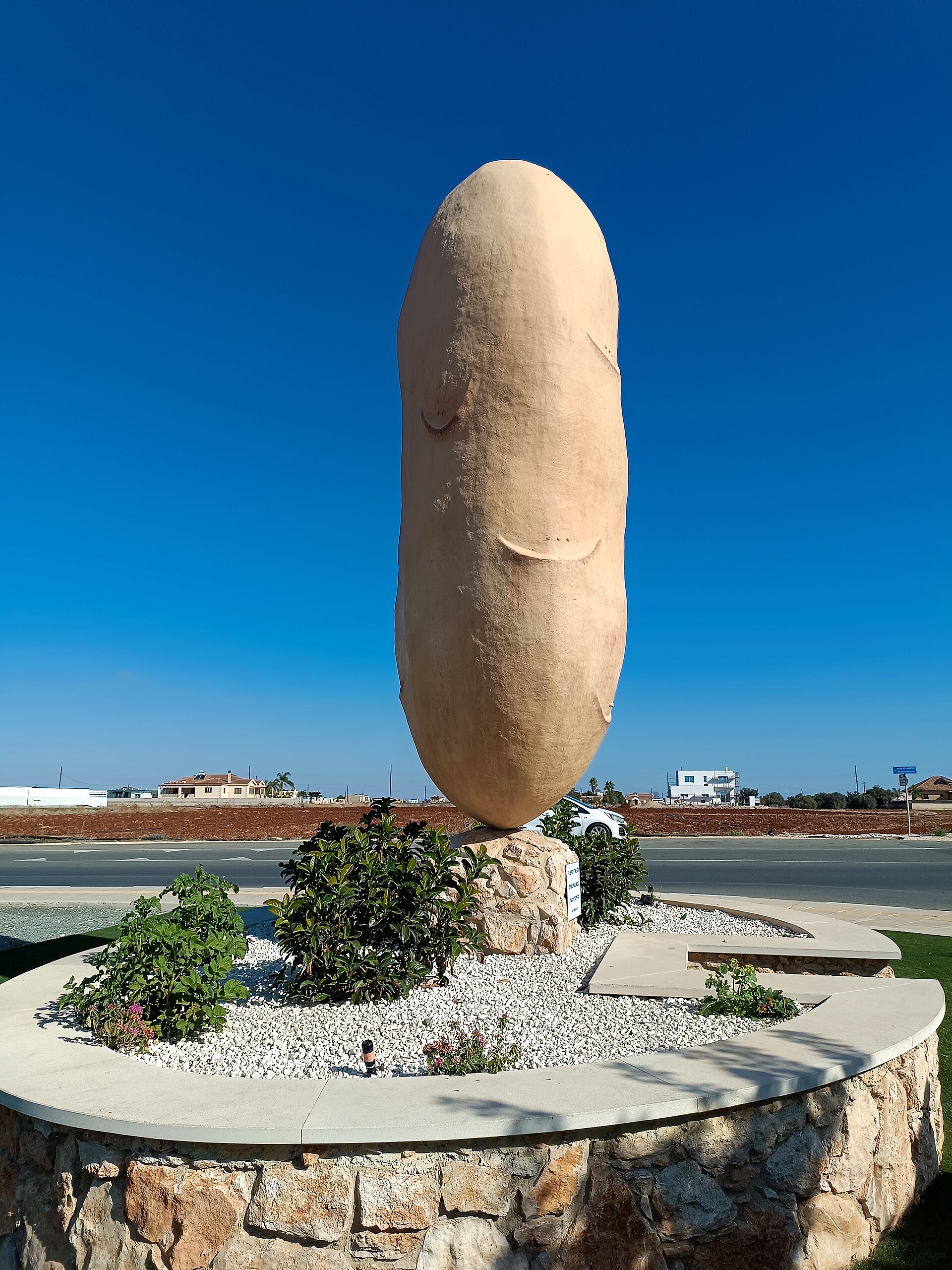
Photo: The Big Potato monument in Xylofagou, a potato-growing village in Cyprus (illustrative). Knowledge2need / Wikimedia Commons, CC BY-SA 4.0