
Colorado Potato Beetle (Leptinotarsa decemlineata)
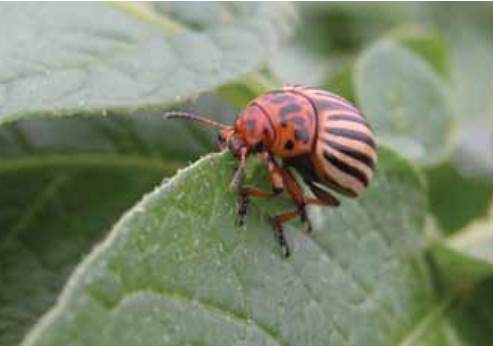
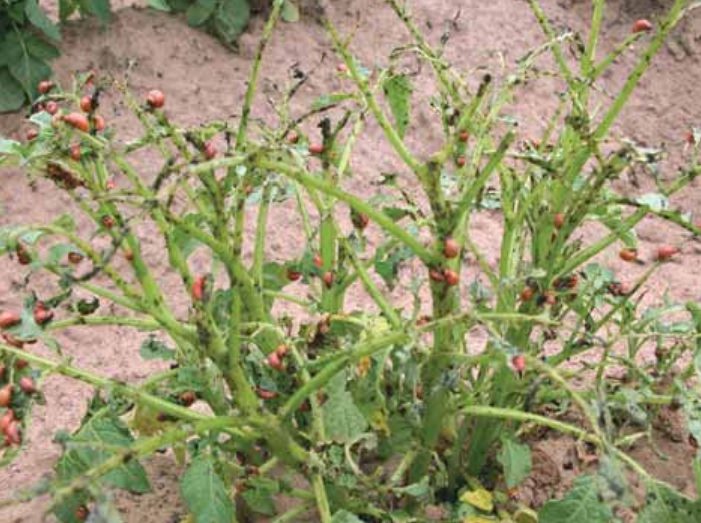
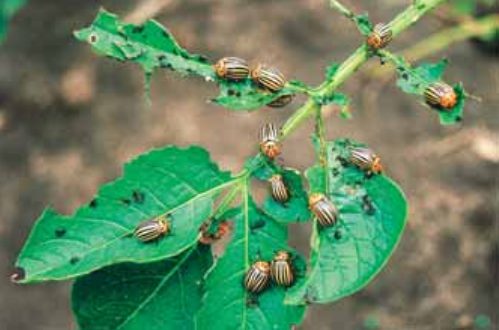
Life stages: eggs, larvae, pupae, adult beetles. The Colorado potato beetle (CPB) is one of the most serious insect pests of potatoes. The feeding damage
caused by CPB will drastically reduce yield if no effective control is applied.
Weather conditions determine the number of CPB generations per season. If cool temperatures prevail (15–16°C), CPB completes its life cycle in about 8 weeks. By contrast, at high temperatures (30–33°C), CPB populations increase rapidly because the incubation period of the eggs and the time for development of larvae and pupae is shortened. In Ontario, CPB generally completes two generations during the growing season. In warm summers, a third generation may develop.
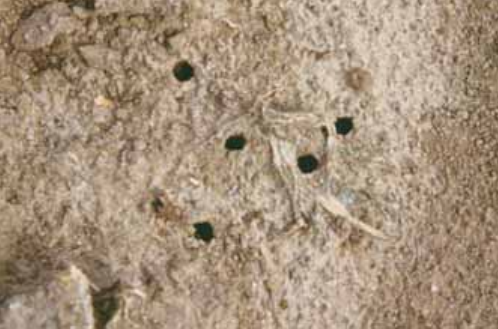
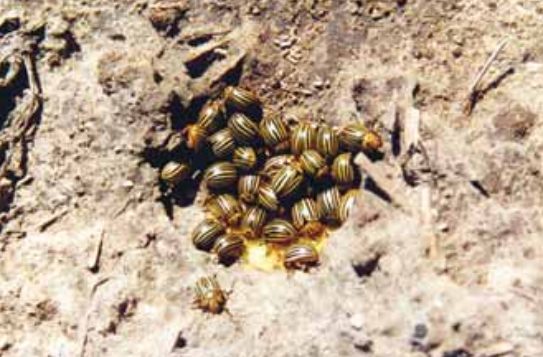
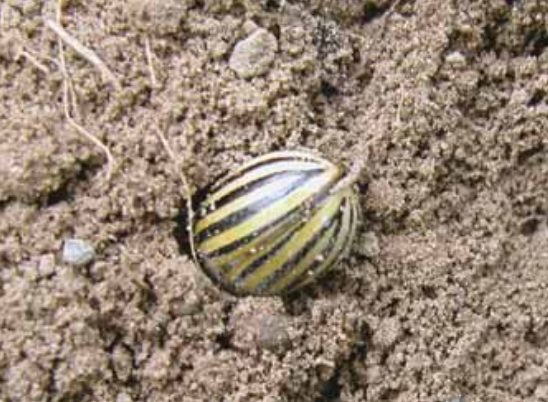
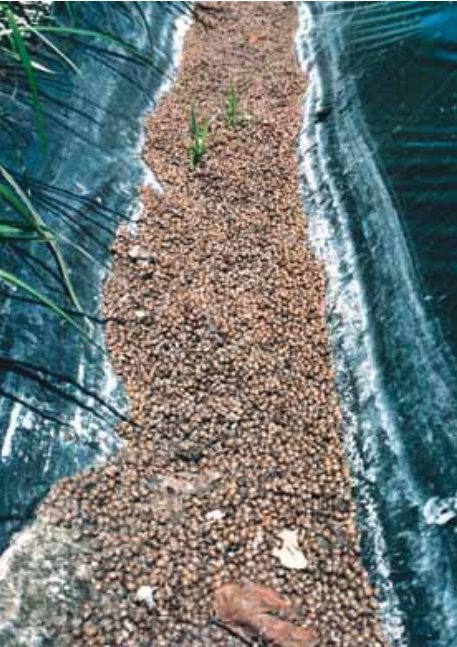
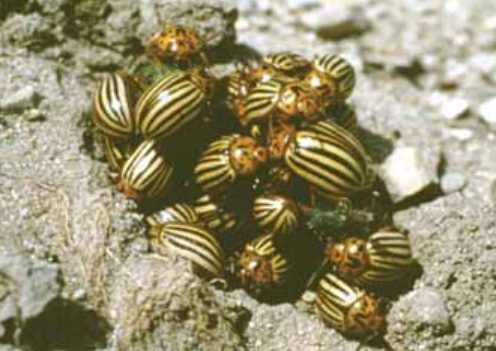
In the fall, adult beetles burrow into the soil either in potato fields or in protected places surrounding the fields to overwinter at depths of 25–35 cm. When beetles emerge in the spring, most walk to the crop. If the weather is warm, a few beetles will fly directly to the fields. The infestation and feeding damage of CPB is first noticed along the edges of potato fields close to overwintering sites. If spring weather is warm, beetle emergence may be very rapid; during cool springs, beetle emergence may be quite slow.
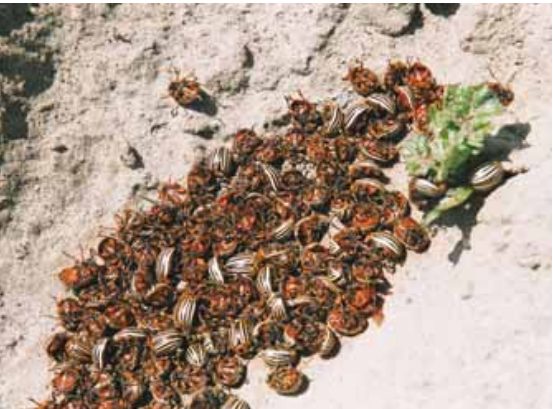
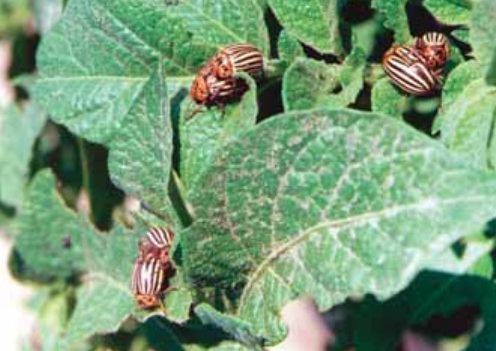
On warm, sunny days, beetles are easily observed feeding on top of the plants, but on cool days they hide under soil clods or foliage. Mating and egg laying occur shortly after emergence. Females may lay as many as 400 eggs during their life span of 4–5 weeks. The yellow eggs are laid in clusters, usually on the underside of leaves. Frost will kill the eggs, as will sandy soil splashed by heavy rain onto the egg masses.
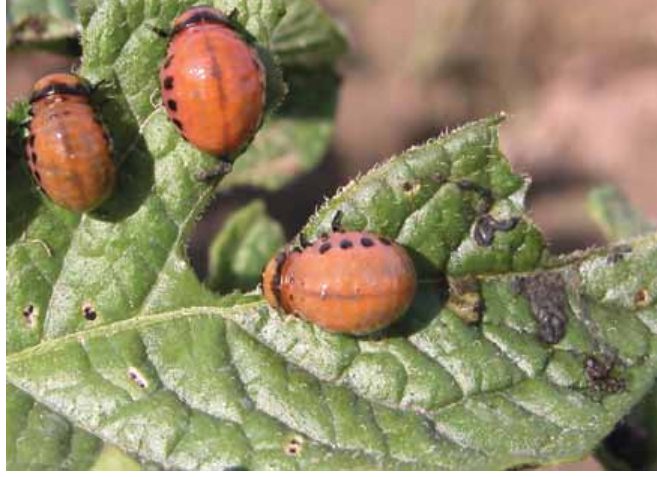
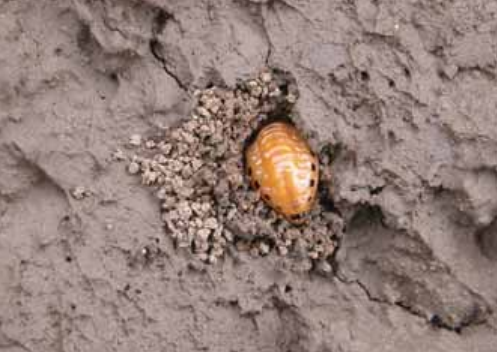
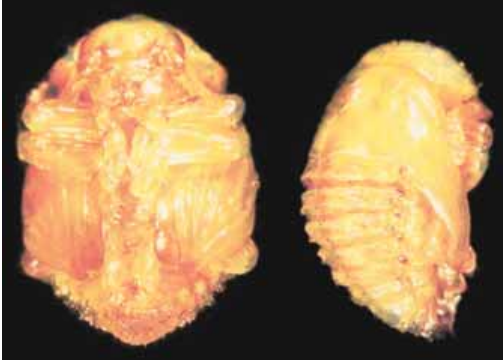
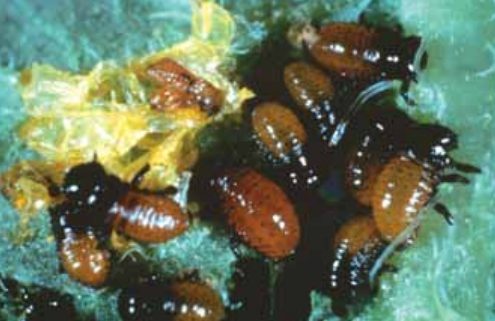
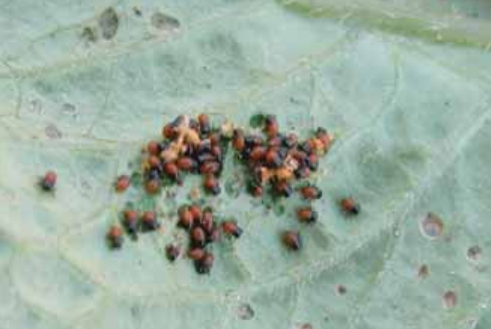
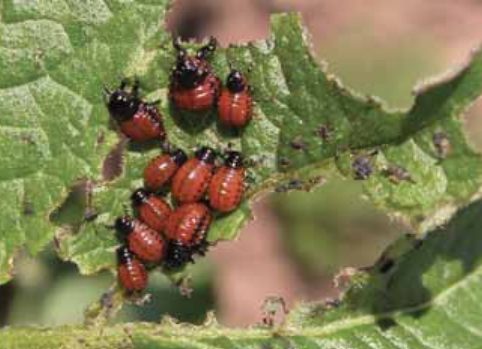
Eggs hatch into larvae within 4–9 days, depending on temperature. Larvae are reddish with a distinct black head, humped back and double row of black dots on each side of their bodies. The larvae pass through 4 stages (instars), reaching maturity in 7–20 days, depending on temperature. Once the fourth-instar larvae have matured, they crawl down to the ground and bury themselves in the soil to a depth of 5–10 cm to pupate. The pupal stage lasts 5–9 days. The next generation of adults then emerges.
Beetles that overwinter and emerge in the spring are usually called “first generation beetles” and die 4–5 weeks after emergence. The beetles that emerge from pupae during the season—usually in July—are called “second generation beetles.” These second generation beetles feed continuously to accumulate enough energy to survive the winter buried in the soil. In southwestern Ontario, a partial third generation may develop if summer weather is unusually hot.
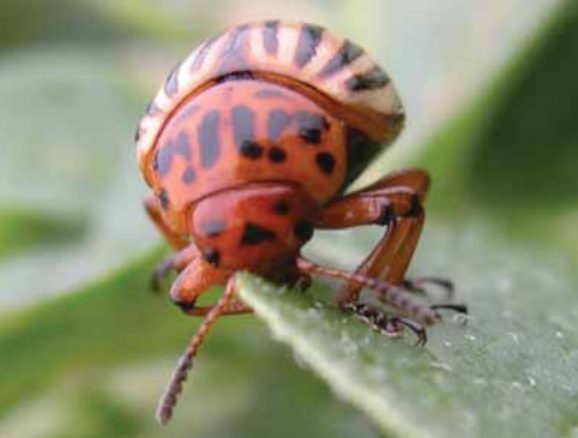
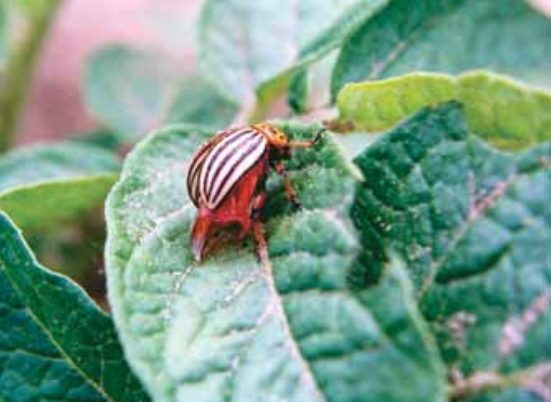
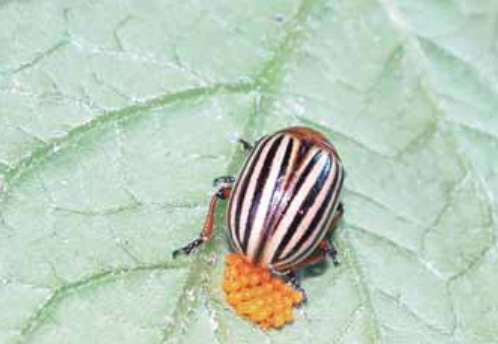
Males are a few millimetres smaller than females. On the wing covers,
10 black stripes run lengthwise over a yellow-cream background.
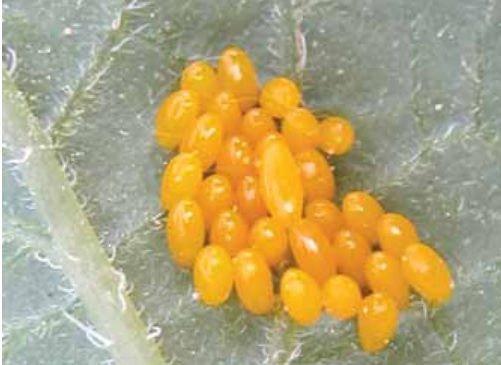
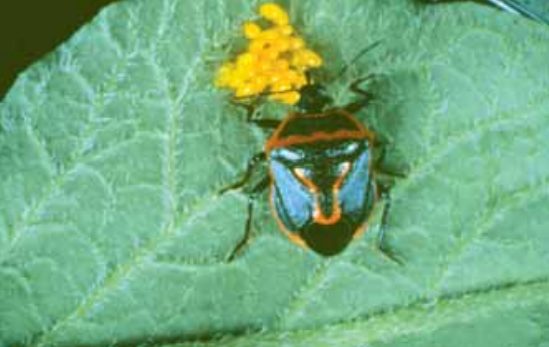
masses have 25–40 eggs and are usually laid on
the underside of the leaves. Eggs turn dark orange
close to hatching time.
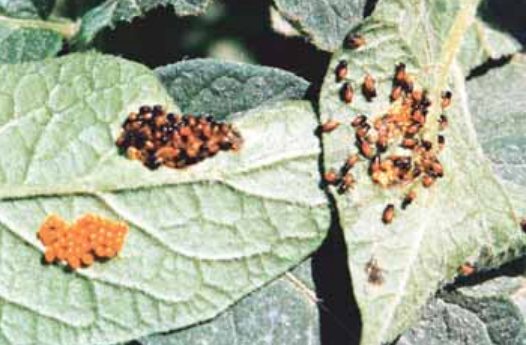
(middle) and newly hatched larvae moving away from
the egg hatch site (right).
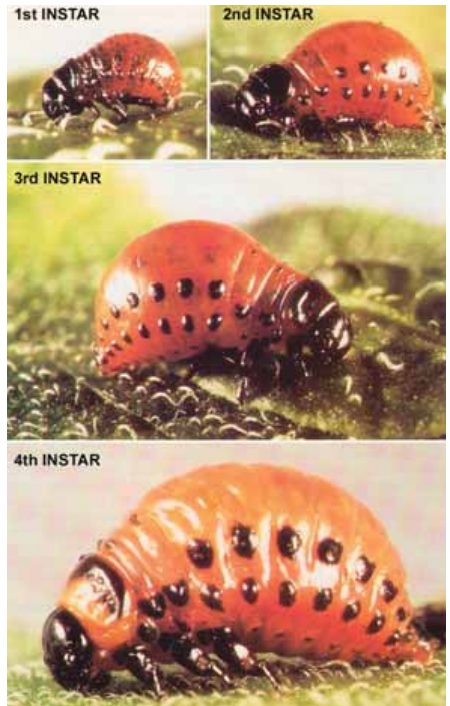
and humpbacked, with two rows of black
spots on each side of the body. There
are four larval stages (instars).
SMALL LARVAE
First instar or newly hatched larvae are very tiny, about 1.5–2 mm long. Second instar larvae are up to 5 mm long.
LARGE LARVAE
Third instar larvae are about 8 mm long. Fourth instar larvae reach a maximum length of 12 mm.
feed on the tender tissues of the growing point of
the potato plant.
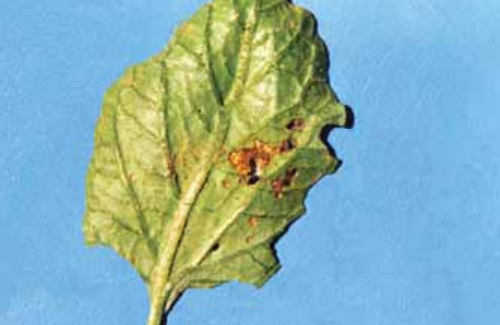
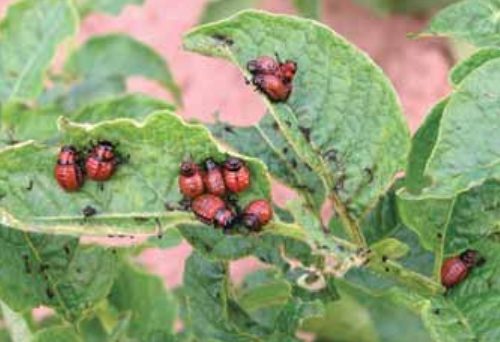
days, larvae and adults tend to feed on upper
leaves. On cool days, they hide under the foliage
adults leave black droppings on the foliage.