During April 2021 we experienced cold dry conditions which haven’t been seen in some years.
Moving into May much of the country has received, or is about to receive, some much needed rain together with an increase in cold temperatures, however short-lived. Following the colder drier conditions throughout the first half of spring this could cause additional problems. Earlier-planted crops may now be ready to crack above the soil surface.
How will the cold spring affect potato crop management decisions?
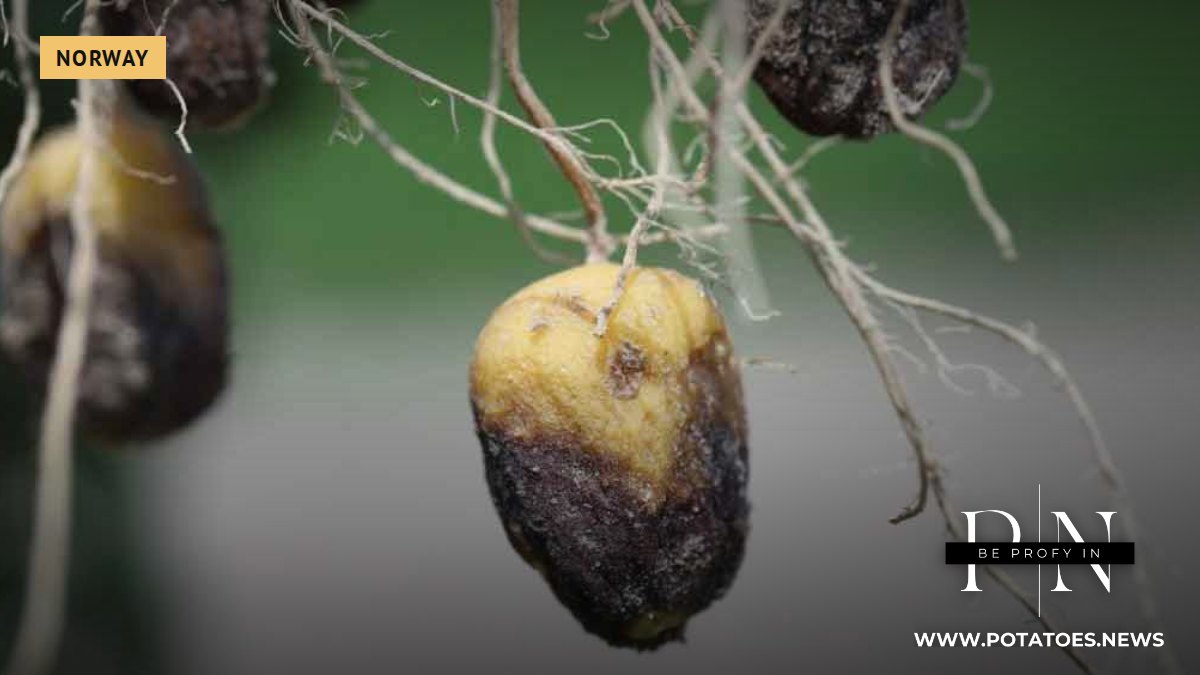
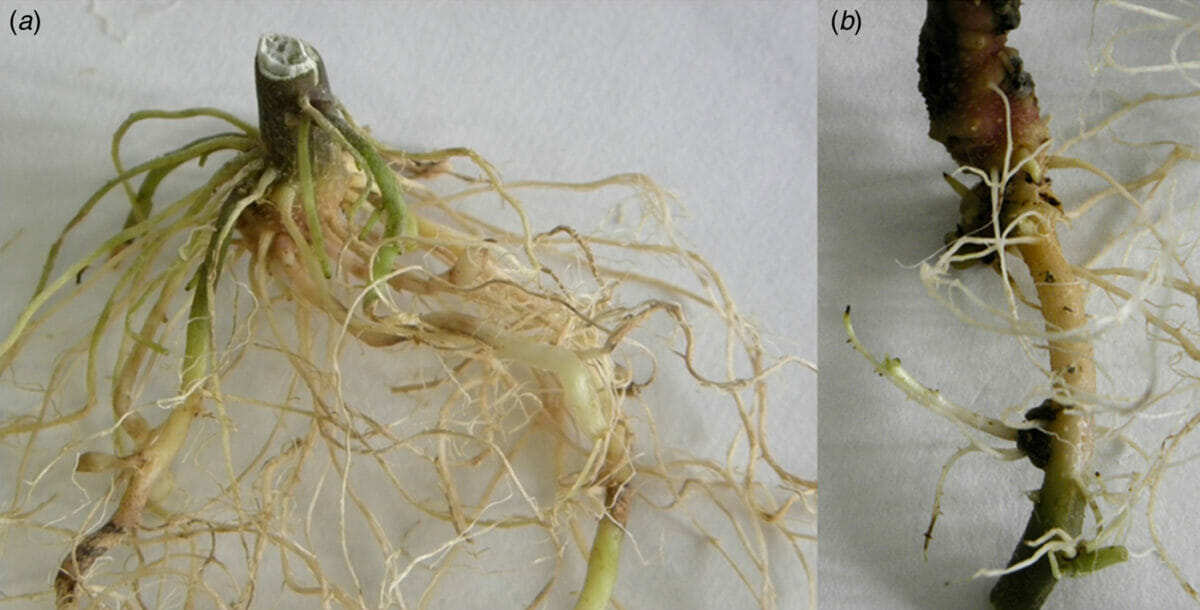
Rhizoctonia solani will be a threat to watch out for especially early in the season. Emerging sprouts may be attacked and then later on – the base of the stem will become vulnerable. Symptoms could appear as blackened sprouts, causing secondary sprouts to grow – these may also become infected. Sprouts may not emerge under severe attack.
Control methods for Rhizoctonia in potato crops after a cold spring:
Chemical control of Rhizoctonia in potato crops
The current chemical options available as treatments for protection against Rhizoctonia solani are flutolonil, azoxystrobin, fludioxonil and fluxapyroxad. However there are also newer actives on the horizon which include biological approaches as well as chemical options.
Non-chemical and IPM options for the control Rhizoctonia in potato crops
The use of biological agents is gaining speed and being recognised as a potential alternative to protect crops against the pathogen.
Biological controls used as part of an IPM planting strategy for seed potatoes are now being considered in the alternative control of Rhizoctonia solani. Naturally occurring soil bacteria such as specific strains of Pseudomonas sp is used in the organic sector. This alternative approach provides a reasonable level of preventative activity and is approved for the reduction of Rhizoctonia solani on seed potatoes. A number of horticultural companies are now looking at this biological approach.
The use of bacterial defences, for example Bacillus subtilis, are already being tested considered as another alternative approach to controlling this disease. Other options for an integrated pest management approach include the use of novel varieties, and some biofumigation methods.
Rhizoctonia in potato crops – fact file:
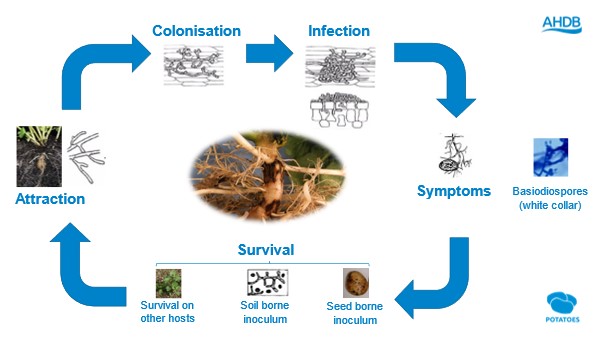
Rhizoctonia solani is both a seed and soil-borne fungal pathogen which is found in a range of crops, including potatoes, worldwide. Infected seed and inoculum already present in the soil are the main causes of infection.
Rhizoctonia symptoms in potato crops
This disease causes many defects such as stolon and stem cankers; however skin finish defects such as “black scurf” caused by the sclerotia, “elephant hide” style blemishes, cracking and tuber deformities are also well documented. Rhizoctonia solani can also cause up to 30% yield losses attributed to weight loss whilst in store.
Rhizoctonia and potatoes – lifecycle
The lifecycle of this pathogen has raised interest and concern in relation to cultivation practices. The pathogen overwinters as sclerotia and mycelium on infected tubers, as well as in plant residues and soils which are already infected.
What conditions favour Rhizoctonia in potato crops?
Research has highlighted that there are a number of factors that contribute to the multiplication and infection in potato tubers:
Temperature
Potatoes are often planted in colder soils here in the UK and grow slowly. Rhizoctonia is a disease of young immature plants and can be most damaging in soils between 16 – 23°C in the UK, reducing in aggressiveness as soils warm up. The longer the plant takes to establish, the more susceptible it could be to Rhizoctonia infection.
Moisture Rhizoctonia favours colder dry conditions.
Soil type Sandier soils with more pores and cracks can provide the channel for the pathogen to become more mobile.
Depth of planting Plant at an optimal depth if you plant too deep the plant could be more pre-disposed to infection – plant too shallow there is the risk of greening of the tubers.
Nematodes There is growing evidence that infection can be caused by plants as in weeds as alternative hosts for nematodes. Certain species of plant parasitic nematodes (PPNs) have been found to facilitate secondary infections by fungal pathogens by caused by nematode damage to the roots of the young plant.
Rhizoctonia management techniques in potato crops
Seed treatment has been regarded for a prolonged period of time as the best method for controlling this disease. However with the withdrawal of many of the active substances used to protect tubers at planting, as well as when in store; it is now becoming increasingly important to understand the value of an integrated pest management strategy to minimise the risks.
- Where possible select a varietywhich is linked to rapid skin set.
- Check levels of inoculum in the soil through testing for the presence of inoculum and also soil borne organisms including PCN and other nematode species.
- Consider seed or in-furrow soil treatments (chemical or biological) where required
- Choose tested, certified and clean seed
- Plant in temperatures above 8°C to speed up emergence and reduce risks of stem canker
- Dol not dump harvested infested tubers on future potato fields as they can become sources of inoculum.
- Manage the rotation – lengthen rotations wherever possible to reduce build-up of the pathogen in soils
For more information, see the AHDB webinar recording with Dr Matt Back, Harper Adams University, UK; to whom we thank for his contribution to this subject:
See the R422 Final Research Reviews for more information on the management of Rhizoctonia.