China: Dingxi Claims Half of the Country’s Seed-Potato Capacity at Its 2026 Potato Congress
The Gansu city reports 1.5 billion virus-free minitubers a year, 5 million tonnes of potatoes and a 28 billion yuan industry chain. The figures come from local officials and were repeated by state media.
Dingxi, a city in China’s northwestern Gansu province, used its annual potato congress on 16 September to present itself as the country’s seed-potato hub. The 2026 China·Dingxi Potato Congress brought together more than 600 guests from research institutes, government, industry associations, processors and e-commerce platforms, according to Science and Technology Daily and Xinhua.
Both outlets reported the same core figures from local officials:
- potato area stable at 3 million mu (about 200,000 ha), with output above 5 million tonnes;
- whole-chain output value of 28 billion yuan in 2025;
- virus-free pre-basic minituber capacity of 1.5 billion per year, which officials say is about half of China’s seed-potato capacity;
- potato income equal to 22% of farmers’ per-capita disposable income;
- annual output value of Dingxi wide starch noodles above 5 billion yuan.
Science and Technology Daily also put the value of the “Dingxi potato” regional brand at 39.6 billion yuan. Xinhua added that the city has 28 leading processing companies with 960,000 tonnes of processing capacity and 131 wide-noodle producers, and that its seed material is exported to Egypt and Turkey. These figures appeared in one outlet only.
Weekdays. Unsubscribe in one click.
A number to read carefully
Xinhua quoted yields rising from about 2,800 to more than 8,000 jin per mu. That is not the city average. The officially reported area and output imply about 3,300 jin per mu, or roughly 25 t/ha (POTATOES NEWS calculation). The 8,000-jin figure most likely refers to the best irrigated fields.
Context
All the data come from local government sources repeated by state media, so the independent outlets confirm what was said, not the underlying statistics. Chinese policy now treats seed self-sufficiency as a strategic priority, and Dingxi’s pitch fits that line: clean seed at scale, a processing base built on starch and noodles, and a regional brand.
Why it matters
China is the world’s largest potato producer, and seed self-sufficiency is now an explicit policy goal. If Dingxi’s capacity figures hold, a single city supplies around half of the country’s seed-potato capacity. That concentration is both a strength and a risk, for example from disease or a bad season. For foreign seed and equipment suppliers, the message is that China is building domestic capacity rather than importing it. The mention of Egypt and Turkey shows that Chinese seed material has started to reach export markets.
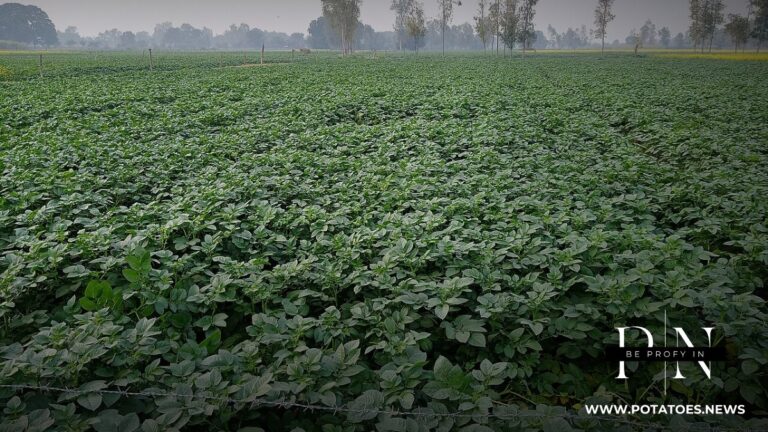
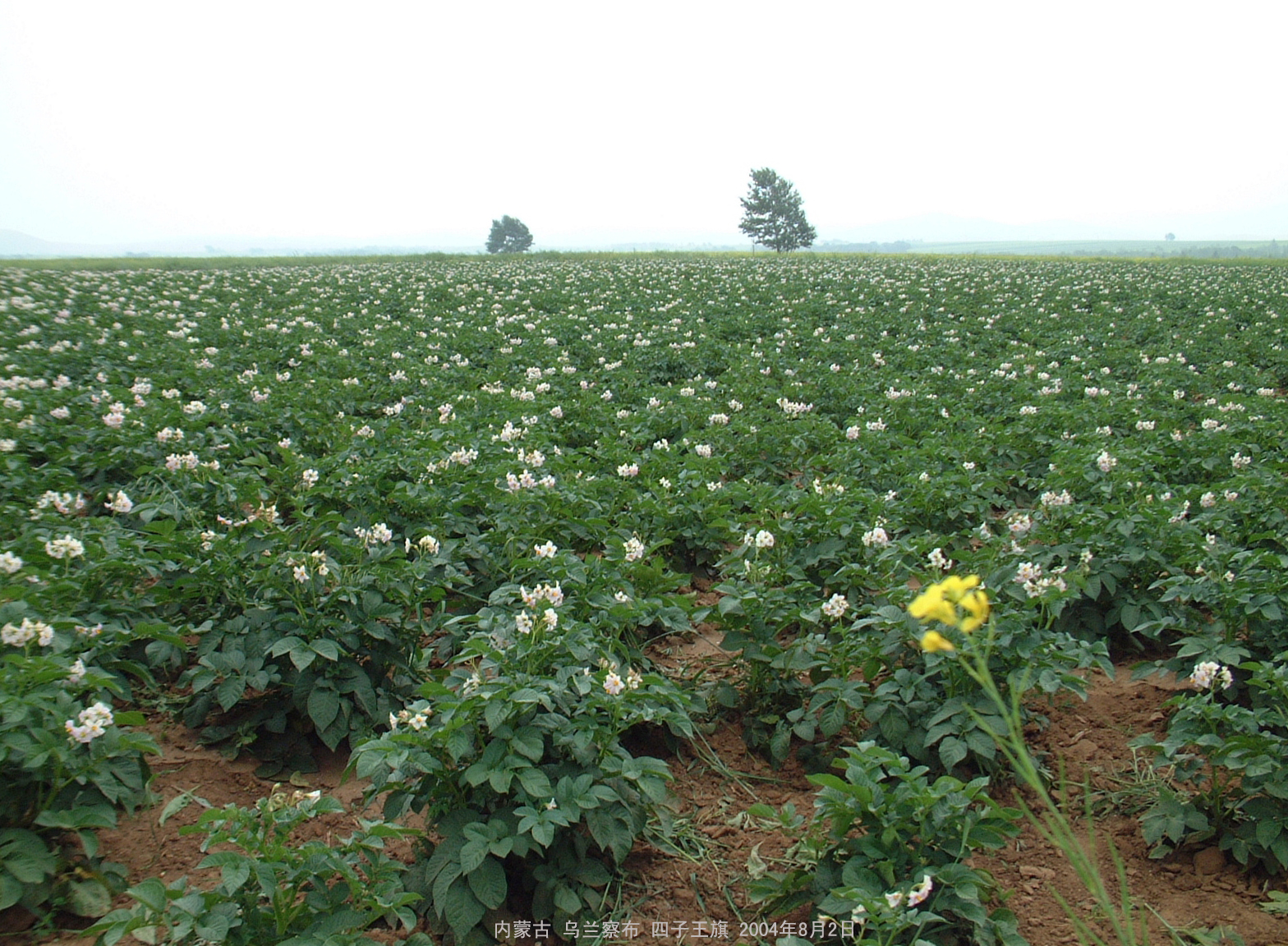
Photo: Potato field in Inner Mongolia, northern China (illustrative). wanghongliu / Wikimedia Commons, CC BY-SA 3.0.