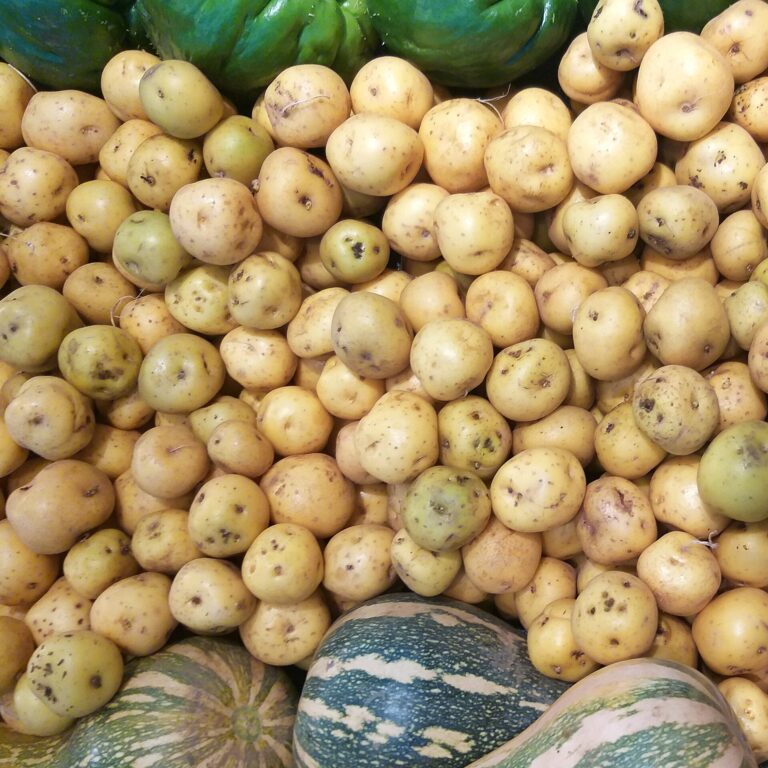
Chile: pesticide impact diagnostic in La Araucanía finds potato growers running at twice the project’s reference level
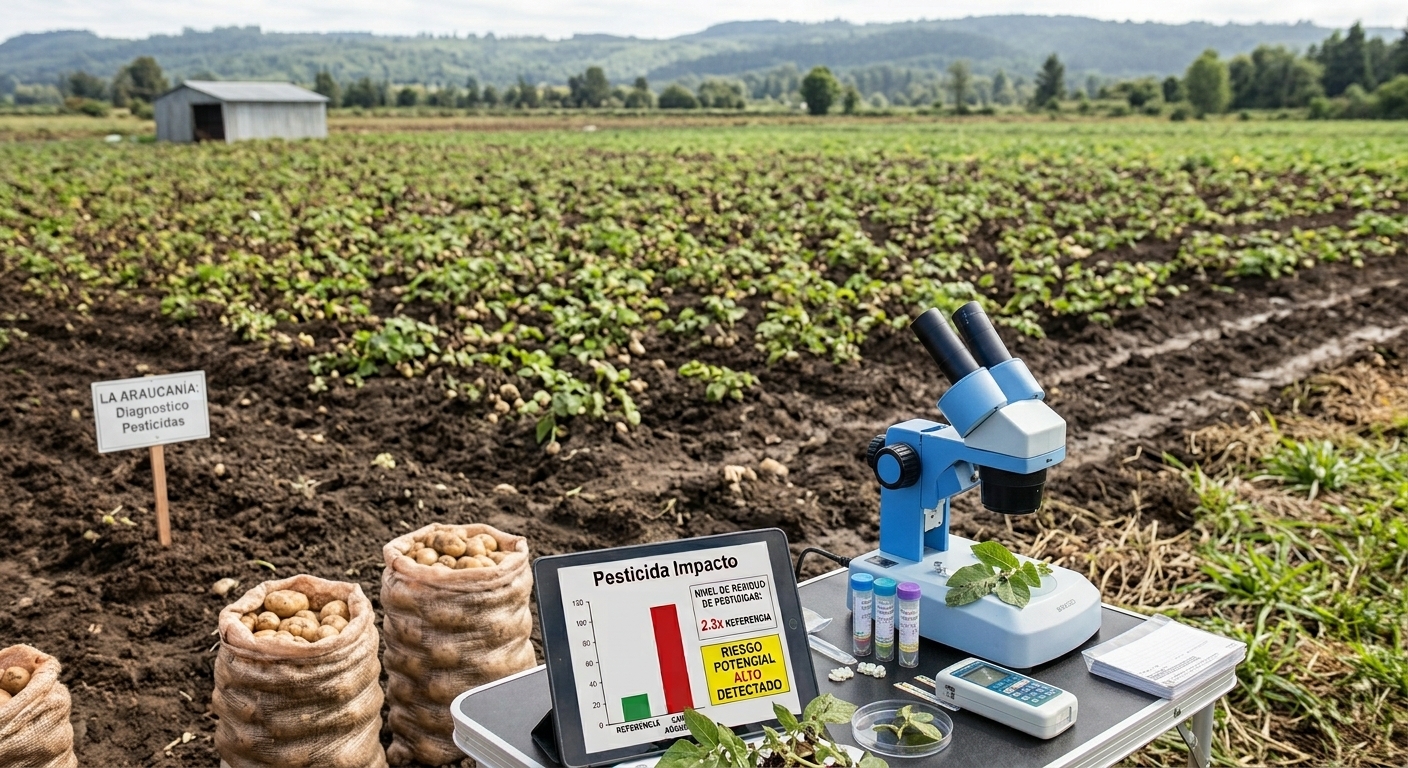
A field diagnostic carried out under the FIA-funded Papa Huella Cero project has put a number on what agronomists in coastal La Araucanía had assumed: late blight control is the dominant driver of pesticide load in the region’s potato systems, and it pushes growers far past the level the project set as its working target.
The finding
Presenting at a seminar in Puerto Saavedra on 5 September, INIA agronomist Mario Hidalgo reported that participating holdings average an Environmental Impact Quotient of roughly 300 points, against a reference level of 150 adopted by the project. Intensive fungicide programmes against late blight account for most of the gap, with the commune of Saavedra singled out.
Weekdays. Unsubscribe in one click.
Two qualifications belong with that figure. The EIQ Field Use Rating is calculated per hectare per season and has no recognised international threshold — the 150-point level is INIA’s own working benchmark, not a regulatory limit. And the diagnostic results have so far been presented verbally; INIA has not published them as a report.
What the project is
Papa Huella Cero — full title “agroecological transition protocol for potato production systems in La Araucanía”, project code PYT-2025-0144 — is executed by INIA Carillanca with financing from the Agrarian Innovation Foundation (FIA). It runs 36 months on a budget of 147 million Chilean pesos, led by extension researchers Patricio Méndez Leal and Claudia Osorio Ulloa, and covers the seven communes of the Tranapuente agreement: Carahue, Saavedra, Toltén, Teodoro Schmidt, Gorbea, Nueva Imperial and Freire.The work is organised in four components: environmental diagnosis using the EIQ methodology; a mobile application for decision support and impact scenario modelling; field validation through demonstration sites, farm-level management plans and monitoring; and technology transfer through technical workshops with growers and municipal technical teams. IniaTemucotelevision
Targets include 200 agroecological management plans on potato holdings and participatory validation of the protocols alongside farmers and municipal staff. EIQ itself scores the potential risk of a product to farm workers, consumers, biodiversity, natural resources and beneficial organisms — which makes it usable as a discriminator between actives of comparable efficacy rather than as a measure of how much product is applied. Inia
The application will be free and is designed to return an immediate toxicity reading for any product registered with the Agricultural and Livestock Service (SAG). The diagnostic also flagged a health issue that was not the project’s original focus: participating growers largely lack personal protective equipment when spraying, and the first training modules have been redirected accordingly. Temucotelevision
Governance and seed supply
The findings were reviewed at the ordinary meeting of the administrative council of the Tranapuente Regional Potato Centre, which INIA Carillanca leads. Regional director Fernando Ortega and centre head Patricio Méndez took stock of 2026 and opened the definition of work lines for the 2027–2032 renewal of the agreement, with closer articulation between INIA, the municipalities and other local actors identified as a priority. The centre has operated for more than three decades.Two operational items were confirmed for the coming months: a distribution of seed and native potato material to growers in the territory, and training activities on seed potato management and production scheduled for September and October. The training already delivered during 2026, reaching around 340 participants in the agreement, covered pulses rather than potatoes. IniaInia
Sector context
National potato area reached 39,486 hectares in 2024/25, up 9% year on year, with the largest area concentrated in La Araucanía and Los Lagos. Potatoes carry the largest producer base of any annual crop in Chile — 24,506 production units per the VIII National Agricultural Census, roughly half of them working under five hectares. La Araucanía and the regions to the south are free of the quarantine pests of potato: golden and pale cyst nematodes, potato smut, bacterial wilt and phoma, a status maintained through SAG’s National Potato Health Programme. ODEPA. Boletín de la papa, septiembre 2025 – Opia.CL: Observatorio para la Innovación Agraria, Agroalimentaria y Forestal +2
Practical implications
The diagnostic narrows where intervention pays. Because the excess load is concentrated in the late blight programme rather than spread across the pesticide portfolio, the index responds to changes in one schedule — which is a tractable target for extension work in a smallholder-dominated territory.
EIQ gives growers a way to substitute between actives of similar biological efficacy but different risk profiles. That produces a lower score at an unchanged spray count, which matters because it decouples the environmental metric from the yield risk of cutting applications. Whether the transition also improves margins depends on reducing the number of applications without losing yield, and the project has not yet reported first-season productivity data.
For the seed side, the binding constraint is phytosanitary rather than agronomic. The free-area status is what makes regional seed multiplication commercially viable at all, and it rests on discipline around legal planting material and soil movement on machinery — not on anything the agroecological protocol addresses.