Chile: Potato Wholesale Price in La Calera Falls to 30-Day Low, 19.7% Below National Reference
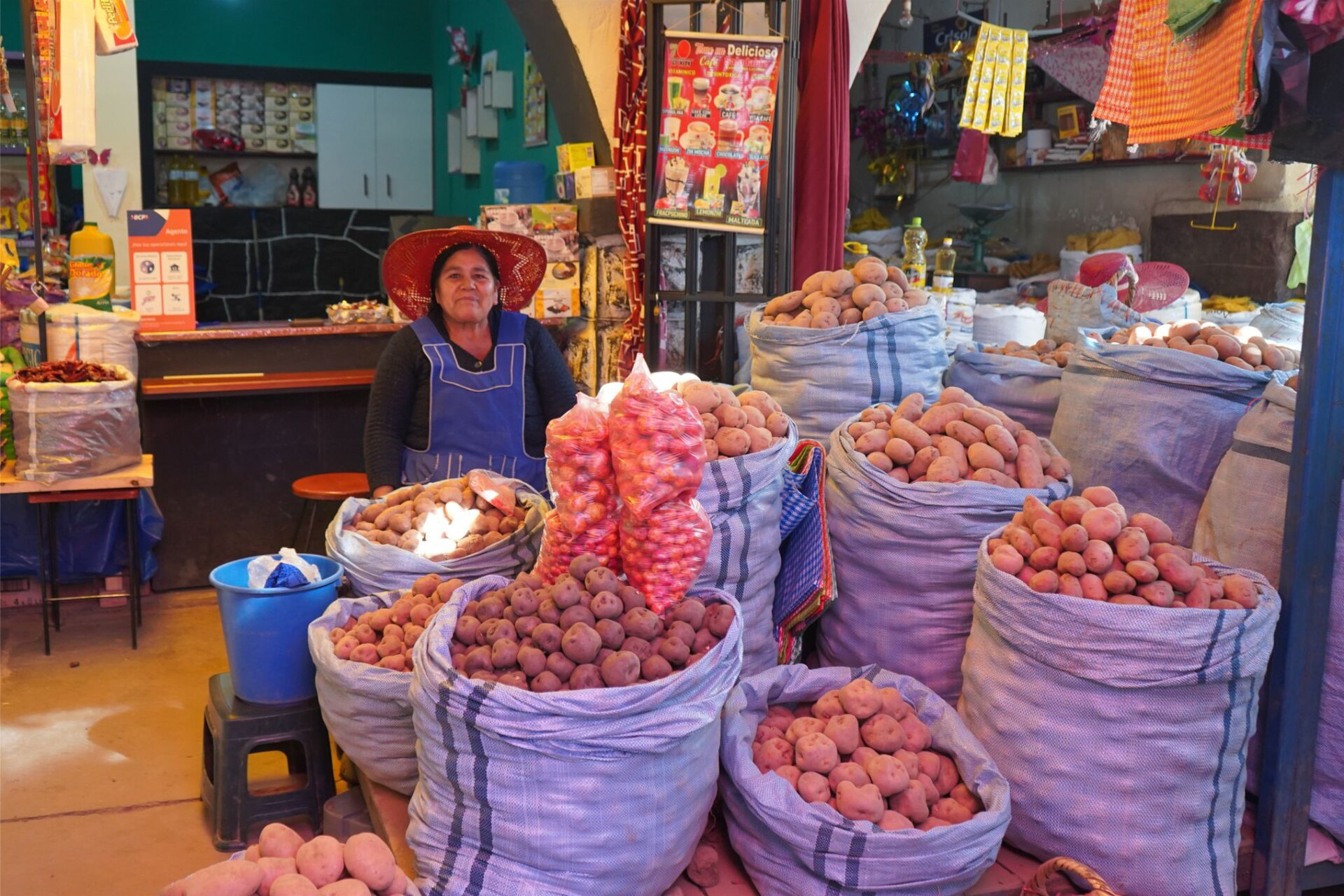
Chile’s potato market is offering a study in regional divergence. On 15 October, the wholesale price at the Feria Mayorista de La Calera (Femacal) — one of the country’s key produce markets, serving the Valparaíso region — settled at 18,750 Chilean pesos per 25-kilo sack, equivalent to roughly 750 pesos per kilo. The figure marks a 1.3% weekly decline and the lowest reading recorded at La Calera in the last 30 days, according to AgroPrice data built on official figures from ODEPA, the Chilean agriculture ministry’s studies and policies office.
Over that 30-day window, La Calera prices oscillated between 18,750 and 20,500 pesos per sack, averaging 19,662. The current quote therefore sits 912 pesos below the market’s own monthly mean — a gap of about 4.6%. More striking is the distance from the national picture: the volume-weighted national wholesale reference, calculated across the markets surveyed, stood at 23,345 pesos per 25-kilo sack. La Calera is trading 4,595 pesos under that benchmark, a difference close to 19.7%.
The dispersion across Chilean markets remains substantial. At the southern end, Puerto Montt’s Feria Lagunita registered 17,500 pesos per sack — the lowest of the markets cited. Chillán and Concepción, in the country’s central-southern growing belt, reached 20,000 pesos. Santiago’s two big metropolitan terminals tell a different story entirely: 23,500 pesos at Lo Valledor and 24,500 at Vega Central Mapocho. The spread between the cheapest and the most expensive market thus approaches 7,000 pesos per sack — around 40% — confirming significant differences by market and supply zone.
Weekdays. Unsubscribe in one click.
For the trade, such dispersion is both a logistics map and an arbitrage signal. La Calera functions as a supply hub for coastal central Chile and the Valparaíso conurbation; when its quotes run nearly a fifth below the national weighted average, product from the surrounding producing zones is clearing locally rather than paying freight into the capital’s terminals. For Santiago retailers, the persistence of a 23,500–24,500 peso range at Lo Valledor and Vega Central indicates that capital-region supply remains priced at a clear premium despite softer conditions elsewhere.
The timing matters. Chile is moving through its spring, with new-crop volumes gradually building; a 30-day low at a major regional terminal, arriving alongside a weekly decline, is consistent with the early stages of seasonal supply expansion. Whether the national reference follows La Calera down — or whether Santiago’s premium simply widens — will depend on how quickly new volumes reach the metropolitan markets and on the state of road logistics between the producing south-central zones and the capital.
For growers, the immediate reading is less comfortable: a sack at 18,750 pesos at La Calera, or 17,500 in Puerto Montt, leaves thin margins over harvest and freight costs in the southern regions. The next AgroPrice/ODEPA readings will show whether 15 October marked a floor or merely a step in a longer seasonal slide.