Canada: New Ring Rot Directive Keeps Zero Tolerance and Tests Up to 800 Tubers per Seed Field
Canada's new bacterial ring rot directive for seed potatoes takes effect on October 12, 2026. It keeps zero tolerance and sets sample sizes of 100 to 800 tubers by field size.
The Canadian Food Inspection Agency (CFIA) has issued a new directive on bacterial ring rot for field-grown seed potatoes. Directive D-26-01 takes effect on October 12, 2026. It replaces two older documents: D-97-12, the ring rot testing programme, and D-95-18, the investigation procedure after a detection. The page was last modified on August 21, 2026.
The basic rule does not change. Under Part II of the Seeds Regulations, there is zero tolerance for ring rot on a seed potato farm unit. The disease is caused by the bacterium Clavibacter sepedonicus.
The directive sets how many tubers growers must send for testing. At least two lots must be tested before seed potatoes leave a farm unit. The sample size depends on field size:
Weekdays. Unsubscribe in one click.
- 0.025 to 1.0 ha: 100 tubers
- 1.0 to 4.0 ha: 200 tubers
- 4.0 to 40.0 ha: 400 tubers
- more than 40 ha: 800 tubers
Approved laboratories do the tests at the grower’s cost. Confirmation methods may include ELISA, immunofluorescence (IMF) and PCR. New seed farms must test all lots in their first three years.
A positive result has heavy consequences. CFIA revokes the certification of all seed lots on the farm unit. For three years after the latest detection, no seed tags are issued. Infected fields are excluded for two calendar years. In an investigation, sister lots are sampled at 2,000 tubers per lot and other lots at 1,000 tubers. Growers must keep all ring rot test results for 10 years. Bins, stores and handling equipment must be cleaned and disinfected with products registered against the disease.
Why it matters
Ring rot is hard to see and easy to spread. University of Maine Cooperative Extension says a seed lot with only a trace of the disease may produce a crop with 10% to 30% infected plants. Most spread happens during seed cutting and planting. The bacteria survive in dried slime on harvesters, graders and sacks. They can live for years, even below freezing. The disease develops fastest at 70 to 75°F (about 21 to 24°C) and only slightly at 37°F (about 3°C), so cold stores can hide it.
UMaine notes that zero tolerance is the rule across North America and internationally. For seed buyers anywhere, the Canadian directive is a useful benchmark: a clean test result is only as strong as the number of tubers behind it.
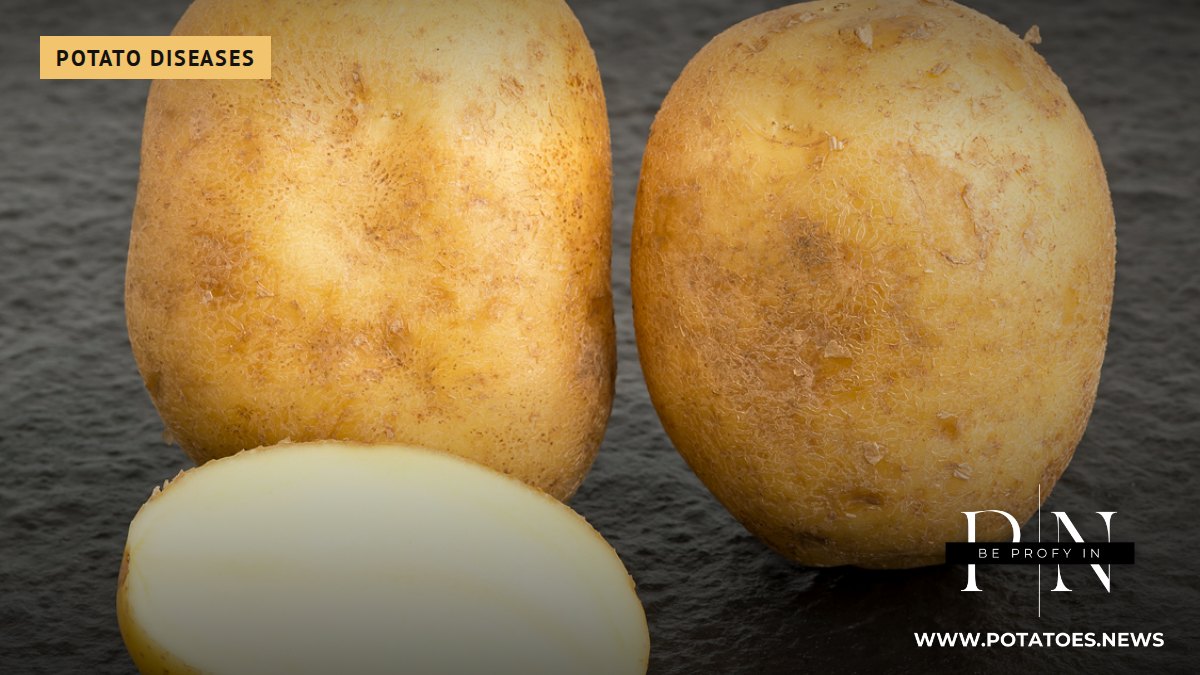
Photo: Whole and cut potato tubers (illustrative). Sylvia Breslin, Science and Advice for Scottish Agriculture / Wikimedia Commons, OGL 3