Cameroon produced 20,000 tonnes of potatoes in 1961, according to FAOSTAT data published by Our World in Data. The yield was 2.9 tonnes per hectare. In 2024 the same data show 370,206 tonnes at 10.6 tonnes per hectare.
Output grew about 18 times. By our calculation, the harvested area grew from about 7,000 hectares to about 35,000 hectares. Most of the growth came after 2000. The FAOSTAT series reached 377,912 tonnes in 2018 and has stayed between 320,000 and 375,000 tonnes since then.
A highland crop
The West and North-West regions supply 80% of annual output, according to the business outlet Investir au Cameroun. The agriculture ministry MINADER lists the main zones in a 2024 technical guide. They include Dschang, Bangou, Babadjou, Bamendjou, Santa and Bamenda, as well as Tibati and Mokolo.
The guide says potatoes need an altitude above 1,200 metres. The best temperature range is 18 to 25°C. Rainfall during the cycle should be 300 to 700 millimetres.
Seed is the bottleneck
The research institute IRAD has released three main varieties with yields of 20 to 45 tonnes per hectare, according to the ministry guide. They tolerate late blight and mature in 100 to 130 days. Yet the national average stays near 10.6 tonnes per hectare.
The guide recommends 1,200 to 2,500 kilograms of seed per hectare. It also recommends 134 kg of nitrogen, 77 kg of phosphate and 154 kg of potash per hectare, plus 40 kg of magnesium oxide, for a yield target of 25 to 35 tonnes. For storage it advises 4 to 5°C and 92 to 95% relative humidity.
In 2022 the then agriculture minister Gabriel Mbairobe named the lack of quality planting material and high seed costs as key constraints. The government rehabilitated a seed farm at Bansoa in the West region with German support. It has 15 hectares for potatoes, including 5 hectares for seed multiplication.
Thin margins
The ministry guide models one hectare at a total cost of 2,162,500 CFA francs. It assumes a yield of 14,000 kilograms sold at 175 CFA francs per kilogram. The gross margin is 287,500 CFA francs per cycle.
Why it matters
Cameroon has a large gap between potential and real yields. Better seed could raise output without new land. The outlet reported that demand often reaches one million tonnes a year, far above current output.
For seed and input suppliers, the highlands of the West and North-West are the key target. For growers, the thin margin leaves little room for yield losses.
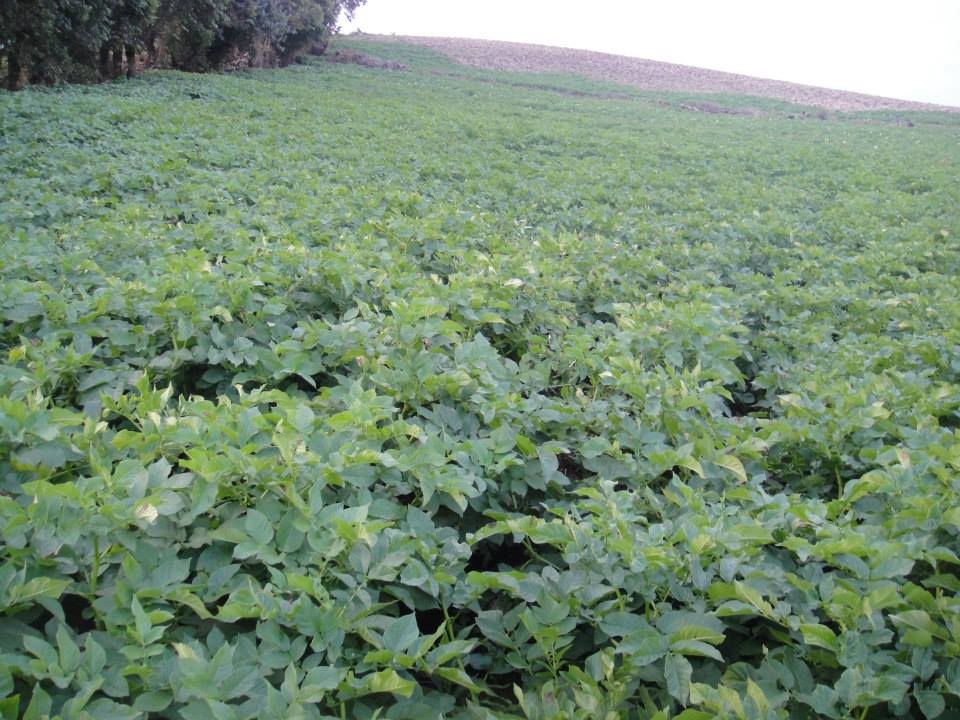
Photo: An Irish potato farm in Mmuock Leteh, Cameroon (illustrative). Zaumu Rita / Wikimedia Commons, CC BY-SA 4.0