Brazil: potato prices jump up to 19.3% on the week, but slide as harvesting resumes
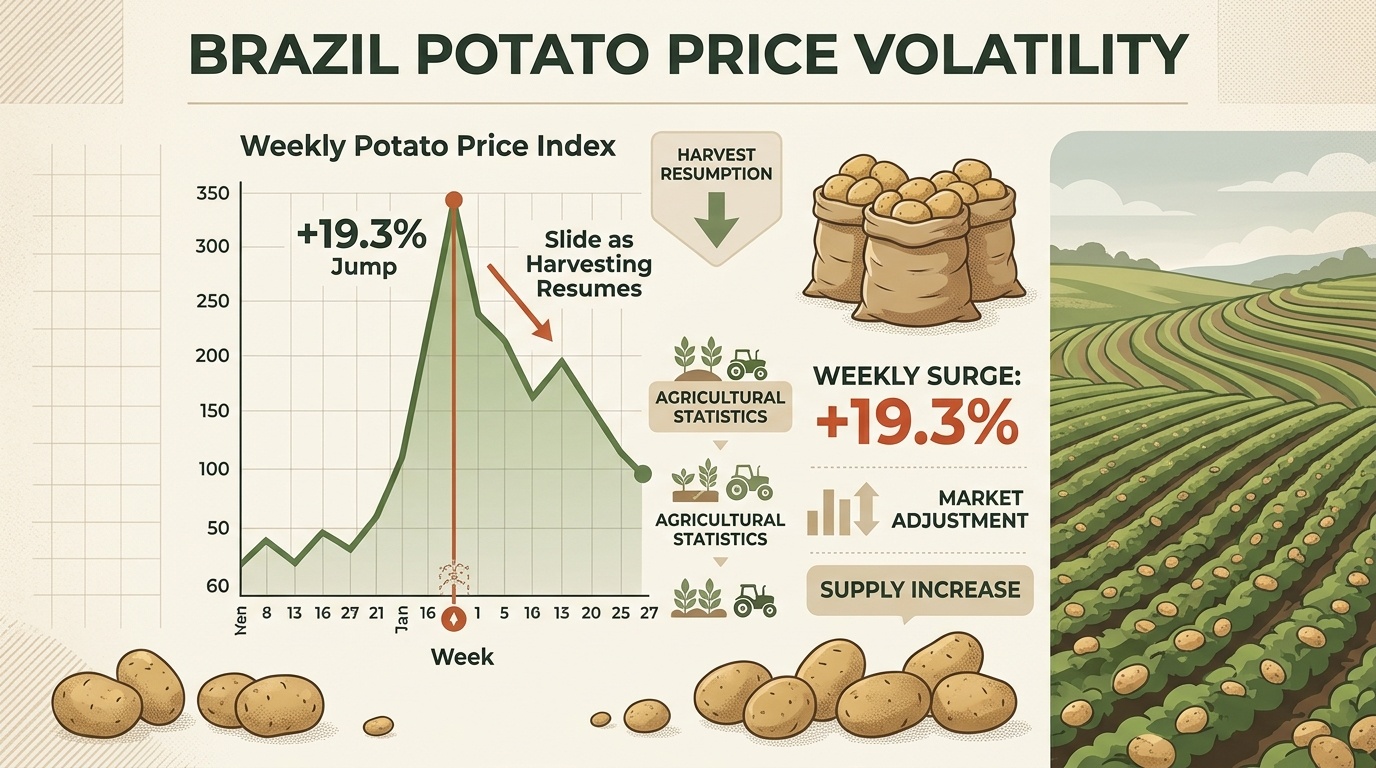
Wholesale prices for premium Agata potatoes averaged R$77–78 per 25 kg sack across Brazil’s three main markets. An election-weekend lull in harvesting drove the increase, and prices eased day by day once fieldwork restarted.
Average wholesale prices for special-grade Agata potatoes rose in all three of Brazil’s leading wholesale markets during the week of 26–30 October, according to Hortifruti/Cepea, the agricultural market research centre at the University of São Paulo’s ESALQ campus in Piracicaba. Gains ranged from 7.75% in São Paulo to 19.27% in Rio de Janeiro.
The weekly averages, however, tell only half the story. Prices peaked on Monday and then fell steadily as the week went on.
Weekdays. Unsubscribe in one click.
Prices by market
| Wholesale market | Average price, R$ per 25 kg sack | Approx. R$ per kg | Week-on-week change |
|---|---|---|---|
| São Paulo | 77.12 | 3.08 | +7.75% |
| Belo Horizonte | 78.04 | 3.12 | +17.60% |
| Rio de Janeiro | 77.20 | 3.09 | +19.27% |
Working back from the reported changes, the three markets had been noticeably apart the previous week: around R$71.6 per sack in São Paulo, R$66.4 in Belo Horizonte and R$64.7 in Rio de Janeiro. They have now converged to within R$1 of each other.
An election-day pause in the fields
Hortifruti/Cepea’s market contacts reported that harvesting slowed over the weekend, as Brazilians went to the polls on Sunday 25 October for the second round of the presidential election, with gubernatorial run-offs held in several states on the same day. Fewer potatoes therefore reached wholesale markets at the start of the week, and prices opened higher. Once fieldwork resumed, volumes recovered and prices began to retreat.
This is a familiar pattern in Brazil’s fresh potato trade, where any short interruption to harvesting, whether from rain, a public holiday or a weekend, tends to produce an early-week spike that is then absorbed by incoming supply. In mid-April 2026, for example, rain around Água Doce in Santa Catarina pushed prices up at the start of the week, yet São Paulo still closed that week 6.9% lower.
For traders, the takeaway is that this week’s higher averages do not signal an upward trend: by Friday, prices were already trading below the weekly mean.
Bigger tubers, better prices
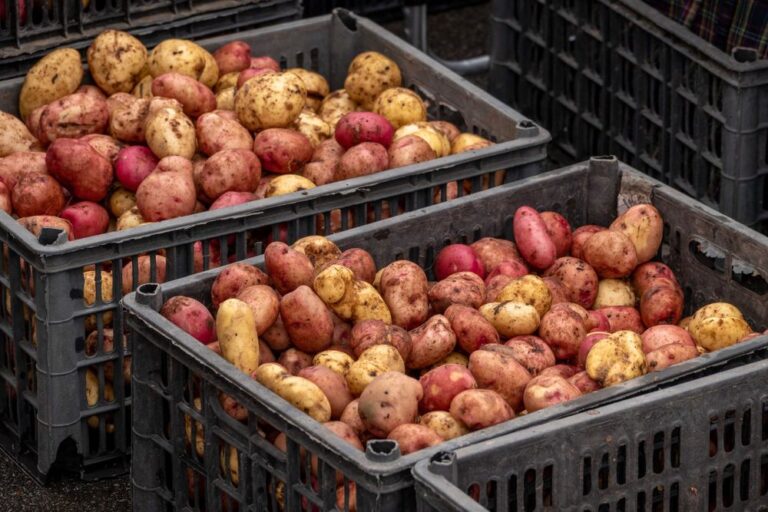
The market continues to show a wide spread of prices, driven by both quality and commercial grading standards. Larger tubers fetched more than smaller ones, even within the same grading class.
Where the potatoes came from
- São Paulo received supplies from southern Minas Gerais and the Cerrado Mineiro region.
- Rio de Janeiro was supplied from southern Minas Gerais, south-western São Paulo state and the Cerrado Mineiro.
- Belo Horizonte drew mainly on southern Minas Gerais.
Seasonal context
Current prices sit well above this year’s mid-winter low. In July, as the winter crop gathered pace, the São Paulo price fell from R$91.03 per sack in the week of 6–10 July to R$58.07 in the week of 20–24 July, and held at around R$61 in early August. By late October, potatoes in São Paulo were therefore trading roughly a third higher than at the height of the winter harvest.
Sources: Hortifruti/Cepea, HF Brasil; Argenpapa