Brazil (Minas Gerais): Potato Sector Crisis Prompts Alto Paranaíba Municipalities to Declare Economic Emergency
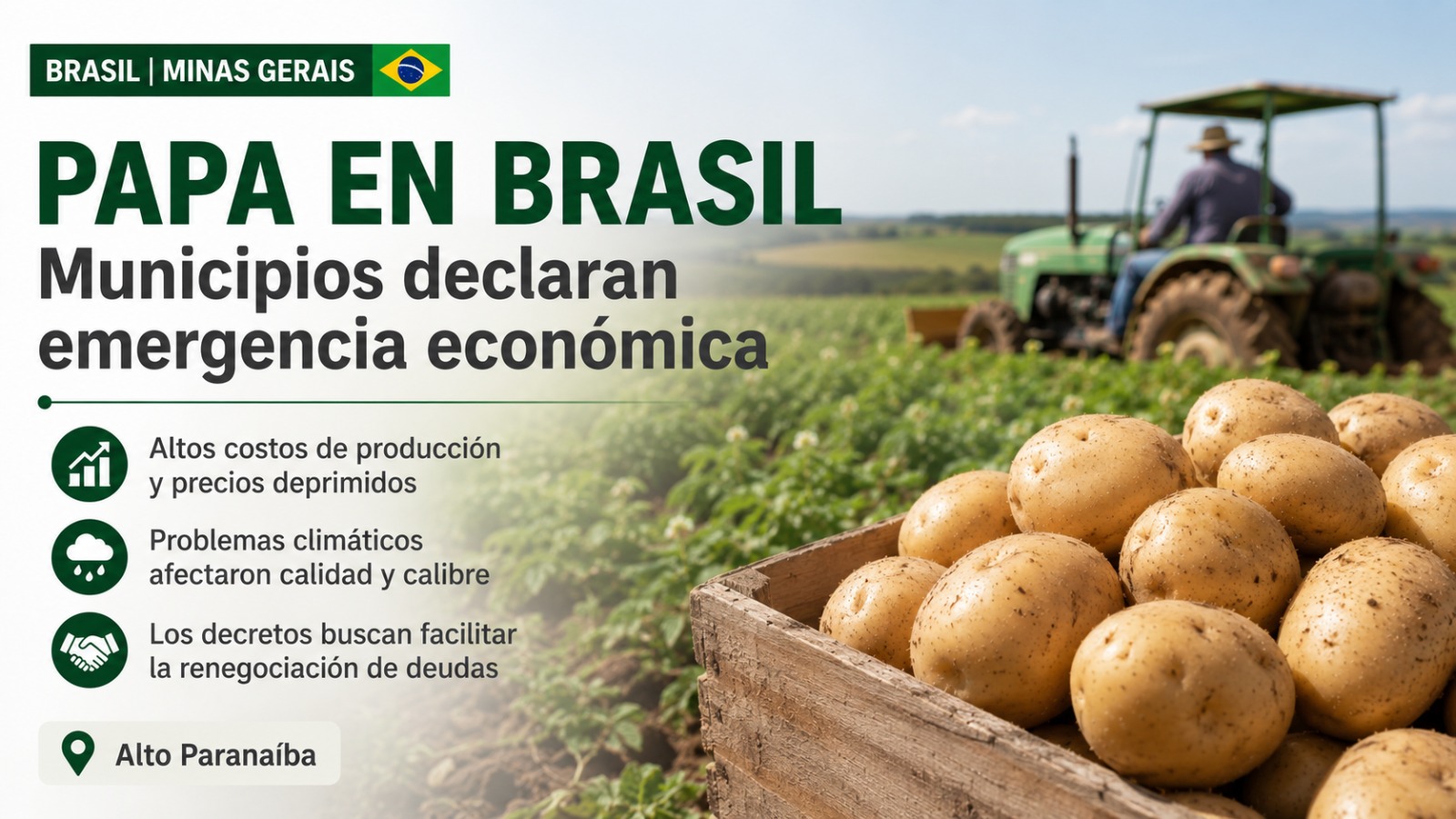
A severe crisis across the potato farming sector has led municipalities in the Alto Paranaíba region (Minas Gerais, Brazil) to declare states of economic emergency. A collapse in farmgate potato prices, sustained high production costs, and adverse agro-climatic conditions have brought local growers to the brink of financial insolvency, posing a major threat to the entire regional economy.
The Alto Paranaíba region represents the largest potato production hub in Brazil, serving as a primary driver of employment, tax revenue, and commercial activity.
Key Factors Driving the Crisis
Weekdays. Unsubscribe in one click.
- Collapse in Wholesale Prices: Market saturation combined with price volatility has driven selling quotes for fresh potatoes well below actual farm production costs.
- Surging Operating Costs and Debt: Elevated expenses for mineral fertilizers, crop protection inputs, fuel, and mechanized field operations over recent seasons have caused farm debt to reach unsustainable levels.
- Widespread Impact on Agricultural Employment: Financial distress among growers directly impacts related businesses, including seed and agrochemical suppliers, transport providers, and field labor reliant on harvest and sorting operations.
Objectives of the Economic Emergency Declarations
Declaring a state of economic emergency at the municipal level aims to mobilize urgent intervention from the Minas Gerais state government and Brazilian federal authorities. Specifically, farmers and local officials are seeking:
- Debt Restructuring and Credit Relief: Extended repayment terms for agricultural loans and subsidized credit facilities to restore farm working capital.
- Tax and Financial Relief Measures: Temporary deferrals of municipal and state taxes to ease immediate financial pressure on farming enterprises.
- Price Support and Market Stabilization: Implementation of government procurement programs or compensatory subsidies to help stabilize domestic market prices.
Local governments and trade associations stress that without prompt public intervention, the crisis in Alto Paranaíba could trigger drastic acreage reductions in upcoming planting cycles and cause lasting disruption to the state’s agricultural economy.