Brazil: Minas Gerais Grows 34.3% of a 4.18 Million Tonne Potato Crop as Output Nearly Quadruples Since 1961
Brazil's potato crop is now almost four times larger than in 1961. Official 2024 data show a strong concentration in Minas Gerais and large farms, while only about a tenth of the crop goes to processing.
Brazil produced 1.08 million tonnes of potatoes in 1961, according to FAOSTAT data published by Our World in Data. In 2024 the same data show 4.18 million tonnes. By our calculation, output grew about 3.9 times.
The statistics office IBGE gives the detail for 2024 in its municipal farm survey. Growers planted 124,916 hectares and harvested 4,183,933 tonnes. The average yield was 33.5 tonnes per hectare.
Seven states grow almost all potatoes
Minas Gerais is the clear leader. It produced 1.43 million tonnes on 39,382 hectares in 2024, at 36.4 tonnes per hectare. By our calculation, this is 34.3% of national output. The other main states were:
Weekdays. Unsubscribe in one click.
- Paraná: 699,042 tonnes, or 16.7%
- São Paulo: 648,547 tonnes, or 15.5%
- Bahia: 510,789 tonnes, or 12.2%
- Rio Grande do Sul: 444,157 tonnes, or 10.6%
- Goiás: 267,453 tonnes, or 6.4%
- Santa Catarina: 168,810 tonnes, or 4.0%
Yields differ widely. Bahia reached 48.5 tonnes per hectare and Goiás 41.0 tonnes. Rio Grande do Sul reached only 25.0 tonnes and Paraná 27.5 tonnes.
Large farms and small farms
A study by the research agency Embrapa and the business school IBMEC, published in July 2026, describes two models. It uses data from the IBGE farm census. In Minas Gerais more than 55% of production comes from areas above 500 hectares. In Rio Grande do Sul 70% of potato farms have less than 20 hectares.
The study describes a trend towards concentration. A small number of large farms now supplies the largest share of the national harvest.
Little processing
Only about 10% of national production goes to industry, according to Embrapa. The agency compares this with 60% in the Netherlands and 57% in the United States. Few Brazilian varieties meet industry needs, so processing relies on imported varieties. According to the study, processing varieties are concentrated in Minas Gerais and São Paulo.
Why it matters
Brazil is a fresh-market potato country with a growing large-farm core. Minas Gerais and Paraná together grow about half of the crop. Weather there has the strongest effect on national supply.
The low processing share leaves room for frozen fry and chip investment. For seed and variety companies, demand for processing varieties is concentrated in two states. For small growers in the South, competition with high-yield large farms is the main challenge.
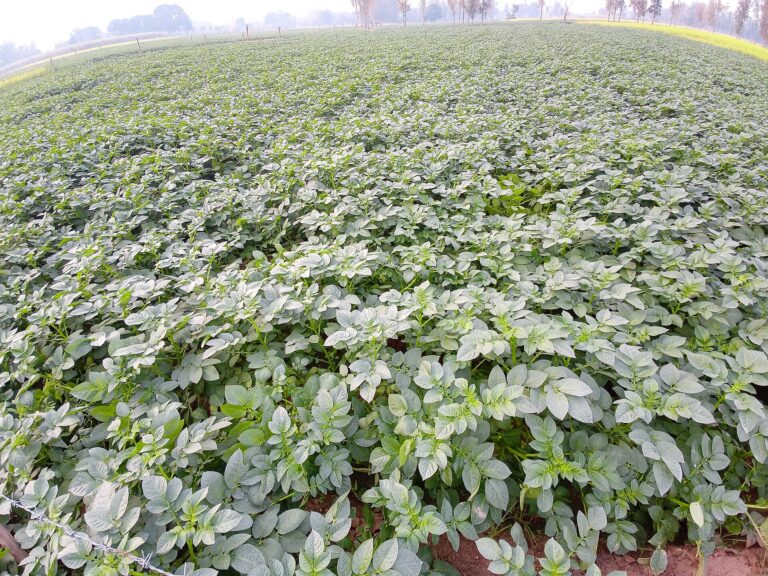
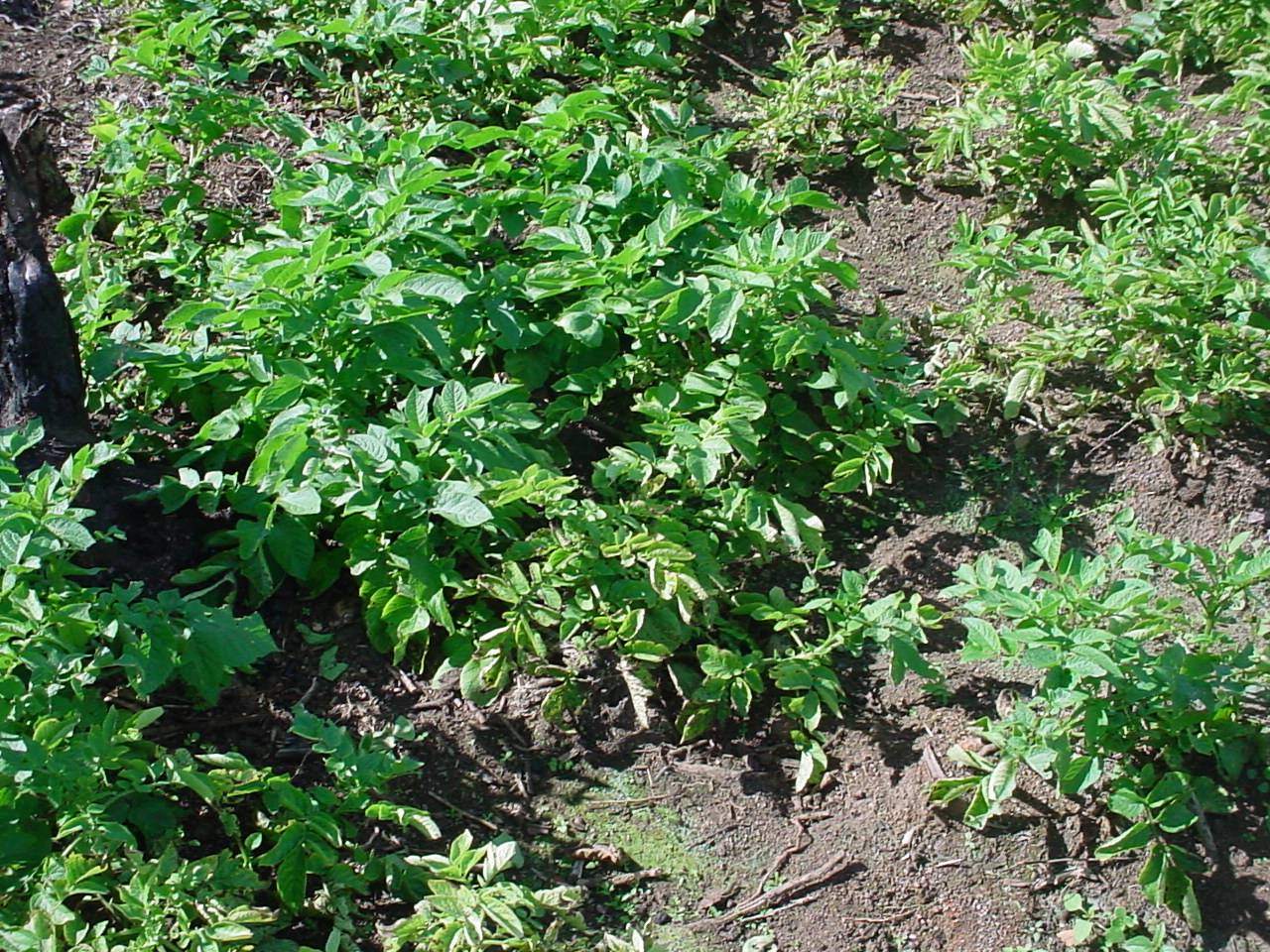
Photo: A potato plantation in southern Brazil (illustrative). Ismar Schein at Portuguese Wikipedia / Wikimedia Commons, Public domain