Bosnia and Herzegovina: Potato Crop Reaches About 407,000 Tonnes in 2024
Bosnia and Herzegovina harvested about 407,000 tonnes of potatoes in 2024, above the long-term average of 385,000 tonnes, but farm prices fell 27%, a state ministry report shows.
Bosnia and Herzegovina produced about 407,000 tonnes of potatoes in 2024, according to the annual agriculture report of the state Ministry of Foreign Trade and Economic Relations (MVTEO), published in May 2025. The report uses data from the statistics offices of the two entities and the state agency.
The country has two entities and one district, and each reports its own crop:
- Republika Srpska: 223,750 tonnes
- Federation of Bosnia and Herzegovina: 182,481 tonnes, 14% more than in 2023, with a yield of 9 tonnes per hectare
- Brčko District: 1,091 tonnes
The three figures add up to 407,322 tonnes, by our calculation.
Weekdays. Unsubscribe in one click.
Low yields
The 2024 crop was above the long-term level. The ministry says average annual production is about 385,000 tonnes, with a low average yield of about 10 tonnes per hectare. Potatoes and vegetables take about 15% of the sown area, and potatoes are 49% of that group.
A yield of 9–10 tonnes per hectare is very low for Europe. It shows that much of the crop is grown on small family farms with limited inputs, often for home use and local markets.
Prices fell sharply
The bigger harvest pushed prices down. The average purchase price for ware potatoes was 0.80 convertible marks (KM) per kilogram in 2024, 27% lower than the 1.10 KM of 2023. Consumer prices also fell, from 2.00 KM to 1.60 KM per kilogram, a drop of 16.7%. Sales on green markets were smaller in 2024 than in 2023, both in volume and in value.
What the data do not show
The report gives no separate figures on potato imports, exports or seed. The share of certified seed and the level of self-sufficiency therefore cannot be checked from this source.
Why it matters
Bosnia and Herzegovina is one of the larger potato producers in the Western Balkans by volume, but one of the least productive per hectare. The country uses a lot of land to grow a crop that a more intensive system could produce on much less area.
This yield gap is the main opportunity. Certified seed, irrigation, better storage and advice could raise output without more land. For farmers, the 2024 season also shows the risk of a larger crop without market planning: more potatoes meant a 27% lower farm price.
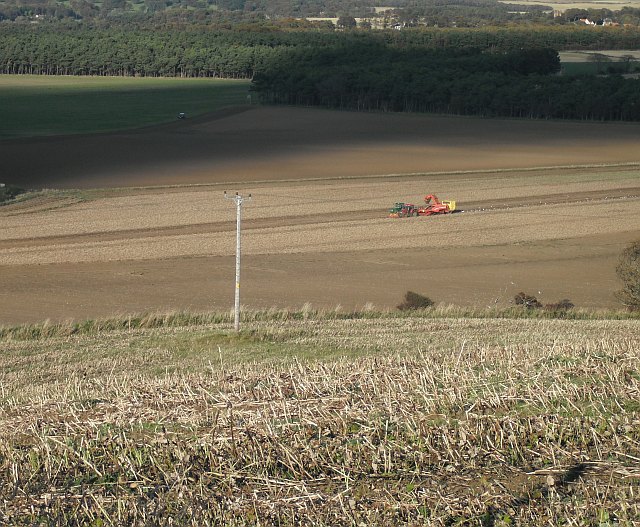
Photo: The Semberija plain, Bosnia and Herzegovina (illustrative). Dejan Cabrilo / Wikimedia Commons, CC BY-SA 3.0