Bolivia Pushes Potato Seed Production with Biotechnology, Aeroponics and Custom-Built Machinery
Mayors from Cocapata and Tarata toured INIAF's Tuber Technology Innovation Center to coordinate tissue-culture, aeroponic seed production and Korean-backed custom machinery for Bolivian potato growers.
Municipal authorities from Cocapata and Tarata visited INIAF’s Tuber Technology Innovation Center to coordinate the adoption of tissue-culture plantlets, aeroponic seed-tuber production and machinery adapted to Bolivian conditions under a program backed by Korean cooperation.
Bolivia’s National Institute for Agricultural and Forestry Innovation (INIAF) received a technical visit from municipal authorities of Cocapata and Tarata at its Tuber Technology Innovation Center, aimed at coordinating the incorporation of new technologies into potato production. Mayors and councilors took part in the activity, touring tools designed to improve seed quality, optimize resource use and strengthen crop productivity in the region.
In-vitro plantlets and aeroponics. The authorities visited INIAF’s biotechnology laboratory, where they observed the production of potato in-vitro plantlets through tissue culture — the starting point of any clean-seed system. They also toured greenhouses using aeroponic systems to produce seed tubers in controlled environments, where plants grow with roots suspended in air and nutrient delivered as mist. The technology allows resources to be optimized and advances the production of propagation material with better sanitary quality, which is the critical bottleneck for Andean potato systems still dominated by informal, farm-saved seed.
Weekdays. Unsubscribe in one click.
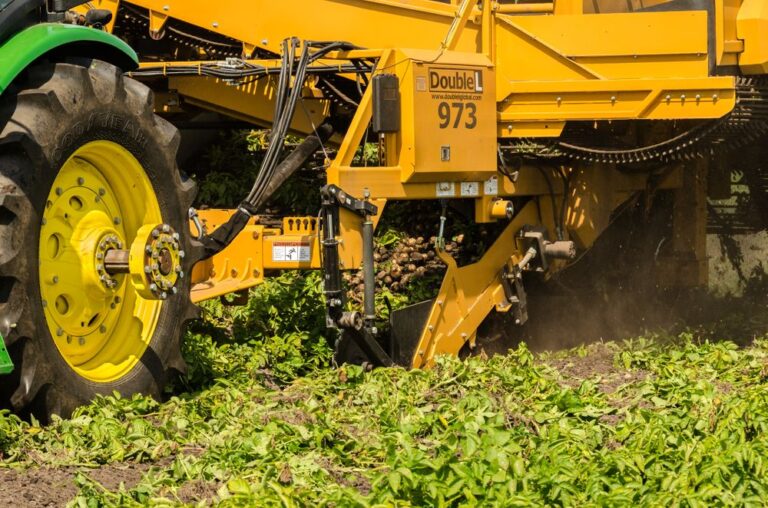
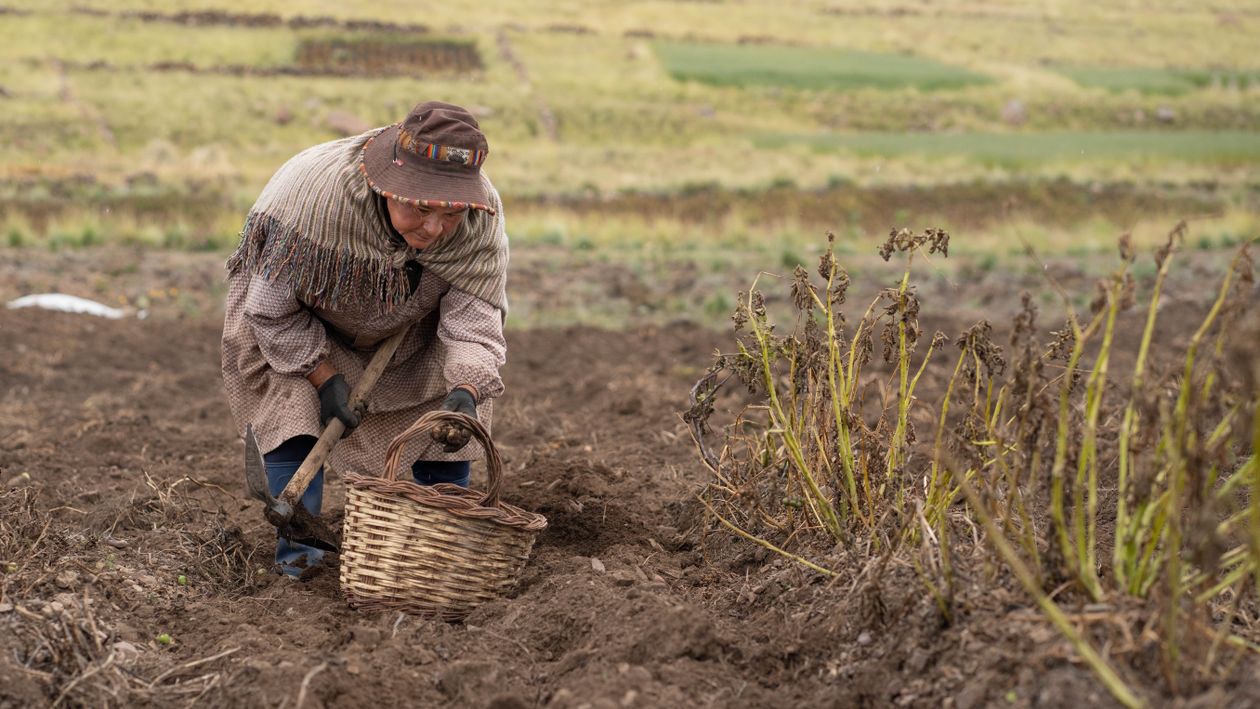
Machinery adapted to Bolivian conditions. The day included practical planting activities carried out under the program “Development of Custom Agricultural Machinery for Bolivia”. The initiative is promoted by INIAF together with Korean international cooperation and the Rural Development Administration (RDA). Its objective is to introduce modern machinery adapted to local needs — reducing work times and raising producer productivity in a country where much potato cultivation still takes place on small, steep Andean plots ill-suited to standard imported equipment, and where seasonal labor scarcity increasingly limits what family farms can manage by hand.
Municipal articulation. The coordination between the institute and the municipalities seeks to facilitate the adoption of these technologies and contribute to strengthening potato seed production in the region. Bringing mayors and councilors into the technology center is a deliberate dissemination strategy: municipal governments in Bolivia control local extension budgets and are often the deciding factor in whether laboratory innovations ever reach farmers’ fields.
The Bolivia case is a small but telling example of how seed-system upgrading is being pursued across the Andes this decade: tissue culture and aeroponics for clean basic seed at the top of the pyramid, locally engineered machinery at the bottom, and municipal governments as the transmission belt in between. Whether Cocapata and Tarata convert the visit into budget lines and multiplication agreements will determine if the technology actually moves beyond INIAF’s greenhouses. The involvement of Korea’s Rural Development Administration also fits a wider pattern of Asian agricultural cooperation in Latin America, where machinery-adaptation programs have become a favored instrument precisely because they address labor shortages that seed quality alone cannot fix.
Sources: El Mundo (Bolivia); background on INIAF’s wider pattern of Korean-backed potato cooperation: PotatoPro.