Beyond the Chip: How a New Chinese Potato Variety Signals a Shift in Global Agri-Trade

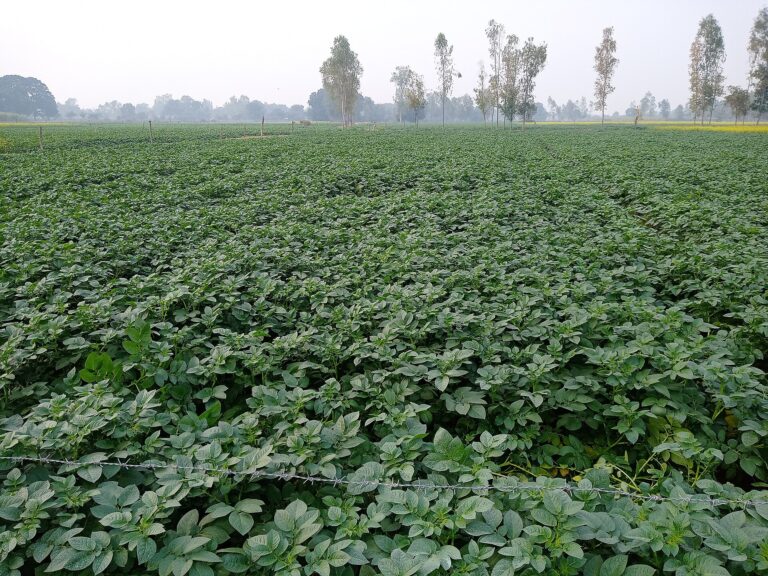
The first shipment of a new potato variety, ‘Ganken No.9’, has cleared customs in China, bound for Jakarta. Developed by the Gansu Yasheng Potato Industry Group, this event is more than a routine export; it is a strategic move highlighting China’s growing ambitions as a developer and exporter of proprietary agricultural genetics, targeting key markets in the Global South. For farmers, agronomists, and industry observers, this signals a new competitor in the international seed and processing potato market, one backed by significant state-led agricultural science.
The technical profile of Ganken No.9 is tailored for industrial demand. With a dry matter content of 22.8% and a starch content of 16.9%, it meets critical quality thresholds for processing into fries, chips, and starch. For comparison, industry-leading processing varieties like Russet Burbank typically have dry matter between 20-22%, while Innovator, a major chipping variety, can reach over 23%. Gansu No.9’s advertised disease resistance and high yield, cultivated in the cool, high-altitude region of Shandan, position it as a cost-effective raw material. This export is underpinned by booming bilateral trade: customs data from Lanzhou shows trade between Gansu province and Indonesia surged 104.6% year-on-year in the first eight months of 2025, reaching $605 million USD. This growth is facilitated by streamlined customs procedures and targeted guidance for businesses, creating a conducive corridor for agricultural products.
This development must be viewed within broader trends. Indonesia is a massive and growing market for processed potatoes, yet domestic production often struggles to meet quality and volume demands for large-scale processors. According to a 2024 USDA GAIN report, Indonesia’s potato imports have been steadily increasing, with a significant portion dedicated to processing. China, already a dominant global potato producer (over 94 million tonnes in 2023, per FAO), is now leveraging its scientific capacity to move up the value chain from bulk commodity exporter to a supplier of high-value genetic material and specialized produce. The complementary trade noted in the report—Indonesian palm oil and coffee for Chinese agri-tech and equipment—frames this potato export as part of a deeper, strategic economic partnership.
The export of Ganken No.9 to Indonesia is a microcosm of larger shifts in global agriculture. It demonstrates China’s advancing capability in cultivar development for specific industrial niches, challenging traditional seed powers. For importing nations like Indonesia, it represents an alternative source for quality planting material and processing stock, potentially increasing supply chain options and competitive pressure. For farmers and agribusinesses worldwide, it underscores that the future of crop competitiveness hinges not only on yield but increasingly on precise quality traits, supply chain integration, and strategic international partnerships. The global potato trade is no longer just about volume; it’s about value, genetics, and geopolitical alignment.
Global Potato Brief
Top five stories, prices, disease alerts and events. Weekday mornings, no advertising.
Linked in this material
- Country
- Indonesia
- Sections
- Growing seedsNewsProcessingSeeds
Related stories
Russia Accelerates Development and Certification of New Domestic Potato Varieties in 2026
Russian Potato Breeders Validate 11 Domestic Varieties in Moscow Region Greenhouse Trial