Belgium: Survey Finds Wide Support for Robust Potato Varieties, but They Hold Only About 3% of the Conventional Retail Market
Key takeaways
- 90% of responding firms see a need for robust varieties
- 80% of respondents say a new variety has failed for them
- 92% of the companies are open to new potato varieties
- 3% is the robust share of the conventional retail market
Why it matters
- For farmers
- Ask buyers for contracts before planting a robust variety, and share field and storage results, because missing data is the first barrier named.
- For processors
- Define quality and supply terms for robust varieties now; growers will not plant them without a secure market and clear specifications.
60-second summary
A cross-border Interreg project on robust potato varieties surveyed the processing industry and the fresh market in Belgium and northern France. Of 136 companies contacted, 29 replied, so the results show a trend. Almost 90% see a need to move to varieties that resist disease and climate stress. More than 80% say that introducing a new variety failed for them, because of agronomic problems, missing information or storage issues. 92% of companies say they are open to new varieties, but processors need constant quality and growers want a secure market. In Belgium, almost 70% of organic potatoes sold in shops come from robust varieties, against about 3% in the conventional sector and about 1% of the field volume. A memorandum sets five priorities, including a common protocol for late blight, water stress and nitrogen use. The 2030 goal is a much larger share.
Almost 90% of potato companies that answered a new survey in Belgium and northern France see a need to move to more robust varieties. The results come from a cross-border Interreg project on robust potatoes. The Belgian farm weekly Landbouwleven published the findings on 17 September 2026.
Robust varieties are more resistant to disease and to climate stress. The project started in 2025 and has five partners from Belgium and France, including organic farming groups. The Walloon potato sector association (fiwap.be) leads the project.
The project ran two surveys: one for the processing industry and one for the fresh market. In total, 136 companies were contacted and 29 replied. The sample is small, so the results show a trend, not a full picture of the sector.
Weekdays. Unsubscribe in one click.
The main problem is not resistance to change. According to a bio-engineer at the association, more than 80% of the respondents said that introducing a new variety had failed for them. The reasons include agronomic problems, a lack of information on varieties and problems in storage. More than half of the growers want more data on how robust varieties perform in the field and in storage.
Processors appear open to new varieties. According to the survey, 92% of the companies said they are open to this option. The real challenge is the conditions. Processors need constant quality and a reliable supply. Growers do not want to plant a variety without a secure market.
Half of the respondents use robust varieties regularly, but 80% of these potatoes go to the organic fresh market. In Belgium, almost 70% of the organic potatoes sold in shops come from robust varieties. In the conventional sector, the share is about 3%. In the field, robust varieties make up only about 1% of the potato volume grown in Belgium.
The partners have written a memorandum with five priorities. The first is to collect and share more knowledge about robust varieties. The second is to secure enough supply for the chain. The third is a common protocol to assess robustness, especially for late blight, water stress and nitrogen use. The fourth is communication with consumers. In Belgium, the variety name no longer has to appear on the package. The idea is to promote the concept of a robust variety instead of single variety names.
The vision for 2030 is to increase the market share of robust varieties, raise production volumes and promote Belgian and French origin.
Why it matters
The climate is changing, fewer crop protection products are available, and production risks are growing. Robust varieties can reduce these risks, but the survey shows that the supply chain is not ready yet. Our report on the heavy reliance of Belgian growers on one variety during the drought was published on 24 September.
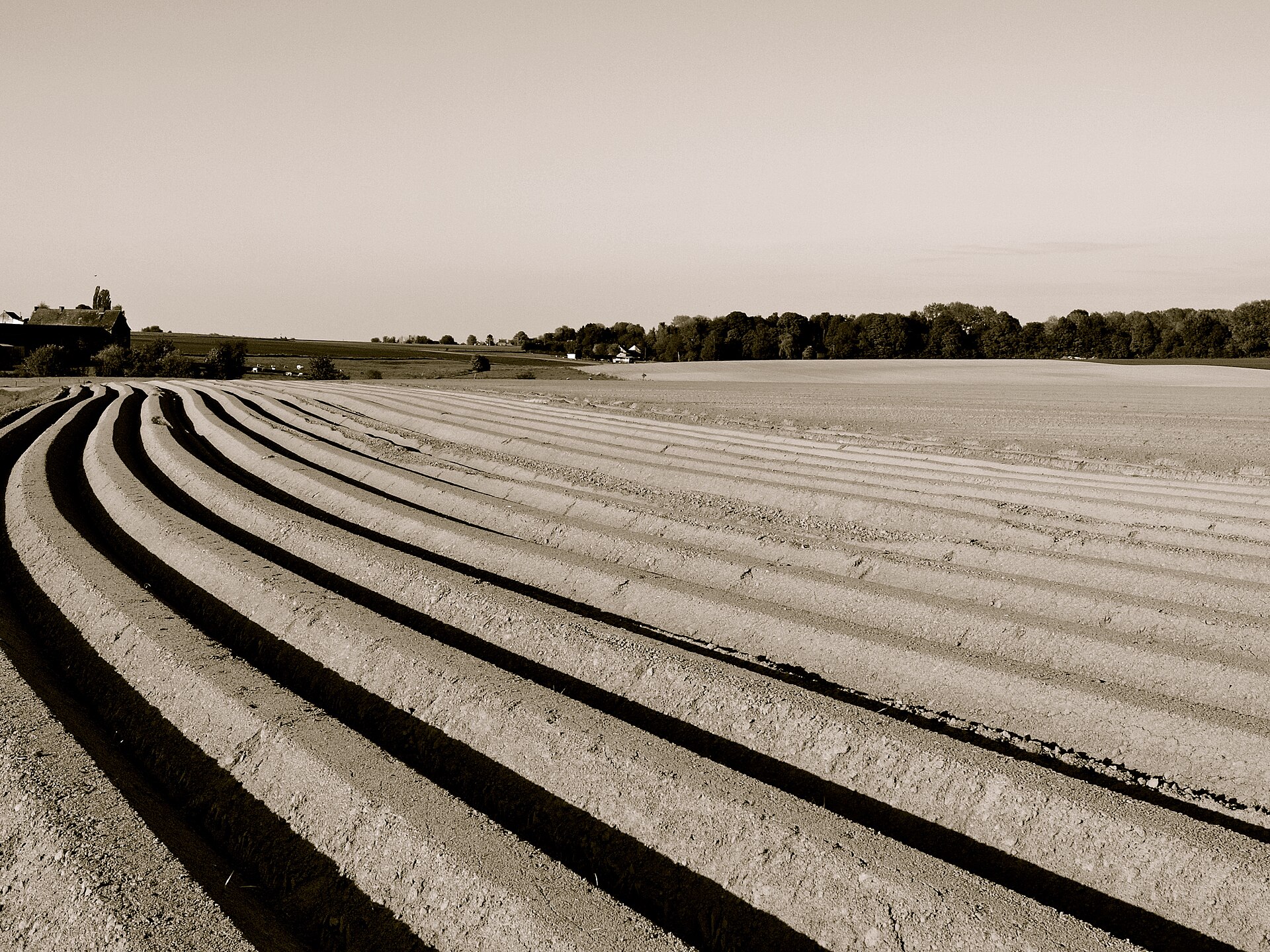
Photo: Potato field in the Walloon Region, Belgium (illustrative). Hossey didier / Wikimedia Commons, CC BY 4.0
Global Potato Brief
Top five stories, prices, disease alerts and events. Weekday mornings, no advertising.
What next
The partners have written a memorandum with five priorities. The vision for 2030 is to increase the market share of robust varieties, raise production volumes and promote Belgian and French origin.
Sources
- Landbouwleven — https://www.landbouwleven.be/26187/article/2026-09-17/robuustere-aardappelvarieteiten-verbouwen-wordt-noodzaak
- Interreg France-Wallonie-Vlaanderen, project page — https://www.interreg-fwvl.eu/nl/projecten/introductie-en-gebruik-van-robuuste-aardappelrassen-door-de-handel-de-verwerkende
- The survey figures come from one source (the project, as reported by Landbouwleven); the sample is 29 companies.
Linked in this material
- Country
- Belgium
- Sections
- EuropeNew potato varietyNews
Related stories
Austria: Home-Grown Table Potatoes Unlikely to Cover Demand This Season as Prices Reach €32–35 per 100 kg

Serbia: Growers Say Imports Now Cover About 40% of Potato Needs as Local Area Shrinks