
15 Sep 2026 Global Potato Industry General partnerAVGUST
The Global Potato Industry
Netherlands·Company·IRRIGATION

Beating the Drought: One Farmer’s Shift to Drip Irrigation Saves His Potato Crop
2 min read Updated
Beating the Drought: One Farmer’s Shift to Drip Irrigation Saves His Potato Crop

Key takeaways

  • Seed potato farm at Kerkwerve, near-no summer rain
  • Flat hoses with outlets every 30 centimetres
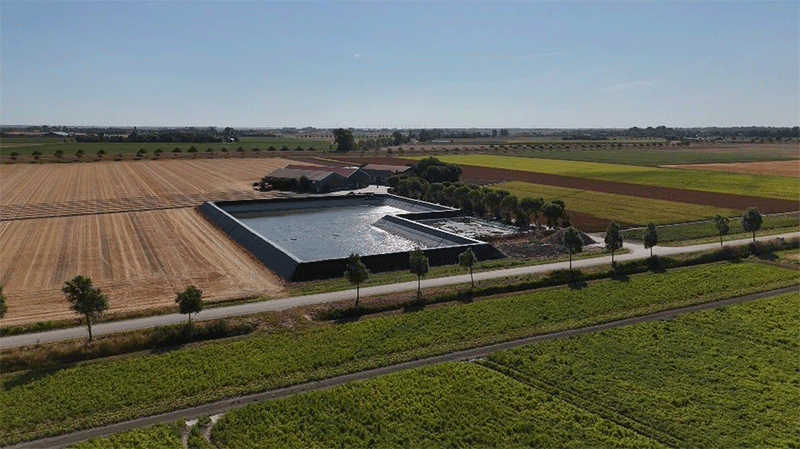
  • 3-metre basin holding 22,000 cubic metres
  • Irrigated beds visibly ahead of dry sections
  • Watering stopped — tubers already large enough

Why it matters

For farmers
Drip did not beat the drought — it changed how far a fixed volume of stored water could be stretched.
For investors
On-farm storage plus drip is the pairing here; neither works alone in a season with no rain.

60-second summary

Seed potato farmer Martin Hanse in Kerkwerve has kept his crop alive through a drought that has damaged many farms, by investing in drip irrigation. With almost no rain over his fields all summer, he laid flat hoses with small outlets every 30 centimetres, delivering water in small targeted portions straight to the soil; while dust rises from the dry paths, his potato beds have stayed moist enough to keep growing. Supply comes from a three-metre-high basin holding 22,000 cubic metres — reserves have run low this season, but the stored water went considerably further than sprinklers would have allowed. Hanse is clear that this will not be his best harvest year, yet the contrast between irrigated and non-irrigated sections is striking. He has now stopped watering because the tubers are large enough, and hopes for rain in the coming weeks to finish the crop.

30 cmspacing of outlets in the hoses
22,000 m³capacity of the water basin
3 mheight of the basin
General partner
General partnerCrop protection for the potato industry

While drought has devastated many farms this season, Martin Hanse, a seed potato farmer in Kerkwerve, has managed to keep his crops alive through a strategic investment in drip irrigation. With little rain over his fields all summer, Hanse laid flat hoses with tiny holes every 30 centimeters, delivering water in small, targeted portions directly to the soil. The result? Even as dust rises from dry paths, his potato beds remain moist enough to support continued growth. To supply the system, he built a 3‑meter‑high water basin with a capacity of 22,000 cubic meters—though this season’s reserves have run low, the stored water was used far more efficiently than traditional sprinklers would have allowed.

Despite the visible green patches on his irrigated plots, Hanse admits this won’t be his best harvest year. Yet the contrast between irrigated and non‑irrigated sections is striking, with drip irrigation clearly boosting yields where it was applied. He has now stopped watering, as the potatoes are already large enough, but he hopes for rain in the coming weeks to help finalize the crop. His experience underscores the value of precision water management in an era of intensifying dry spells—showing that while drought cannot be fully escaped, smart technology can make a critical difference.
10 / 100 SEO Score

Global Potato Brief

Top five stories, prices, disease alerts and events. Weekday mornings, no advertising.

Sources

  1. Martin Hanse, seed potato farmer — featured in the article

Linked in this material

Country
Netherlands
Advertisement
A5 · 970 × 90Available — book this placement