
Balancing Potato Surplus and Farmer Profitability: The Case for Cold Storage Price Support in Bangladesh
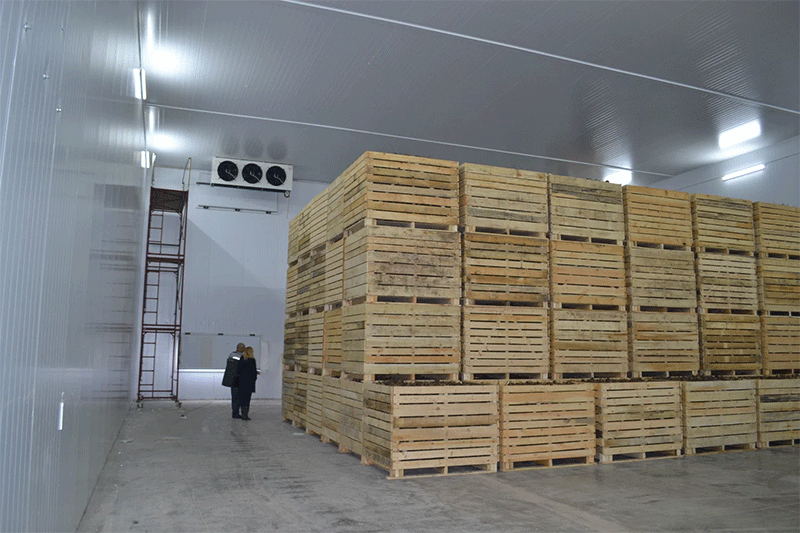
Bangladesh produced 13 million metric tons (MMT) of potatoes in 2024, exceeding domestic demand by 4 MMT, according to the Bangladesh Cold Storage Association (BCSA). This oversupply has driven farmgate prices down to $0.11–$0.13/kg, far below the $0.22/kg that cold storage operators argue is needed to cover production and storage costs.
Globally, potato gluts often lead to price crashes, discouraging future cultivation—a trend seen in India and China, where government interventions like minimum support prices (MSP) have been implemented to stabilize markets (FAO, 2023). Bangladesh faces a similar risk: without policy action, farmers may reduce potato planting in 2026, disrupting supply chains.
The Cold Storage Dilemma
Currently, 3.5 MMT of potatoes are stored in 350 facilities nationwide. However, 20–30% of stocks risk going unsold without price adjustments, potentially causing heavy losses for storage owners. The BCSA’s proposal to set a minimum storage-gate price of $0.22/kg aligns with economic models showing that price floors can prevent market collapses (World Bank, 2022).
Weekdays. Unsubscribe in one click.
The government’s food-friendly program, which subsidizes rice at $0.13/kg for 5.5 million households, could be expanded to include 10 kg of potatoes per family. This would absorb 55,000 tons of surplus, boosting demand while aiding low-income consumers—a strategy successfully used in Peru’s national food programs (IFPRI, 2021).
Policy Action Needed
To protect farmers, stabilize prices, and optimize cold storage use, Bangladesh must:
- Establish a minimum potato price at storage gates.
- Include potatoes in subsidized food programs to manage surplus.
- Monitor supply-demand trends to prevent future imbalances.
Without intervention, the potato sector could face a crisis, hurting both farmers and agribusinesses.
Global Potato Brief
Top five stories, prices, disease alerts and events. Weekday mornings, no advertising.
Linked in this material
Related stories

Chile: Rain in the South Hits the New Potato Crop, and a Santiago Market Manager Warns of Higher Prices
Bangladesh: A Dispute Over Cold-Store Rent Turns Violent in Rajshahi as Fuel Costs Rise for Potato Growers


Leave a Reply