Austria: Potato Self-Sufficiency Fell to 78% Before a 2025 Crop of 813,300 Tonnes
Austria harvested 813,300 tonnes of potatoes in 2025, up 17%. But its supply balance shows self-sufficiency fell to 78% in 2023/24, and the 2026 crop is hit by drought.
Austria harvested 813,300 tonnes of potatoes in 2025, according to Statistik Austria. This was 17% more than in 2024. The potato area grew by 5%. Early and table potatoes made up 52% of the crop. Eurostat reports the same volume from 22,930 hectares, which gives an average yield of about 35.5 tonnes per hectare.
Two markets: table and starch
Austria has two clear segments. In 2024, table and early potatoes covered 13,112 hectares and gave 366,206 tonnes. Starch and industrial potatoes covered 8,785 hectares and gave 327,436 tonnes. The industrial crop yields more: 37.3 tonnes per hectare against 27.9 tonnes for table potatoes.
The starch crop is linked to one plant. AGRANA says its factory in Gmünd is the only potato starch plant in Austria. It is supplied by about 1,300 farms. The Waldviertel in Lower Austria is the main potato region. The agriculture ministry says about 2,000 farms grow potatoes there. Yields average about 32 tonnes per hectare for table potatoes and 40 tonnes for starch potatoes.
Weekdays. Unsubscribe in one click.
Supply balance and trade
In the 2023/24 marketing year, after a weak crop of 594,037 tonnes, Austria imported 292,867 tonnes of potatoes and exported 123,688 tonnes, Statistik Austria says. Domestic use was 763,216 tonnes. Self-sufficiency fell to 78%, from 86% a year earlier and 90% in 2020/21. Each Austrian ate 49.4 kg of potatoes.
The long trend is flat. In 2000, Austria grew 694,600 tonnes on 23,700 hectares, according to Eurostat. The area has stayed between about 20,000 and 24,000 hectares since then. The crop size depends mostly on weather.
Drought in 2026
For 2026, Eurostat lists 20,640 hectares, about 10% less than in 2025. In September 2026, the Chamber of Agriculture called the potato outlook dramatic. It expects yields 50–70% below the five-year average after a record drought.
Why it matters
Austria can feed itself with potatoes in a good year, but not in a bad one. The 2023/24 balance shows that a weak crop quickly raises imports. The 2026 drought may repeat this pattern on a larger scale. Traders in Germany, the Czech Republic and other neighbours should expect stronger Austrian demand in the 2026/27 season.
The starch sector is also exposed. It relies on one plant and a few regions, so a regional drought can hit both farm income and factory supply.
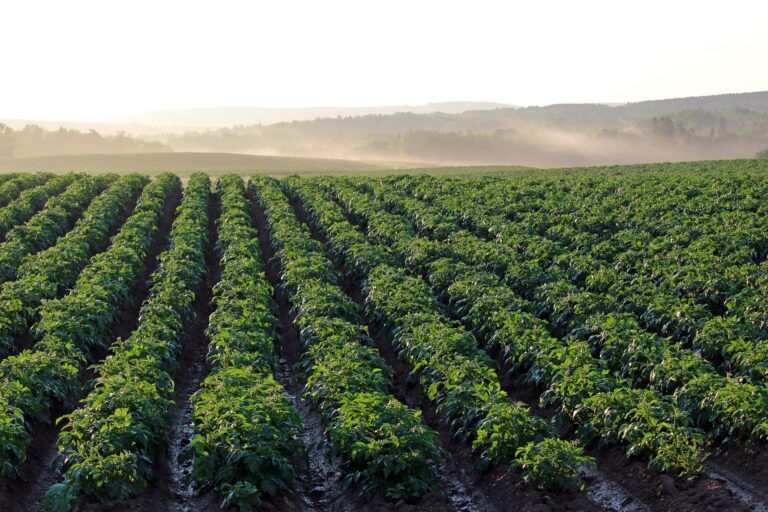
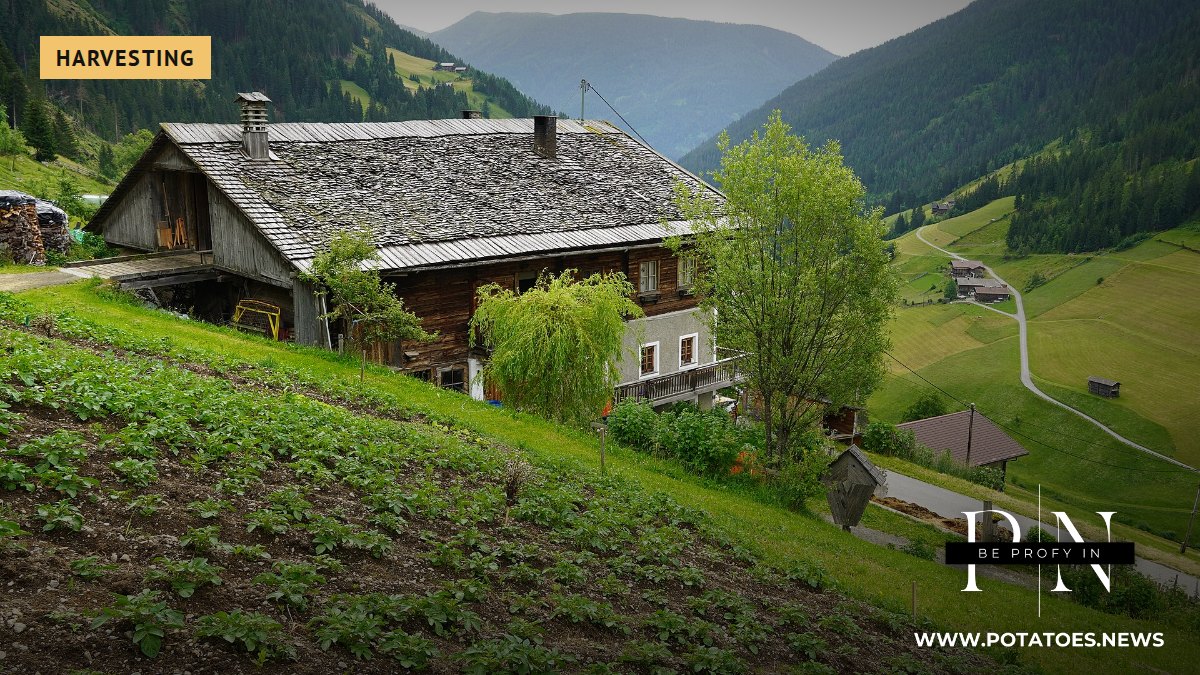
Photo: A potato field on a farm in East Tyrol, Austria (illustrative). Naturpuur / Wikimedia Commons, CC BY 4.0