Armenia: Potato Crop Down 44% From 2015 to 337,683 Tonnes as Imports Shrink and Exports Start
Armenia harvests far fewer potatoes than a decade ago, and yields have slipped. Yet the government says the country has moved from importing ware potatoes to small exports, mostly to Russia.
Armenia harvested 607,719 tonnes of potatoes in 2015, according to FAOSTAT data published by Our World in Data. The yield was 21.9 tonnes per hectare. In 2024 the same data show 337,683 tonnes at 19.3 tonnes per hectare.
By our calculation, output fell by 44% in nine years. The harvested area fell from about 27,800 hectares to about 17,500 hectares. In 1992 the country produced 322,427 tonnes at a yield of 11.1 tonnes per hectare.
National figures match FAOSTAT closely. The deputy economy minister Arman Khojoyan put production at 337,000 tonnes in July 2025, according to the trade magazine British Potato. The outlet Finport reported a 2023 harvest of 364,500 tonnes, up 3.7%.
Weekdays. Unsubscribe in one click.
One main region
Gegharkunik, around Lake Sevan, is the main potato region. The economy minister Gevorg Papoyan said in October 2024 that early snow there had hampered the harvest, according to the news agency Arka.
From importer to exporter
Armenia imported 7,500 tonnes of potatoes in 2023, the minister said. In the first ten months of 2024 it imported only 500 tonnes, and only for seed. In the first nine months of 2024 it exported 2,500 tonnes, he added.
The ministry later gave full-year figures. Exports reached 14,000 tonnes in 2024, compared with 1,300 tonnes in 2023. By 21 May 2025 Armenia had shipped 4,200 tonnes to Russia, worth USD 1.777 million.
Imports have not disappeared. In the first quarter of 2025 Armenia bought 2,447 tonnes from Georgia, according to Georgian statistics.
A price problem
The turn to exports followed a crisis. In March 2024 growers protested because potatoes grown on credit stayed unsold in stores. Iranian potatoes were offered at about EUR 0.11 per kilogram. Local production costs were EUR 0.26 to 0.28 per kilogram, according to Finport. The economy ministry said exports to Russia had become unprofitable because of low prices.
Why it matters
Armenia is a small market with thin margins. Growers compete with cheap imports from Iran and depend on Russia for export sales. Falling yields since 2015 may point to problems with seed quality and costs.
For seed suppliers, the country still needs imported seed. For traders, the small surplus can switch back to a deficit after one bad season in Gegharkunik.
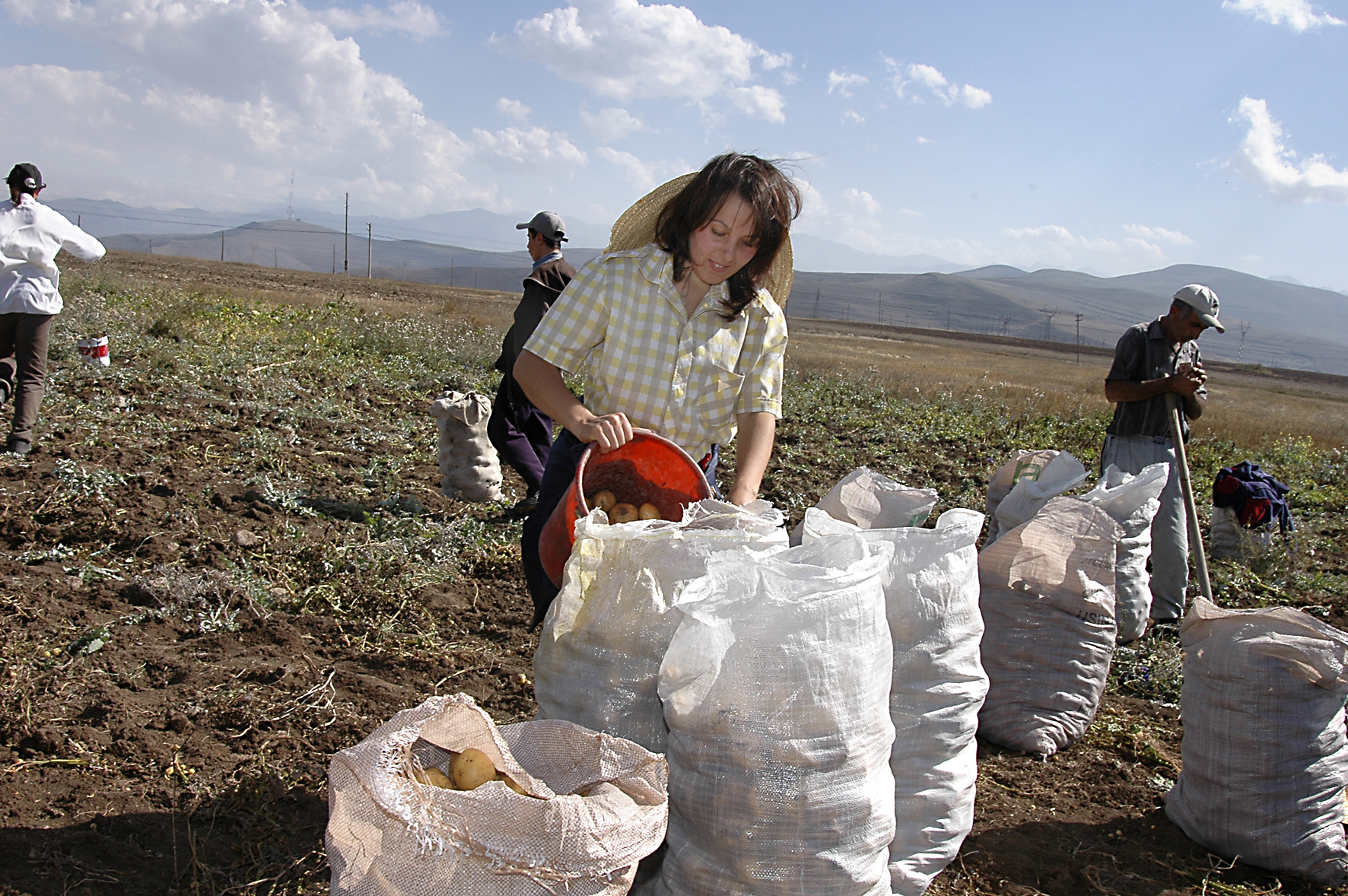
Photo: Potato harvest in Armenia (illustrative). Narek75 / Wikimedia Commons, CC BY-SA 4.0