Argentina produced 2.07 million tonnes of potatoes in 1961 at a yield of 10.2 tonnes per hectare, according to FAOSTAT data published by Our World in Data. In 2024 the same data show 2.11 million tonnes at 35.8 tonnes per hectare.
By our calculation, this means the harvested area fell from about 203,000 hectares to about 59,000 hectares. That is a drop of roughly 70%. Output stayed almost flat because yields rose about 3.5 times. The FAOSTAT series peaked at 3.0 million tonnes in 2021.
Where potatoes are grown
Buenos Aires province holds 55% of the national potato area, according to figures cited by the regional newspaper La Nueva in April 2026. Córdoba and San Luis hold 28.8%, Tucumán 7.7% and Mendoza 5.3%. Jujuy and Salta hold 1.7% and Santa Fe 1.2%. The same report puts national output at about 2.9 million tonnes, with average yields of 30 to 35 tonnes per hectare.
Weekdays. Unsubscribe in one click.
The southeast of Buenos Aires province is the core zone. Balcarce, General Alvarado and Tandil are among its main districts.
A smaller crop after a bad year
The research institute INTA measures the southeast area every year with satellite images. Its latest survey was presented at the National Potato Festival in March 2026. It shows 33,722 hectares planted, down 12% from 38,177 hectares a year earlier.
Most districts cut area. The survey shows these changes:
- General Pueyrredón: minus 19%
- General Alvarado: minus 17%
- Balcarce: minus 16%, from 8,728 to 7,389 hectares
- Tandil: minus 14%
- Benito Juárez: minus 13%
- Necochea: plus 32%
Seed potatoes covered 3,329.6 hectares in the southeast, according to the survey. Growers said 2025 brought losses, oversupply and a sharp fall in prices. The national growers federation FENAPP said the sector must plant better, not more. The federation also reported that sales to Brazil, the main export buyer, fell by 50%.
Why it matters
Argentina has become a high-yield, concentrated potato producer. A small change in southeast Buenos Aires area now moves national supply and prices. The 12% cut is a deliberate market correction by growers, not only a weather effect.
For processors, a smaller fresh crop can tighten raw material outside contracts. For exporters, the weak Brazilian demand remains the main risk. Input costs are also rising, which limits any quick return of area.
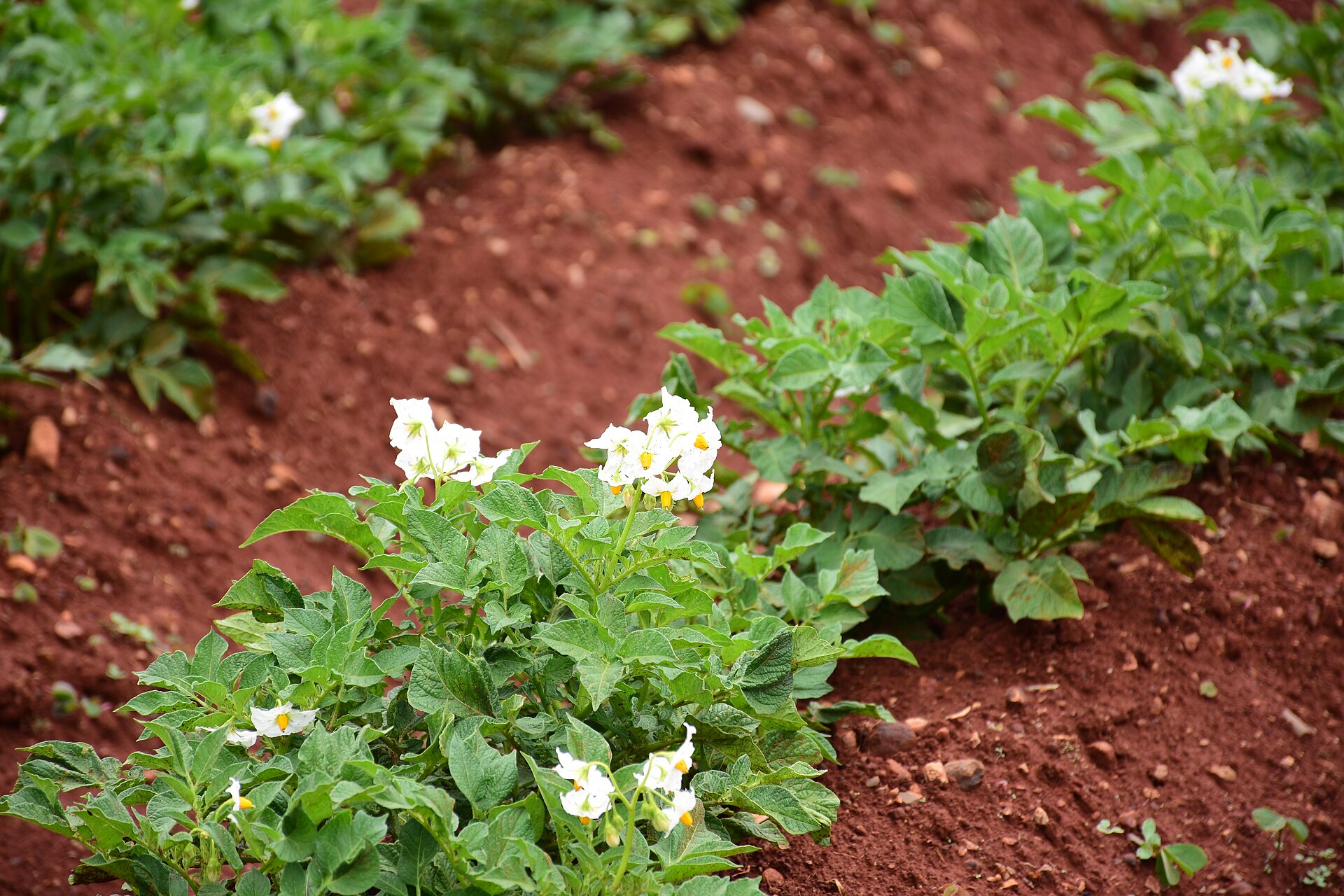
Photo: A potato crop in the Mantaro Valley, Peru (not Argentina) (illustrative). AsiriMH / Wikimedia Commons, CC BY-SA 4.0