Aphids

Life stages: eggs, wingless forms, winged forms.
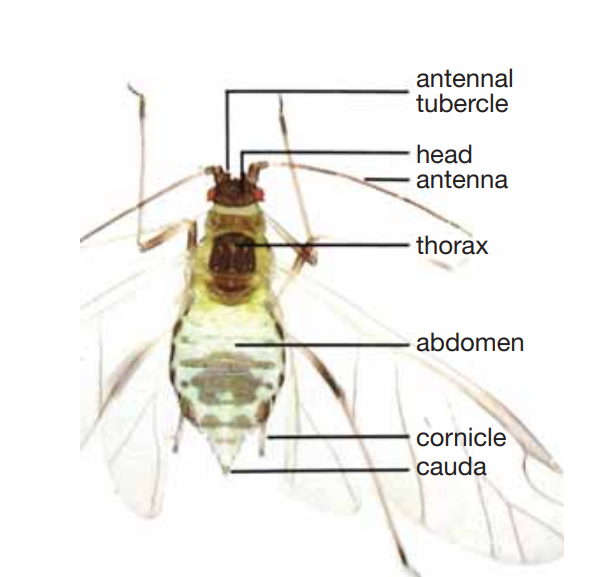
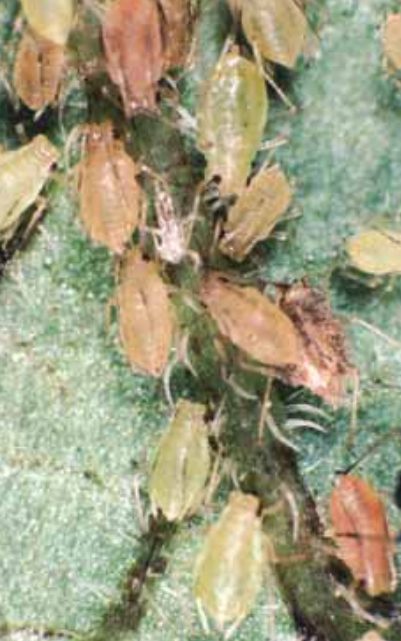
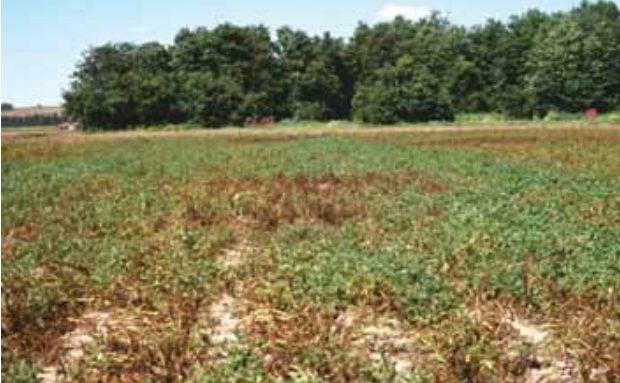
Aphids are small, soft-bodied, sucking insects 1–4 mm in length. Aphids affect the potato crop directly by feeding and indirectly by transmitting viruses that cause important diseases. The most common species of aphids found on potatoes in Ontario are the green peach, the potato and the buckthorn aphid.
Most aphids overwinter as eggs on fruit trees. In the spring, wingless aphids hatch from the eggs and reproduce without mating by giving birth to live, wingless young. When the wingless aphid colonies become too crowded, winged individuals are produced. The winged aphids, also called “spring migrants,” fly to an acceptable summer host where they feed and produce wingless offspring. Wingless aphids are by far the predominant form
on potatoes during the growing season. As potato plants mature and the days become shorter, winged male and female migrants appear. They fly to overwintering hosts, where the females lay fertilized overwintering eggs.
Aphid populations may increase rapidly when temperatures are high; a mixed population of young and old aphids can increase five-fold within one week. Natural predators such as ladybeetles and lacewings are very effective in keeping aphid populations at low levels.