
Agrivoltaics and Potato Farming: How Partial Shading and Smart Irrigation Boost Yield and Sustainability
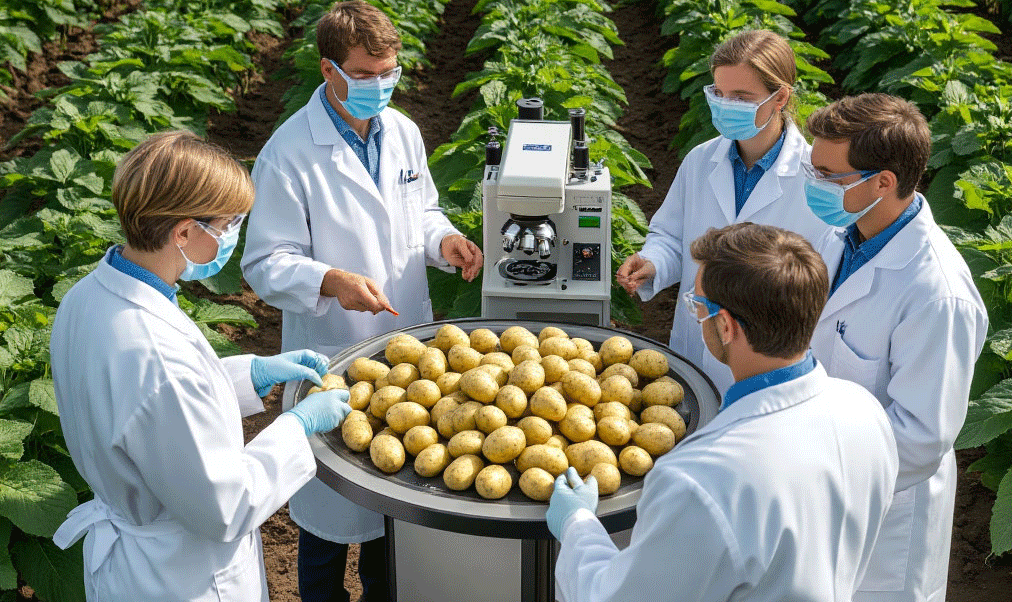
With the global population projected to reach 9.7 billion by 2050 (UN, 2022), agricultural production must increase by 60% to meet demand (FAO, 2023). However, expanding farmland is not always viable due to land degradation and water scarcity. Agrivoltaics—the integration of solar panels with crop cultivation—offers a dual-use solution, maximizing land efficiency while promoting renewable energy.
The Study: Potato Growth Under Agrivoltaic Conditions
A recent experiment investigated potato growth under three light conditions:
- Full sunlight (control)
- Partial shading (between solar panels)
- Full shading (directly beneath panels)
Two irrigation deficit levels were tested—35% and 50%—alongside three potassium sulfate (K₂SO₄) application rates.
Weekdays. Unsubscribe in one click.
Key Findings:
- Highest yields were recorded in partially shaded zones, statistically matching full-sun yields.
- Fully shaded areas (under panels) had lower yields, but potatoes contained significantly higher protein levels.
- Potassium content was highest in partially shaded potatoes, suggesting improved nutrient uptake.
- No significant differences in nitrogen, phosphorus, or carbohydrate content were observed across treatments.
Water Use Efficiency & Sustainability
The study highlights that partial shading combined with moderate irrigation deficits (35%) can boost water productivity, making agrivoltaics ideal for water-scarce regions. According to the World Resources Institute (2023), agriculture accounts for 70% of global freshwater withdrawals, emphasizing the need for efficient practices.
Agrivoltaics not only increase land-use efficiency but also reduce evaporation, helping conserve water. A 2023 study in Nature Sustainability found that agrivoltaic systems can reduce water usage by up to 20% while maintaining crop yields.
The Future of Farming with Agrivoltaics
The research confirms that potatoes grown under partial shading in agrivoltaic systems perform as well as those in open fields, with no compromise in nutritional quality. Moreover, strategic shading and controlled irrigation enhance water-use efficiency, making this approach viable for arid regions.
As climate change intensifies, agrivoltaics present a scalable solution—balancing food security, energy production, and environmental sustainability. Further studies should explore its applicability to other crops, but the evidence so far is compelling.