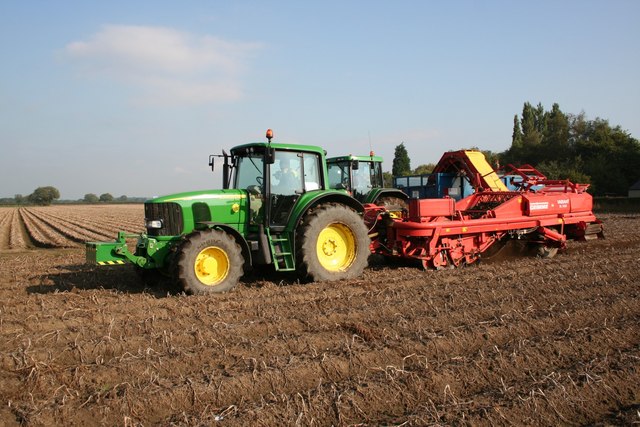
As harvest and storage filling approach completion across North America, the North America Potato Storage Organization is urging growers, storage managers and transport operators to keep safety at the centre of the operation — with fatigue management and machinery isolation at the top of the checklist.
The most dangerous weeks of the potato season are often the last ones. Long working days, tired crews, difficult weather and queues of loaded trucks converge as harvest and storage filling approach completion — and it is precisely then, the North America Potato Storage Organization warns, that familiar tasks become dangerous.
In its article “Getting the crop into storage safely,” NAPSO lays out practical precautions for growers, storage managers, transport operators and workers, built around a blunt principle: a waiting truck or an approaching deadline must never become a reason to bypass essential safeguards.
Weekdays. Unsubscribe in one click.
The risk map covers three zones. On roads and in storage yards, truck blind spots and pedestrian access are the priority, demanding clear communication between drivers and receiving crews and designated vehicle routes. Around unloading, tipping equipment and moving conveyors require proper machinery isolation before anyone clears a blockage — the kind of shortcut that routinely turns a clogged belt into a life-changing injury. Inside buildings, the guidance addresses work at height, personal and respiratory protective equipment, housekeeping, air quality and emergency preparedness.
NAPSO is equally direct about the paperwork that makes practice stick: visible safety signage, completed and approved risk assessments, written safe working procedures and documented worker training. These are not bureaucratic ornaments; they are what makes a safety expectation auditable on the day a crew is tired and the trucks are backed up.
Fatigue gets its own paragraph, and deservedly so. Managers are encouraged to organise realistic shifts, provide breaks and arrange relief, while workers should feel able to report exhaustion or stop an unsafe task without pressure to continue. In a sector where seasonal urgency is a point of pride, formalising the right to stop is arguably the most countercultural — and most valuable — recommendation in the document.
The framing extends beyond the fence line. A serious incident reaches families, colleagues, neighbours and emergency responders; protecting workers, NAPSO argues, means protecting the communities that depend on them. For an industry selling reliability and stewardship to retail customers, that community framing is also sound self-interest.
Practical application is built in: the full article includes six questions crews can review before the next load, designed to serve as a shift briefing or a timely review of site procedures as the season’s final tasks approach. The material is available through NAPSO’s Safety Resources section.
For operations still loading out in the northern states and Canada, the timing is exact: the final loads of the year are going into storage now, under the worst time pressure of the season. The checklist costs twenty minutes. The alternative, as incident statistics in agriculture show every year, costs considerably more.
The guidance lands as storage safety is becoming a harder conversation in the North American industry: larger storages, more automation and longer working hours concentrate risk exactly at the point of the season when attention is thinnest. NAPSO’s choice to publish at the harvest finish line rather than before it is a recognition of when incidents actually happen — not in the planned first week, but in the improvised last one.