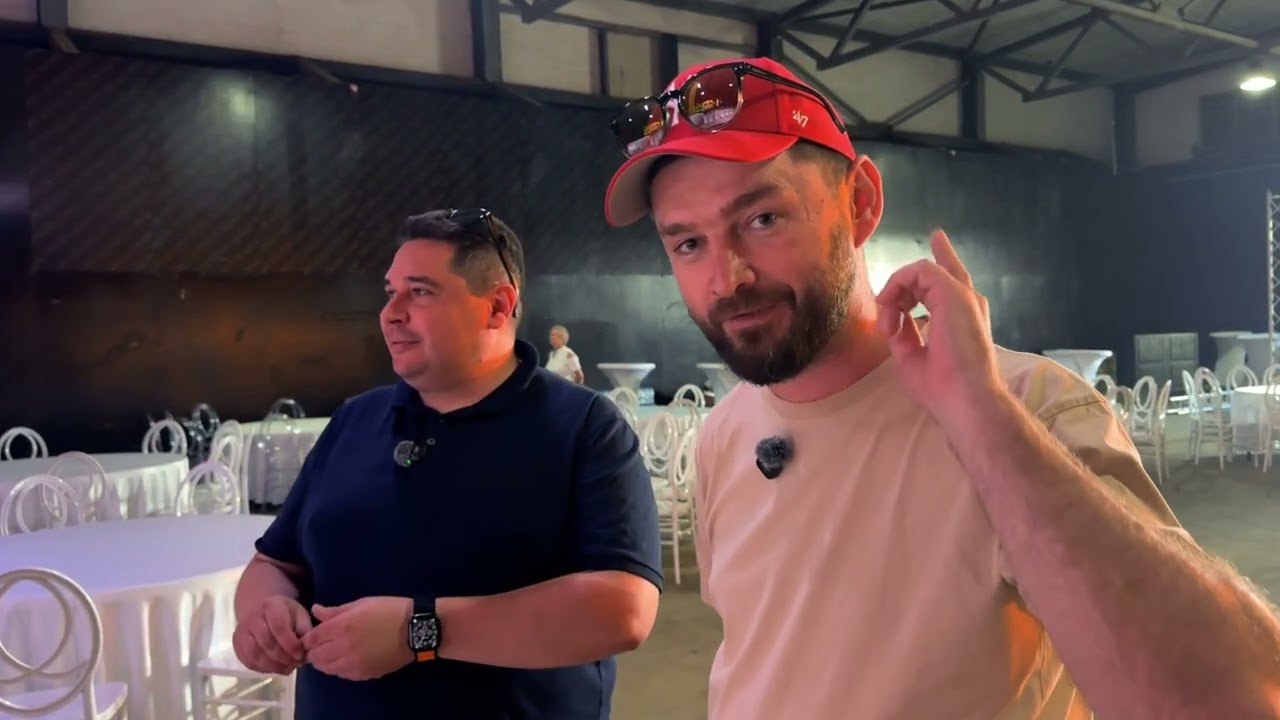
Here’s how our visit to Tver Agroprom LLC went as part of the “Potato Tour of Russia” project. We spoke with General Manager Dmitry Sergeyevich Minashkin about the company’s history, growing and storage technologies, staffing and market challenges, and why they deliberately choose a “single product”—table potatoes—and build a resilient business model around it. Especially for the “Potato Enthusiast” community—don’t miss it!
“Tver Agroprom”: from a multi-format project to a potato focus
The company was registered in 2009; the project was commissioned in 2012. It originally envisioned “vegetables and fruit,” but over time the enterprise deliberately shifted to a single product—potatoes. “We’re not planning processing—that’s a different industry, food manufacturing,” explains Dmitry Minashkin. They did try to enter raw material supply for chips/fries, but stepped back due to the high risk of dependence on “a single buyer.” With retail chains it’s the opposite: “We know how to work with retail. We have a strong commercial department and well-structured accounting.”
Scale and economics
In 2025 potatoes occupy about 926 hectares—by the team’s account, the largest planting in the region. It’s an impressive and… “frightening” number, the manager admits. Why not scale down? “Pure economics,” Minashkin answers, brisk and to the point. His management style stems from past experience: two university degrees (law and public/municipal administration) and years in M&A. “Decisions are made through a business case: we run the numbers—and it becomes clear.”
Technology: from digital in the field to a “smart” storage
- Digital agriculture and guidance. Field analytics and reports from the chief agronomist, backed by an external consultant, help adjust in-season decisions.
- Tolsma storage. An automated climate-control system with alerts sent to the manager’s phone. “If you ventilate properly—it’s more electricity, but storage losses are lower.”
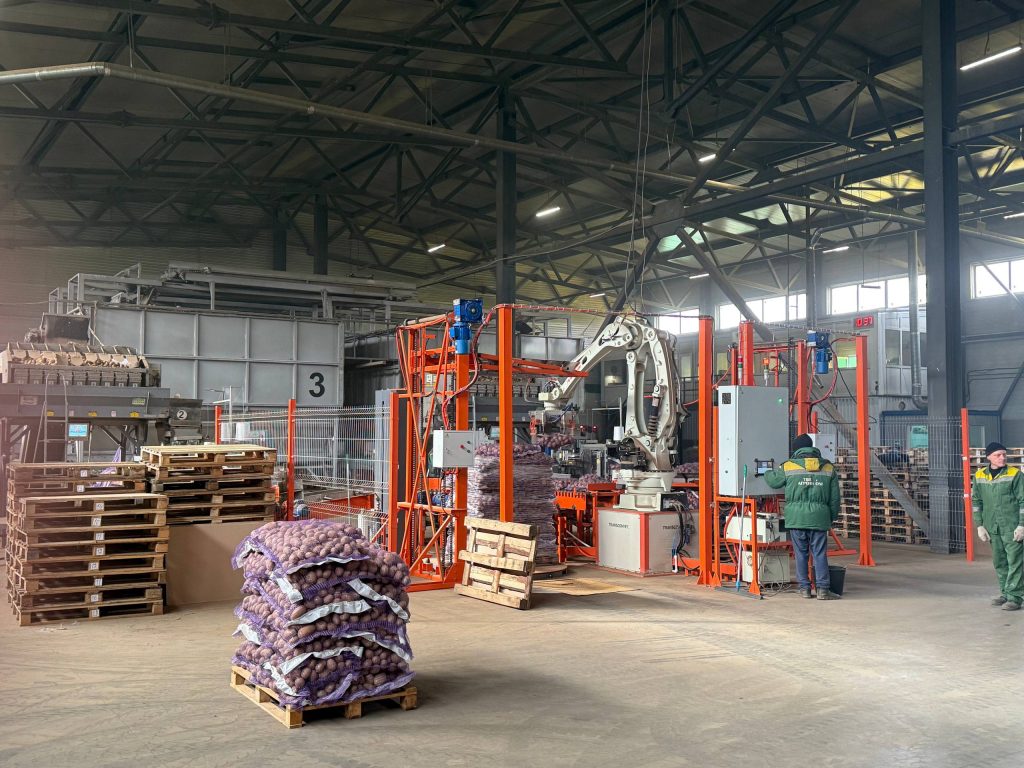
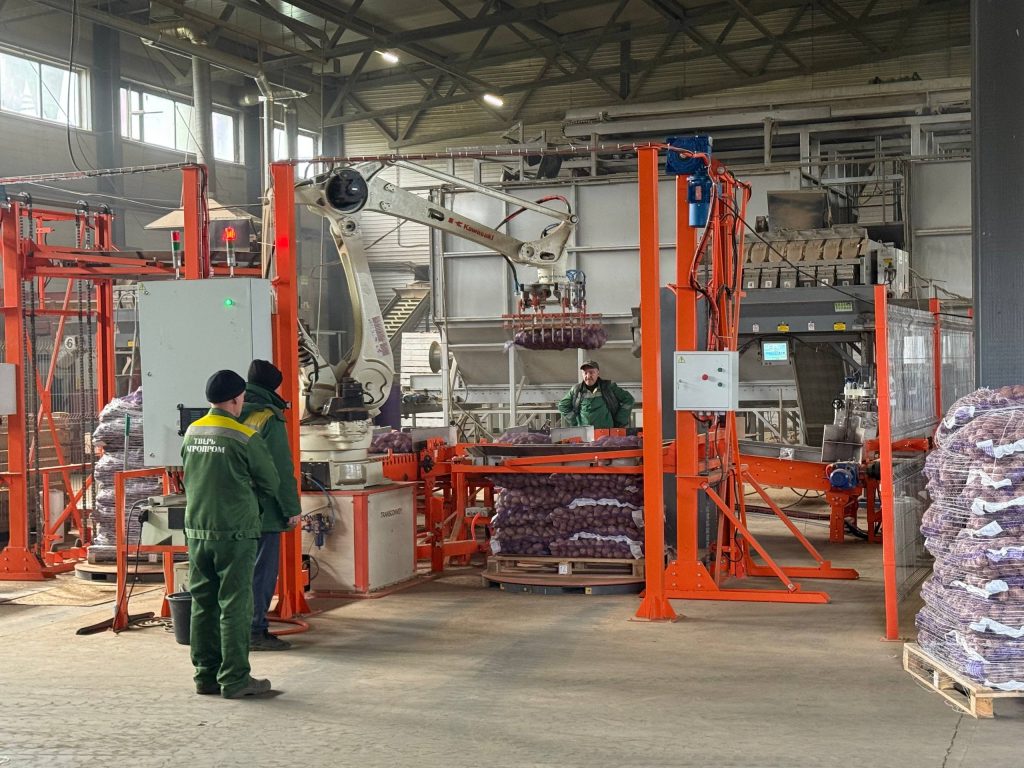
- New packing line. Designed to fit the farm’s needs: two parallel lines for 25-kg net bags, with labeling and circular palletizing. Rated capacity—up to 1,000 bags/hour; “600 is enough for us.”
- Equipment. Planting—Grimme; at intake—retrofit hopper, clod separation, in-house conveyor lines; the stone separator has been in service for many seasons.
Soil, stones, and variety
The Tver zone is cool and… stony. “Stones through the harvester always mean mechanical damage and storage risk,” says Dmitry. Hence the choice of varieties with better tolerance to mechanical injury and storage stability: the main bet is on Gala. The stone numbers speak for themselves: around 3,000 tonnes are hauled off from “this site alone.” “The more you till, the more stones come up—that’s physics.”
People and logistics
People are key: the enterprise buses workers in (the nearest town is Likhoslavl). Motivation is primarily financial: “refer-a-friend” programs and targeted support “through thick and thin”—from the birth of a child and weddings to tough life situations—plus trainee stipends. Wages are “at or above market.” The machinery is “all in the fields,” and everyone feels the seasonality.
The market: consumption, markups, and the “golden mean”
Per-capita potato consumption in Russia is cited at ~55 kg per year (according to Rosstat, as referenced by the manager), though industry debates continue. One thing is certain: retail chains sometimes apply markups “over 100%,” and the task is to find a balance so that “everyone earns and no one gets greedy.” The enterprise openly invites small farms to work through its packing and sales “for the chains,” but geography and logistics don’t always allow it.
A round table instead of a “Field Day”
Instead of the usual “plowing in circles,” they propose a round table “from planting to sales”: machinery, technologies, storage, and commerce. On one site—both competing crop-protection suppliers (“Avgust” and Syngenta), equipment manufacturers, and storage experts. “The trick is to do something new and useful for everyone across the full cycle.”
And yes, the hospitality is legendary. “If you plan to come to a Tver Agroprom event—bring either a spare liver or a driver,” the organizers joke.
Quotes of the day
“We know how to work with the chains—we have everything for that.”
“I make decisions through a business case: run the numbers—and everything becomes clear.”
“Digital farming and ‘smart’ storage aren’t a fad; they’re profit tools.”
“It’s a cold zone with lots of stones—so we choose varieties, equipment, and storage regimes for the ‘mechanics’.”
At a glance: key facts about Tver Agroprom
- Registered: 2009; project launch: 2012
- Profile: table potatoes (single product)
- Potato area (2025): ~926 ha
- Storage: Tolsma, automated climate control
- Packing: new dual 25-kg line, up to 1,000 bags/hour (rated)
- Partners/technologies: Grimme, Avgust, Syngenta, and others
- Workforce: employee shuttles, referral programs, targeted support, trainee stipends
Visit takeaways
Tver Agroprom shows how a focused strategy (one product, one market), technological discipline, and the “cold” economics of managerial decisions can turn a seasonal, risky business into a predictable full-cycle operation—from field to shelf. They don’t chase flashy “news for news’ sake”: stones, airflow, kilowatts, and retail markups—each of these “prosaic” factors is turned into a controllable metric. As a result, the enterprise grows where others are “cutting acreage.”
Follow the “Potato Tour of Russia” on Potatoes News. Coming soon—a video from our Tver Agroprom visit with technical details, storage life hacks, and frank talk about the market. If you’d like to be the hero of upcoming episodes or a tour partner—write to us.