
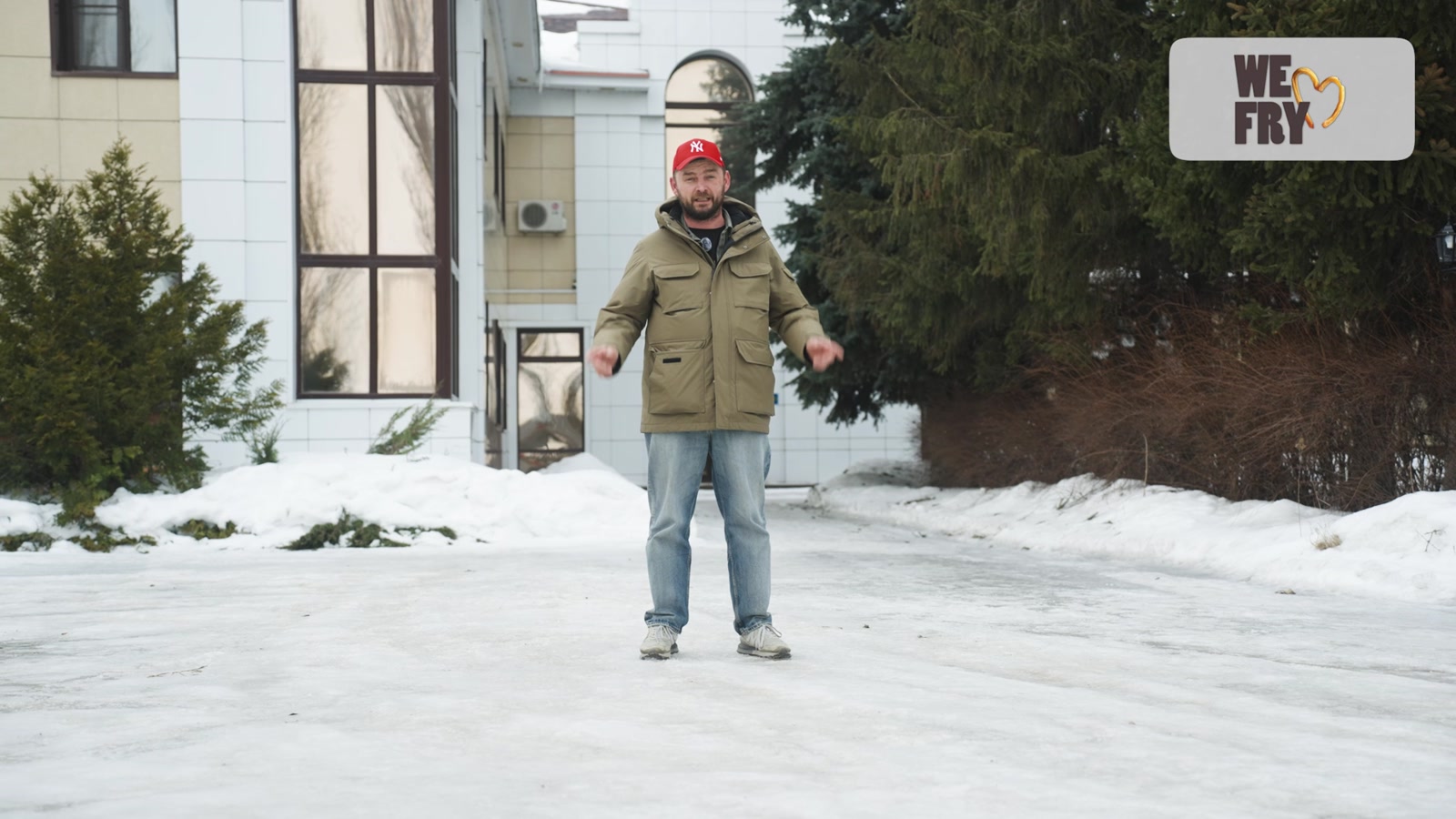
On 2 March 2026, the International Potato Tour met Yuri Lesnichenko of Goodness Foods Tambov in Borshchevoye, in Russia’s Tambov Region. With snow still on the ground, he explained what the farm was doing before planting and how it intended to improve storage for its processing crop.
Repairing and checking the machinery
Lesnichenko said the main repair campaign began on 1 March. Replacement parts for the farm’s Challenger tractors had been taking longer to arrive. He described how engineers and agronomists check the equipment against a checklist and sign off on it before fieldwork.
Working heavy black soil before it dries
Lesnichenko said heavy soil can form clods. The farm grew its potatoes under irrigation and aimed to form the ridges within 3 to 5 days of planting, before the soil dried out. Staff worked in two shifts around the clock during planting and ridge formation, using guidance systems.
Weekdays. Unsubscribe in one click.
Storage plans for carrots and processing potatoes
Lesnichenko put the farm’s container storage capacity for carrots at 7,000 tonnes. Beetroot was usually stored in bulk. That season, the farm was planning a trial in which it would lift beetroot grown on ridges and store it in containers.
The farm also grew potatoes for processors, including WE FRY, Lesnichenko said. It planned to retrofit four stores for this crop in 2026. He explained that the farm needed to manage humidity and temperature, and that cooling the crop too far could raise sugar levels and lead to processing defects.

The irrigation plan in March 2026
At the time of the interview, Lesnichenko said the farm planned to expand irrigation from 1,300 to 1,800 hectares. He said that would give it room for 600 hectares of potatoes within a three-year rotation. He described potatoes as his “second bread” and emphasised that they remain a living crop in storage.
Avgust is the general partner of the International Potato Tour.