
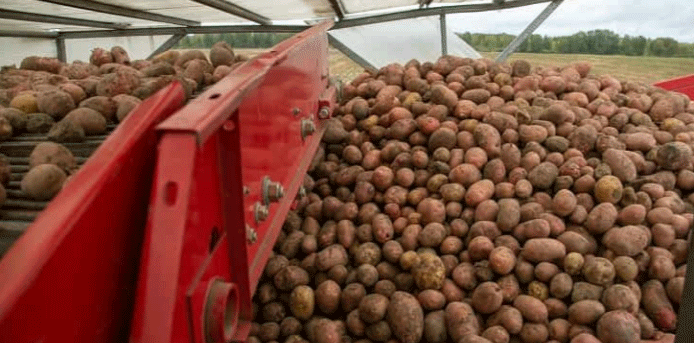
Recent social media reports warning of “massive viral infections” in Novosibirsk’s seed potatoes have caused unnecessary panic among farmers and consumers. However, the Rosselkhozcenter (Russian Agricultural Center) has clarified that the situation is far less severe than claimed, with only 14-15% of tested samples showing viral presence—a manageable level that does not threaten overall crop viability.
Testing and Transparency in Seed Quality Control
According to Vladimir Volokitin, head of the Novosibirsk branch of Rosselkhozcenter, PCR-based laboratory testing is conducted before planting to detect pathogens. While viruses like Potato Leafroll Virus (PLRV) and Potato Virus Y (PVY) were found in some batches, the contamination rate is far below the exaggerated “99%” circulating online.
Globally, viral infections in potatoes are common, with studies showing that 20-30% of seed potatoes in some regions carry latent viruses (FAO, 2023). However, strong agronomic practices—such as certified seed use, crop rotation, and vector control—can minimize economic losses.
Market Impact and Consumer Concerns
The misinformation contributed to a short-term spike in potato prices in Novosibirsk, with costs temporarily doubling. However, experts reassure growers that viruses do not necessarily destroy crops—healthy plants in favorable conditions often resist severe damage.
Best Practices for Farmers and Storage Tips
To mitigate risks, Rosselkhozcenter advises:
- Using certified virus-free seeds (reducing infection risks by up to 90%, according to International Potato Center, 2023).
- Regular field monitoring for aphids (primary virus vectors).
- Proper storage (maintaining 4°C and 90% humidity to prevent secondary infections).
The Novosibirsk case underscores the importance of relying on scientific data over sensationalized claims. While potato viruses exist, their impact can be controlled through preventive measures, certified seeds, and robust testing protocols. Farmers should stay informed through official agricultural channels rather than unverified sources.
