
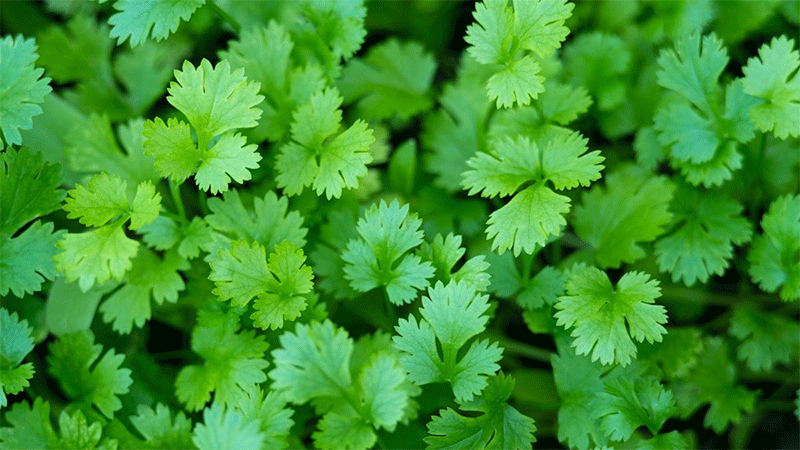
The practice of companion planting, often viewed as garden folklore, is gaining validation through the lens of applied agroecology. The specific pairing of cilantro (Coriandrum sativum) with potatoes (Solanum tuberosum) is a prime example of functional biodiversity. The mechanism is twofold. First, cilantro acts as a powerful insectary plant, flowering quickly and attracting beneficial predators like hoverflies (Syrphidae family) and ladybugs (Coccinellidae family). The larvae of these insects are voracious consumers of common potato pests, including aphids and the devastating Colorado potato beetle larvae. This aligns with research from institutions like the University of California’s Statewide Integrated Pest Management Program, which promotes the use of insectary plants to establish a self-regulating pest management system, reducing reliance on chemical interventions.
The second benefit lies in efficient resource use. Intercropping, the practice of growing two or more crops in proximity, is a well-established method for maximizing land productivity. A study published in the Journal of Sustainable Agriculture highlighted that strategic intercropping can increase total yield per unit area by 20-30% compared to monocropping. By combining a root crop (potato) with a fast-maturing leafy herb (cilantro), growers can achieve a higher Land Equivalent Ratio (LER), making more efficient use of light, water, and nutrients within the same soil footprint. This is particularly valuable for small-scale farms and market gardeners focusing on high-value production.
Beyond the Garden: Broader Impacts on Sustainability and Health
The implications of this practice extend beyond pest control and yield. The reduction in pesticide use has direct benefits for soil health and non-target organisms, including vital pollinators. Furthermore, localized food production models that incorporate such methods contribute to a reduction in food waste and the carbon footprint associated with long-distance transport. The problem is significant; ReFED, a leading data-driven food waste organization, estimates that in the U.S., over 38 million tons of food go unsold or uneaten each year, much of it perishable produce. By enabling households and communities to grow their own fresh, on-demand cilantro and potatoes, this companion planting strategy supports a more resilient and less wasteful food system.
The cilantro-potato companion planting strategy is more than a simple “hack”; it is a practical application of ecological principles that delivers tangible agronomic benefits. For farmers and agricultural professionals, it demonstrates the power of designing cropping systems that work with natural processes rather than against them. By strategically integrating plants that support ecosystem services like pest predation and spatial efficiency, we can develop more sustainable, productive, and resilient agricultural operations. This approach, validated by both practitioner experience and scientific research, offers a scalable model for reducing input costs, enhancing crop health, and contributing to a more robust local food economy.
