As the North American potato industry navigates the heart of the 2025 storage season, a crucial educational intervention is on the horizon. Co-hosted by Spud Smart magazine and the North American Potato Storage Organization (NAPSO), the “Mid-Storage Health Check: Diagnosing and Managing Problems” webinar, scheduled for December 17, represents a timely, tactical resource for professionals responsible for safeguarding tuber quality and marketable yield. This session is strategically timed for the mid-storage period, a phase where latent issues—undetectable to the untrained eye—begin to manifest and can swiftly escalate.
The webinar’s curriculum directly targets the most common and costly failure points in potato storage. Led by two preeminent specialists, Dr. Sastry Jayanty (Colorado State University) and Dr. Amanda Gevens (University of Wisconsin–Madison), the focus will be on practical diagnostics. Key topics include interpreting CO₂ and humidity data in dynamic storage environments, decoding the causes of persistent condensation and wet floors (often indicators of poor air distribution or insulation leaks), and identifying the early visual signatures of devastating pathologies like bacterial soft rot, pink rot, and Fusarium dry rot, as well as physical damage from pressure bruising. This focus on early detection is not merely theoretical. Postharvest losses remain a staggering global issue; while comprehensive 2025 data is pending, the UN’s Food and Agriculture Organization (FAO) historically estimates that root and tuber crops can experience 15-25% postharvest losses in developed systems, with improper storage being a primary contributor. In a high-volume, low-margin industry, preventing even a single percentage point of loss in a multi-thousand-ton facility translates to tens of thousands of dollars preserved and critical supply contracts upheld.
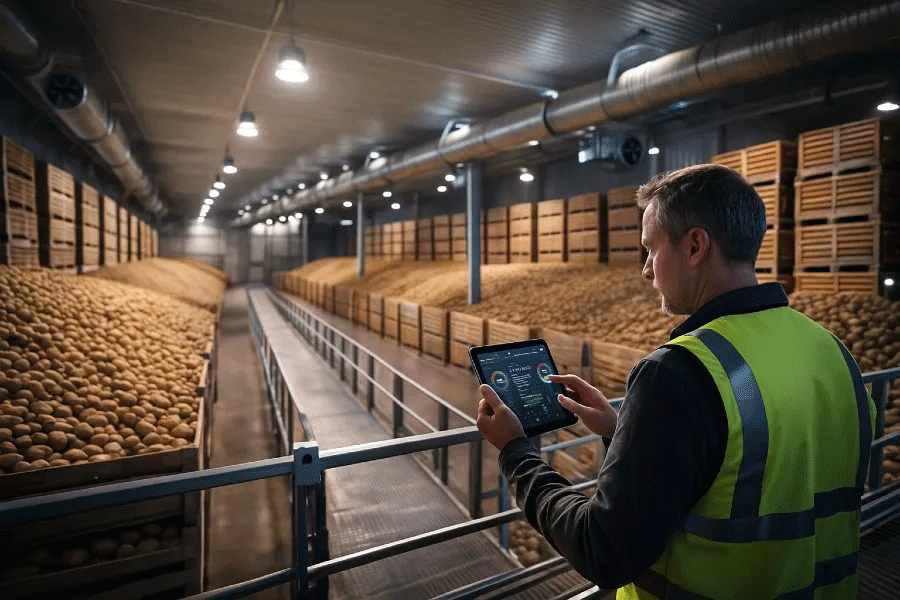
The session’s design as an interactive, case-study-driven forum allows for direct engagement with the experts, moving beyond textbook principles to address the nuanced challenges individual storage managers face. This knowledge transfer is essential for implementing what Dr. Jayanty and Dr. Gevens will emphasize: simple, repeatable monitoring protocols that turn subjective observation into objective, actionable intelligence. Understanding that a slow creep in CO₂ levels may indicate increased tuber respiration from an early infection hotspot, or that a specific pattern of condensation correlates with an air delivery shortfall, empowers managers to move from reactive firefighting to proactive system management.
The “Mid-Storage Health Check” webinar is more than an educational event; it is a critical risk management tool for the modern potato industry. In an era where supply chain efficiency and product quality are paramount, the ability to proactively manage the storage environment is a direct determinant of profitability and sustainability. This webinar underscores a fundamental shift in postharvest philosophy: from passive warehousing to active, data-informed stewardship of the crop. For growers, agronomists, and storage engineers, participation is an investment in operational resilience. By learning to diagnose the subtle warnings of a storage system in distress, professionals can take corrective action that preserves tuber integrity, extends marketable life, and ultimately protects the significant investment embodied in every stored pile. The health of the storage is the health of the bottom line.
