
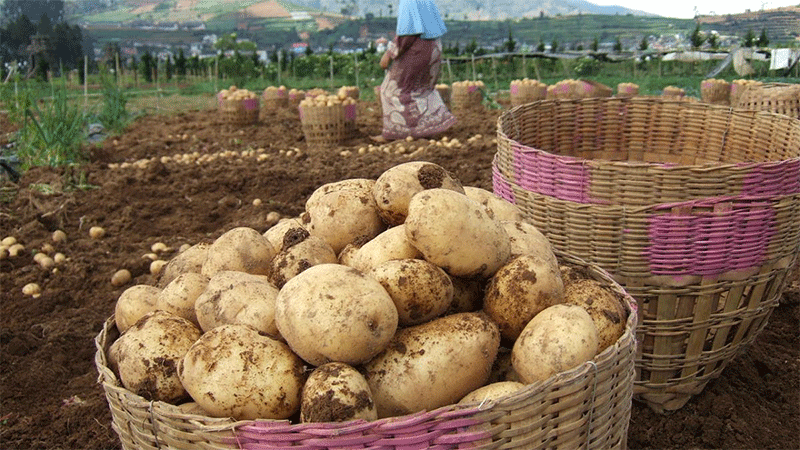
For potato growers and storage managers facing annual losses from rot and premature sprouting, traditional knowledge may offer a scientifically-grounded solution. Russian agricultural experts and home gardeners are documenting significant success using rowan leaves (from both red and black chokeberry varieties) as a natural preservative in potato storage, with reported reductions in spoilage of 15-30%.
The method leverages the natural phytochemical properties of rowan leaves, which are rich in fungicidal compounds and tannins that suppress fungal and bacterial pathogens including Phytophthora and Fusarium. The technique involves layering approximately 50 grams of leaves per 10 kilograms of potatoes throughout storage containers, creating a protective environment that extends tuber viability while reducing dependence on chemical treatments.
The science behind this approach is increasingly validated by research into plant-derived antimicrobials. Studies published in the Journal of Food Science and Technology have confirmed that botanical compounds from various tree leaves exhibit significant antifungal properties, with some reducing pathogen growth by up to 80% in controlled conditions. The rowan tree (Sorbus aucuparia) specifically contains parasorbic acid and other compounds with demonstrated preservative effects.
Implementation requires careful attention to detail:
- Leaves should be harvested before frost (post-frost leaves contain reduced phytochemical concentrations)
- Fresh leaves offer maximum efficacy but can be lightly dried for convenience
- Optimal application rate: 50-100 grams per 10kg of potatoes depending on rot risk
- Regular monthly inspection and replacement of decomposed leaves is critical
The rowan leaf method fits within a comprehensive storage protocol that begins long before potatoes enter the storage facility. Key pre-storage considerations include:
- Variety selection (late-maturing varieties like ‘Golubizna’, ‘Zhuravinka’, and ‘Atlant’ show superior storage characteristics)
- Proper field drying (ceasing irrigation 2-3 weeks before harvest to thicken skins)
- Careful harvesting under optimal conditions (dry weather, temperatures of 12-17°C)
- Curative period of 2-3 weeks at 13-18°C with 90-95% humidity to heal minor damage
For commercial operations, the potential economic impact is substantial. Post-harvest potato losses typically range from 15-25% globally according to FAO statistics, representing significant financial impact for producers and storage facilities. A 30% reduction in these losses through natural methods like rowan leaf application could dramatically improve profitability while meeting consumer demand for reduced chemical use in food production.
Alternative botanical options include fern leaves (particularly effective against mold), pine needles (additional rodent deterrent properties), and onion skins (mild disinfectant action). Some practitioners also use a rowan leaf infusion (100g leaves per liter of water, steeped for 24 hours) as a spray treatment before storage.
The rediscovery of rowan leaves as a potato storage aid represents an important convergence of traditional knowledge and modern agricultural science. While not a standalone solution, this method offers a valuable component in integrated storage management that can significantly reduce losses while minimizing chemical inputs. For commercial potato operations, further research into standardized application protocols and potential scale-up is warranted. For smallholders and organic producers, this method provides an immediately accessible, cost-effective tool for improving storage outcomes. As the agricultural sector seeks more sustainable solutions, such nature-based approaches deserve serious consideration and further scientific validation.
